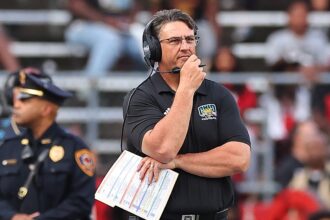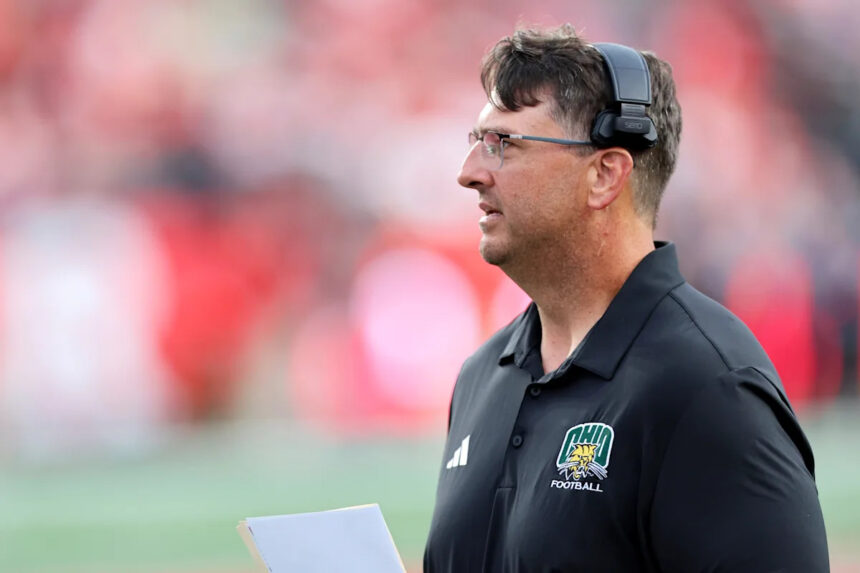
Ohio University Fires Head Football Coach Brian Smith for Contract Violations, Including Affair with Student
In a stunning revelation that cuts to the core of institutional trust and personal conduct, Ohio University has terminated head football coach Brian Smith for multiple, serious violations of his employment contract. Records obtained by The Associated Press detail a pattern of behavior that led to his dismissal, centering on an extramarital affair with an undergraduate student and repeated alcohol-related misconduct. The move, executed “for cause,” ends Smith’s tenure abruptly and sends shockwaves through the Bobcat community, raising immediate questions about oversight, accountability, and the arduous path to rebuilding a program’s reputation.
A Termination Notice Lays Bare the Allegations
The university’s formal notice of intent to terminate, sent by President Lori Stewart Gonzalez on December 12, moves beyond vague statements of “serious professional misconduct” to specific, damning charges. According to the documents, Brian Smith’s contract violations were twofold and interrelated, painting a picture of a leader who failed to uphold the standards demanded of his position.
First, and most prominently, the notice cites Smith’s participation in extramarital affairs, specifically identifying a relationship with an undergraduate student at the university. This allegation alone carries immense weight, implicating severe breaches of ethical boundaries, potential power dynamics, and the university’s fiduciary duty to its students. While the student’s affiliation (whether an athlete, staffer, or general student) is not detailed, the mere fact of an educator-student relationship of this nature represents a fundamental failure of professional responsibility.
Second, the university outlined a pattern of alcohol-related conduct unbecoming of a head coach. The records include an instance where Smith attended a public event “during which you smelled strongly of alcohol and were intoxicated in your demeanor.” This points to behavior that the university believed directly reflected “unfavorably” on the institution, undermining Smith’s capacity to serve as a role model and the public face of a multimillion-dollar athletic program.
Contractual Cause and the Legal Repercussions
Terminating a high-profile coach’s contract “for cause” is a significant legal and financial decision. It allows the university to avoid paying the often-substantial buyout clause typically included in coaching contracts. Ohio University’s swift action—placing Smith on indefinite leave on December 1 before issuing the termination notice on December 12—signals the administration’s confidence in its findings and its desire to sever ties completely.
The response from Smith’s attorney, Rex Elliott, adds a layer of impending legal complexity. While the full content of his rebuttal isn’t public, its existence suggests a potential challenge to the termination. Legal battles in such cases often hinge on the specific language of the contract and the ability of the university to prove its allegations conclusively. Key questions will include:
- Was there a explicit morality clause? Most coaching contracts contain stringent conduct policies.
- Can the “for cause” designation withstand legal scrutiny? The university must prove the breaches were material and warranted immediate dismissal.
- What is the financial stake? Avoiding Smith’s remaining salary guarantees represents a major fiscal imperative for the athletic department.
This situation diverges from the more common “losses on the field” narrative. Here, the breach is purely off-field, rooted in personal conduct that the institution deemed irreconcilable with the role of head coach.
Expert Analysis: The Ripple Effect on the Program
The fallout from this scandal extends far beyond the coach’s office. “This isn’t just a personnel change; it’s an institutional crisis,” says Dr. Laura Simmons, a sports sociologist who studies ethics in athletics. “A head coach is the ultimate culture-setter. When that individual is accused of exploiting the power dynamic with a student and public intoxication, it calls into question the entire environment he fostered. Recruits, current players, and their parents are now rightfully asking, ‘What was happening here, and who knew what?'”
The damage is multifaceted:
- Recruiting Catastrophe: Rival coaches will undoubtedly use this instability and scandal against Ohio University on the recruiting trail.
- Player Trust Erosion: Current players committed to Smith’s vision now face a sudden leadership void and the discomfort of being associated with a scandal.
- Donor and Fan Alienation: Boosters who financially support the program expect a return on investment in wins and, critically, integrity. This episode damages that crucial relationship.
- Institutional Reputation: Ohio University, a proud academic institution, now has its name linked to a sordid athletic scandal, a connection administrators work tirelessly to avoid.
The university’s decision to act decisively, once evidence was gathered, is a necessary first step in damage control. However, it is only the first step.
Predictions: The Long Road Ahead for Ohio Football
The immediate future for Ohio Bobcats football is one of profound transition and scrutiny. The search for a new head coach will be the most visible next step, but the underlying healing process will be slower. We can anticipate several key developments:
The next head coach will be vetted with extreme prejudice. The athletic director’s mandate will be to find a leader of unquestionable character, perhaps even a “culture czar” known for running a tight, disciplined program. Experience and winning records will be balanced heavily against a pristine personal and professional history.
The NCAA may take a passive role, but Title IX offices will be active. Unless the relationship with the student involved an athlete or recruiting violation, the NCAA may not have jurisdiction. However, the university’s own Title IX office likely conducted, or will conduct, a parallel investigation into the relationship to ensure compliance with federal policies regarding sexual misconduct and power imbalances.
Player attrition is likely. The transfer portal makes it effortless for players to seek a fresh start. A new coach with a different scheme and philosophy may accelerate this process. Retaining key talent will be a monumental challenge for the interim and eventual permanent staff.
Brian Smith’s coaching career is in serious jeopardy. At the major college level, a termination for cause with these specific allegations is a scarlet letter. Rebuilding his reputation to secure another leadership role will be a years-long, if not impossible, endeavor.
Conclusion: A Stark Reminder of the Price of Leadership
The firing of Brian Smith is a stark, unflinching reminder that the role of a head coach transcends Xs and Os. It is a position of immense influence, built on a foundation of trust—trust from the administration, from the players, from the fans, and from the families who send their young adults to the program. Ohio University’s records reveal a pattern of behavior that shattered that trust completely.
While the legal wrangling over the termination for cause may continue, the court of public opinion and institutional integrity has largely rendered its verdict. The university chose the hard but necessary path of protecting its standards over protecting its football program’s short-term stability. The road to recovery for Ohio Bobcat football is now long and uncertain. It will require more than a new playbook; it will demand a relentless commitment to ethical leadership at every level, proving that the lessons of this painful chapter have been learned and that the program’s future will be built on a foundation far stronger than the one that just crumbled.
Source: Based on news from Yahoo Sports.