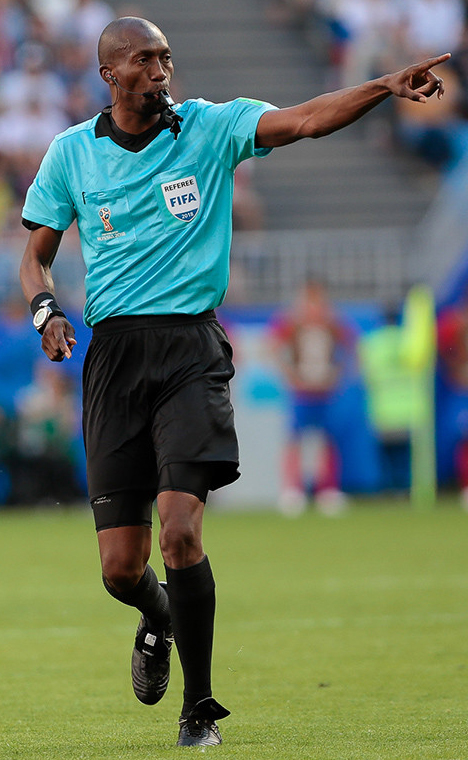
Ref Watch: The Bentancur-Burn Grapple – A Refereeing Paradox Exposed
The beautiful game is often decided in moments of ugly chaos. A corner kick swings in, bodies tangle, and in the blink of an eye, a match can turn on a whistle that is blown—or one that isn’t. This past weekend, a pivotal incident involving Tottenham’s Rodrigo Bentancur and Newcastle’s Dan Burn did more than just award a penalty; it exposed a fundamental and confusing paradox in modern Premier League officiating. The question isn’t just about a foul, but about a referee’s conscious inaction. As former Premier League referee and Ref Watch analyst Dermot Gallagher pointedly asked: why did referee Thomas Bramall clearly notice the grappling, only to seemingly “ignore” it?
The Incident: A Clear View of a Clear Foul
The scene was set at the Tottenham Hotspur Stadium. A Tottenham corner arced towards the near post. What followed was not subtle. Newcastle’s Dan Burn, a formidable physical presence, and Tottenham’s Rodrigo Bentancur became entangled. Burn had two clear arms wrapped around the Uruguayan midfielder, pulling him back and restricting his movement. Crucially, referee Thomas Bramall was positioned mere yards away, with an unobstructed sightline. He saw the clash. His head turned, his eyes tracked the players. He registered the incident in real-time. And then… he played on.
It was only after the ball was cleared and a natural pause in play occurred that the VAR, Michael Salisbury, intervened. He recommended Bramall review the incident on the pitchside monitor. A brief look was all it took. Bramall pointed to the spot, overturning his own initial—and visually confirmed—decision to let play continue. The penalty was converted, altering the dynamic of the match. This sequence is the crux of Gallagher’s critique and the source of widespread bewilderment.
Dermot Gallagher’s Damning Analysis: The “Noticed But Ignored” Conundrum
On Sky Sports’ Ref Watch, Dermot Gallagher dissected the moment with the precision of a veteran official. His analysis cut to the heart of the issue. “The referee is in a perfect position,” Gallagher stated. “He sees it. That’s the biggest thing for me. He sees the incident.” This is the critical first step. Referees are trained to identify potential fouls, and Bramall passed that test.
But then came the baffling part. “Having seen it, he chooses to ignore it,” Gallagher continued. “That, for me, is the mystery.” This transforms the error from a simple mistake of perspective—which VAR is designed to correct—into a more complex error of judgment. Gallagher’s use of the word “ignore” is loaded. It implies a conscious decision to not penalize an action the referee acknowledged was happening. This creates a dangerous precedent and a confusing signal to players, coaches, and fans about what is and isn’t acceptable in the penalty area.
Gallagher’s conclusion was unequivocal: VAR was correct to intervene because a clear and obvious error had been made. But the need for that intervention stemmed from a puzzling human decision, not a lack of visibility.
- The Referee’s Position: Bramall was close, with a clear line of sight. No obstruction.
- The Visual Recognition: He demonstrably saw the grapple between Bentancur and Burn.
- The Critical Inaction: Despite seeing it, he allowed play to continue, requiring VAR to force a review.
- Gallagher’s Verdict: A correct VAR outcome highlighting a perplexing on-field lapse in judgment.
The Wider Implications: Erosion of On-Field Authority and Consistency
This incident is not an isolated blip; it’s a symptom of a broader tension in the VAR era. When a referee of Premier League standard witnesses a foul and chooses not to whistle, it undermines the very concept of on-field authority. Players are left wondering: “If he saw that and didn’t call it, what *will* he call?” It breeds inconsistency, the single greatest complaint against match officials.
Furthermore, it places an unsustainable burden on the VAR system. VAR is meant as a safety net for clear and obvious errors *missed* by the officiating team. It is not designed to be a crutch for errors of judgment made in full view of the referee. If officials begin to subconsciously rely on VAR to bail them out of making big calls in real-time, the flow and spirit of the game suffer. The spontaneous, authoritative decision-making that defines top-tier refereeing risks being eroded.
This case also reignites the debate over selective enforcement. Grappling at set-pieces has been a point of emphasis for years, with directives sent to clubs. When a referee as well-positioned as Bramall fails to act on such a clear example, it sends a mixed message to every other official and team in the league. Is the directive still active? Or is it only punishable via video review?
Predictions: A Reckoning for Refereeing Standards
So, where does this leave us? The fallout from this incident will likely shape behavior in the coming weeks.
First, we can expect the Professional Game Match Officials Limited (PGMOL) to internally address this specific type of error. The emphasis will shift from just “seeing” incidents to having the conviction to act on them immediately. Referees will be urged to trust their eyes and make the bold call in the moment, rather than deferring responsibility.
Second, players and managers will test boundaries. Seeing that such a clear foul went unpunished in real-time may encourage more aggressive grappling, with the gamble that the referee might again “notice but ignore.” This could lead to a spike in similar incidents until referees collectively reassert a zero-tolerance approach.
Finally, this episode strengthens the argument for in-game referee communication. If Bramall had a doubt, could he have used his mic to quickly check with his assistant? While not a formal VAR review, better real-time communication between officials might prevent such stark between the on-field decision and the video evidence.
Conclusion: The Whistle Must Come from the Man in the Middle
The Bentancur-Burn penalty incident, as dissected by Dermot Gallagher, is a landmark case study in modern refereeing. It was not a controversy about a blind spot or a marginal offside. It was about a referee, perfectly placed, witnessing an infringement, and then allowing play to continue. The VAR system worked as intended to rectify the error, but it should never have been needed for an incident of that clarity.
The integrity of the sport relies on the courage and consistency of the on-field referee. The whistle must be a tool of decisive authority, not a reluctant accessory prompted by a voice in the ear. As Gallagher’s analysis makes clear, the biggest problem wasn’t that the foul was missed; it was that it was seen and dismissed. For the health of the game, referees must be empowered and expected to make those game-defining calls themselves, in real-time, preserving both the flow of the match and their own command of it. The alternative is a slow descent into a sport where every contested moment is played twice—once on the grass, and once on a screen.
Source: Based on news from Sky Sports.
Image: CC licensed via commons.wikimedia.org