Seahawks at a Crossroads: The Delicate Dance Between a Super Bowl Run and an Inevitable Sale
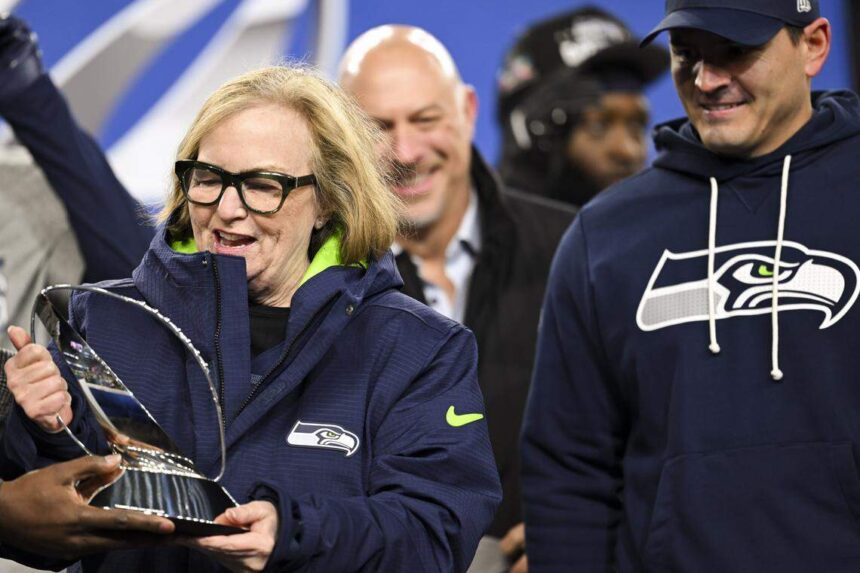
The Seattle Seahawks are preparing for their fourth Super Bowl appearance, a chance to cement a legacy born in the Pacific Northwest and nurtured over three transformative decades. Yet, as the team lands in the spotlight of Super Bowl 60, a shadow of profound change looms over the franchise’s future. A new report has ignited a firestorm of speculation, pitting the immediate glory of a championship chase against the long-term, inevitable reality dictated by a late billionaire’s will. The question is no longer if the Seahawks will be sold, but when—and what that means for the soul of Seattle sports.
The Report, The Rebuttal, and The Inevitable Truth
On Friday, ESPN dropped a seismic report: the Seattle Seahawks will be up for sale sometime after the confetti falls on Super Bowl 60. The news sent shockwaves through the 12th Man and the NFL at large. However, within hours, a spokesman for the Paul G. Allen Estate issued a firm, nuanced rebuttal. “We don’t comment on rumors or speculation, and the team is not for sale,” the statement began, offering immediate reassurance. But it continued, revealing the core of the issue: “We’ve already said that will change at some point per Paul’s wishes.”
This is the delicate dance. The estate is emphatically not in active, immediate sales mode. Their stated focus is winning the Lombardi Trophy and finalizing the sale of Allen’s other major sports asset, the NBA’s Portland Trail Blazers. Yet, they openly acknowledge the binding directive from the team’s late owner. Paul Allen, who purchased the then-struggling franchise for $200 million in 1997, stipulated in his will that both his professional sports teams be sold following his 2018 death, with proceeds directed to his philanthropic pursuits. As a Vulcan, Inc. spokesman noted in 2023, the process of reviewing and selling Allen’s vast assets “could take 10 to 20 years.” The timeline is vague, but the destination is fixed.
The Paul Allen Legacy: From Obscurity to NFL Powerhouse
To understand the gravity of this pending sale, one must appreciate the revolution Paul Allen engineered. His arrival in 1997 didn’t just change an owner’s nameplate; it altered the trajectory of professional sports in Seattle.
- Stability and Investment: Allen provided the deep financial resources and patient leadership the franchise desperately needed, ending years of instability and relocation threats.
- A Stadium Reborn: He spearheaded and largely funded the construction of what is now Lumen Field, a deafening, state-of-the-art home that became the franchise’s iconic heart.
- The Golden Era: Under his ownership, the Seahawks experienced unprecedented success: 15 playoff appearances, 3 NFC Championships, and the city’s first and only Super Bowl title in 2014 (XLVIII).
- A Culture of Excellence: Allen empowered football minds like Mike Holmgren, Pete Carroll, and John Schneider, fostering a culture of competitiveness that made the Seahawks a perennial force.
Allen was not a meddling owner but a passionate steward. His death left a void not easily filled, with the estate’s trustees tasked with the unenviable job of eventually parting with a civic treasure he so lovingly curated.
The Staggering Economics of an NFL Sale
When the sale process finally begins in earnest, it will be a financial event of historic proportions. The NFL’s valuation boom, fueled by massive media rights deals, gambling partnerships, and global expansion, has turned franchises into ultra-appreciating assets.
Consider the recent benchmarks: The Washington Commanders sold for a record $6.05 billion in 2023. Analysts now project that a Seahawks sale, given the team’s strong brand, loyal fanbase, modern stadium, and lack of local debt, could command an eye-watering $8 billion or more if it were to occur in the next few years. From Allen’s $200 million investment to a potential 40-fold return, the numbers illustrate the NFL’s explosive economic growth and the premium attached to a stable, successful franchise in a thriving market.
The buyer’s pool will be exclusive, likely featuring:
- Ultra-high-net-worth individuals or private equity consortia.
- Figures with potential ties to the Pacific Northwest or the tech industry.
- Someone who must pass the NFL’s rigorous ownership vetting, with a key priority being a commitment to keeping the team in Seattle—a concern always present given the city’s sports history.
Predictions and Implications for the 12th Man
So, what happens next? The path forward involves several key phases and questions.
Short-Term (Next 1-3 Years): The estate’s statement suggests a deliberate pace. The completion of the Trail Blazers sale is the immediate priority. The Seahawks’ football operations will continue unaffected, with General Manager John Schneider and the coaching staff operating under the current structure. The “team not for sale” stance is functionally true for now, allowing the organization to focus solely on football.
Medium-Term (The “When”): Most expert analysis points to a sale materializing later this decade, not immediately after the Super Bowl. The estate will seek optimal financial and timing conditions. A key trigger will be the finalization of the NFL’s next cycle of media deals, which could further inflate franchise values. A sale around 2027-2030 seems a plausible, though unconfirmed, timeline.
Long-Term (The “What Then”): The greatest concern for fans is cultural continuity. Will a new owner:
- Maintain the unique, player-centric culture built over decades?
- Invest in keeping the roster competitive at a championship level?
- Honor the deep connection with the 12th Man and the Seattle community?
- Or, will they bring a more corporate, profit-driven approach that could alter the franchise’s fabric?
The shadow of Paul Allen will be long, and the new owner’s willingness to be a steward, not just an operator, will define the next chapter.
Conclusion: A Championship Focus Amidst a Looming Transition
For the players and coaches taking the field at Super Bowl 60, the ownership question is a distant echo. Their mission is singular: win a championship. For the fans, however, this period is imbued with a poignant duality. They are cheering for a triumph that would represent the ultimate culmination of the Paul Allen era, even as they nervously eye the horizon for the dawn of a new one.
The Paul G. Allen Estate holds the keys to one of the NFL’s crown jewels, bound by a mandate to sell but guided by a responsibility to do so wisely. The statement, “the team is not for sale,” is a reflection of the present tense. The unspoken truth is that the future tense is already written. The coming sale of the Seattle Seahawks will be more than a transaction; it will be a transfer of a civic trust. The hope throughout the Emerald City is that when the time comes, the legacy of stability, passion, and excellence that Paul Allen instilled will be the non-negotiable condition of any deal. Until then, the rallying cry remains the same: Go Hawks.
Source: Based on news from Yahoo Sports.