Respect the Culture vs. Welcome All: FIFA’s 2026 Pride Match Dilemma
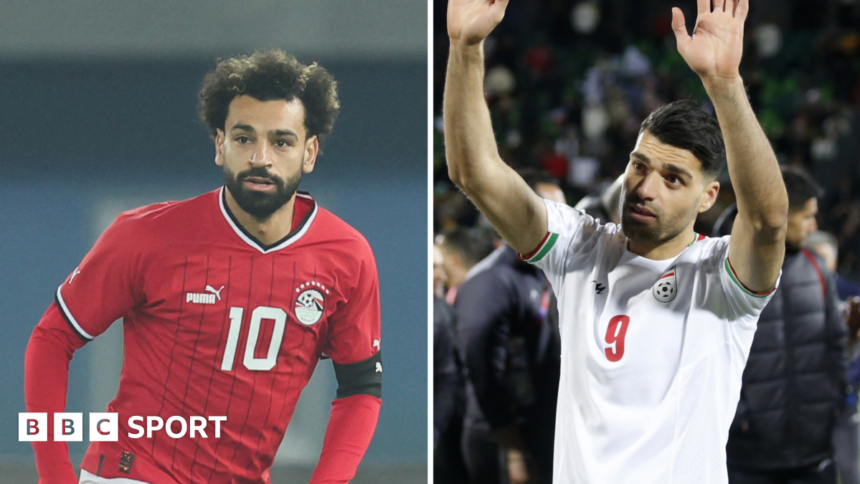
The beautiful game has a profound, and often painful, relationship with social progress. As the global football community turns its gaze toward the 2026 FIFA World Cup in North America, a single scheduled match has become a litmus test for the sport’s commitment to inclusion. Local organizers in Seattle have designated the Group B clash between Egypt and Iran at Lumen Field on June 26, 2026, as the tournament’s official “Pride Match,” a central celebration of the LGBTQ+ community. This planned celebration, conceived before the competing nations were even known, now collides with a stark institutional memory: FIFA’s own 2022 Qatar World Cup directive urging visitors to “respect the culture” of a host nation where homosexuality is criminalized. The resulting tension presents FIFA with an unavoidable choice: will it champion inclusion or retreat to a stance of cultural relativism?
A Stark Contrast: From Doha’s Warnings to Seattle’s Welcome
The shadow of Qatar 2022 looms large over this conversation. In the lead-up to that tournament, FIFA and Qatari officials repeatedly emphasized the need for fans and players to conform to local laws and customs, a message that effectively silenced overt LGBTQ+ expression. The “OneLove” armband saga, where multiple European federations faced the threat of sporting sanctions for their captains wearing the inclusivity symbol, became the defining image of that suppression. Fast forward to 2026, and the script is being flipped by host cities themselves. Seattle’s proactive declaration of a Pride Match is a bold, values-driven statement. As Grant Wahl, a member of the advisory committee for the 2026 Pride Match, stated in his ‘We welcome you’ address, the event is designed to be an open embrace. This creates a direct challenge to FIFA’s past posture. The governing body is now being urged to “do the right thing” and not only allow but actively support these celebrations, finally aligning its actions with its own stated principles of non-discrimination.
Expert Analysis: Navigating the Geopolitical Minefield
The complexity of this fixture cannot be overstated. By sheer coincidence of the draw, the Pride Match will feature two nations—Egypt and Iran—with documented records of discrimination against LGBTQ+ individuals. This presents a multifaceted challenge:
- Player Safety and Focus: Players from these nations may face immense pressure from their home federations, governments, and media to avoid any perceived endorsement of the event. Their mental well-being and ability to compete in a potentially charged atmosphere must be considered.
- Fan Experience and Security: The match will attract a diverse crowd: local LGBTQ+ supporters and allies celebrating pride, alongside fans from Egypt and Iran with potentially contrasting views. Robust, sensitive security planning is paramount to ensure a safe environment for all.
- FIFA’s Diplomatic Tightrope: FIFA positions itself as a global, apolitical entity. Supporting the Pride Match openly could be framed as taking a political stance against the cultures of member associations. However, experts argue that human rights are universal, not political. FIFA’s own statutes forbid discrimination based on sexual orientation, creating a legal and moral imperative to act.
The core question is whether FIFA will treat “respect the culture” as a two-way street. In 2026, the local culture in Seattle and across the United States, Canada, and Mexico is one that increasingly champions LGBTQ+ inclusion. Will FIFA respect that host culture with the same vigor it demanded respect for Qatari culture?
Predictions: Scenarios for the 2026 Pride Match
How will this unprecedented situation unfold? Several scenarios are plausible, each with significant ramifications for FIFA’s legacy.
Scenario 1: Full-Throated FIFA Endorsement. FIFA actively promotes the Pride Match, allows rainbow imagery throughout Lumen Field, and ensures no sanctions for players or federations engaging with the theme. This would be a historic, unequivocal victory for inclusion, signaling a new era for FIFA under its current leadership. It would also likely provoke fierce diplomatic backlash from certain member associations.
Scenario 2: Passive Permission. The most likely outcome. FIFA allows Seattle organizers to proceed but maintains a low institutional profile. It may issue vague statements supporting “inclusion” while avoiding direct association with the Pride Match branding. This would be a classic bureaucratic compromise, satisfying neither side completely but allowing the event to happen without FIFA taking a bold stand.
Scenario 3: Quiet Pressure and Dilution. Behind the scenes, FIFA could pressure local organizers to soften the Pride Match branding, citing “sensitivities” of the competing teams or a desire for “neutrality.” This would be seen as a profound betrayal by LGBTQ+ advocates and a reversion to the Qatar 2022 mindset, damaging FIFA’s credibility in the West.
Scenario 4: On-Field Statements. Regardless of FIFA’s official stance, watch for potential symbolic actions from players. An Iranian player taking a knee, or an Egyptian player displaying a subtle symbol of support, could create a powerful, player-driven moment that transcends organizational politics.
The Path Forward: A Defining Moment for Global Football
The 2026 Pride Match is more than a celebration; it is a reckoning. FIFA’s decision will define its character for a generation. To grant its full, unapologetic support is to finally prioritize its moral compass over diplomatic convenience. It would send a clear message that the organization’s commitment to non-discrimination is not situational—it does not apply only in host countries where it is easy or convenient.
The argument is not about disrespecting the cultures of Egypt or Iran, but about upholding the universal culture of football itself—a culture that should be built on respect, fairness, and a place for everyone. The pitch is a world unto itself, governed by a single set of laws. FIFA must decide if the values of inclusion are part of those fundamental laws of the game.
The 2026 World Cup Pride Match is FIFA’s chance to correct the failures of 2022. It is an opportunity to move from asking marginalized communities to hide, to proudly telling them, “We welcome you.” The world will be watching. The beautiful game’s soul depends on the choice FIFA makes. Will it respect the culture of fear and exclusion, or will it champion the culture of courage and belonging? For the sake of football’s future, the answer must be the latter.
Source: Based on news from BBC Sport.