Rooney Sounds Alarm: Maresca’s Cryptic Chelsea Comments Risk Owner “Protection”
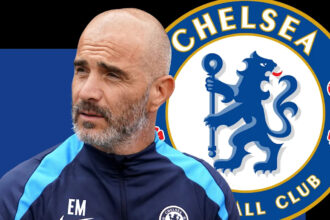
The pressure cooker of Premier League management doesn’t just test tactics and team selection; it probes the very art of communication. A single post-match soundbite can unravel weeks of progress, a lesson new Chelsea boss Enzo Maresca may be learning the hard way. Following cryptic comments from the Italian that appeared to critique the club’s hierarchy, a heavyweight voice from the Premier League pantheon has issued a stark warning. Wayne Rooney, a man who has navigated the intense scrutiny at Manchester United and Everton, believes Maresca has dangerously crossed a line, potentially forfeiting the crucial “protection” from Chelsea’s demanding ownership.
The Incident: Maresca’s Mysterious Message
While the exact comments that sparked the controversy are varied in reports, the essence revolves around Maresca making pointed remarks about the challenges of his role, seemingly referencing a lack of backing or understanding from above. This followed a period of mixed results for the Blues, where the stylistic promises of his possession-heavy “idea” have clashed with the brutal pragmatism required for Premier League points.
For a club like Chelsea, where the Todd Boehly-Clearlake Capital consortium has shown a ruthless streak in dismissing managers for failing to meet immediate objectives, such public ambiguity is seen as a cardinal sin. Rooney, dissecting the episode on his podcast, drew a direct parallel to another high-profile Premier League tension.
“It was very similar to the Mo Salah situation last week where it was very premeditated,” Rooney stated, referencing the Liverpool star’s heated exchange with manager Jurgen Klopp. “He knows exactly what he is saying. The board and owners at Chelsea will know it is aimed at them.”
This analysis cuts to the heart of the issue. In the modern game, where every word is dissected on social media within seconds, there is no room for accidental ambiguity at this level. Rooney’s claim suggests Maresca’s words were a deliberate, calculated signal of discontent—a move Rooney views as fundamentally flawed.
Rooney’s Verdict: A Breach of Football’s Unwritten Code
Wayne Rooney’s perspective is forged in the fires of England’s biggest clubs. His analysis extends beyond tactical nuance into the fragile power dynamics between a manager and his employers. He frames Maresca’s actions not just as a misstep, but as a breach of a core footballing principle: respect for the chain of command.
“You’ve got to respect the owners of a football club,” Rooney emphasized. “They employ you and bring you in, so it’s their way and I feel he’s gone a bit against that.”
This “their way” philosophy is particularly potent at the new Chelsea. The ownership has pursued a bold, data-driven strategy centred on acquiring young talent with high potential resale value. The manager is, in their model, a head coach tasked with developing that project on the pitch. Public criticism, however veiled, is interpreted as a challenge to the entire structure. Rooney implies that by stepping outside the private channels of communication, Maresca has weakened his own position, making himself vulnerable at the first sign of sustained poor results.
Rooney also speculates on the root cause, suggesting it stems from a feeling of insecurity despite achievements. “It is something that’s clearly happened, whether it’s a disagreement or he feels his job is under pressure. He doesn’t feel it should be because of the two trophies he’s won and the points he’s picked up.” This touches on the unique paradox at Chelsea: can a manager ever feel secure, even after delivering silverware? The precedent suggests not.
The High-Stakes Game of Manager-Owner Relations
Maresca’s situation highlights the precarious tightrope modern managers must walk. The need to manage upwards is as critical as managing the dressing room. When does a manager’s fight for backing become a suicidal stand against the owners?
- The “Protection” Factor: Rooney’s key warning is about the loss of “protection.” This is the vital buffer owners can provide during inevitable rough patches. Once that is gone, every defeat is magnified, and every fan protest finds a sympathetic ear in the boardroom.
- The Chelsea Context: At Stamford Bridge, this dynamic is amplified. The owners have invested billions and demand a return. The project is long-term, but the patience for managers is notoriously short-term. Maresca, championing a deliberate style of play, needs time—a commodity rarely granted in SW6.
- The Media as a Weapon: Using the press to send messages is a dangerous game. It can be a powerful tool to rally public support, but as Rooney infers, it can also be seen as an act of mutiny if it backfires. The calculation is perilous.
This incident reveals Maresca, a relatively novice manager at the highest level, potentially misjudging the political landscape. While his frustration at external noise or internal constraints may be valid, the method of expressing it could prove career-limiting.
What Comes Next for Maresca and Chelsea?
The fallout from this episode will be determined by results. The Premier League is the ultimate judge and jury. However, Rooney’s intervention frames the narrative around Maresca’s tenure in a new, more precarious light.
Potential Outcomes:
A Swift Mend: The most likely immediate path is a behind-closed-doors clarification. Maresca may meet with sporting directors Paul Winstanley and Laurence Stewart to smooth things over, insisting his comments were misinterpreted. A string of positive results would quickly bury the story.
The Persistent Shadow: If results wobble, these comments will be resurrected as the first crack in the relationship. They become Exhibit A in the case for his dismissal, proof he was “not on board with the project.” The loss of owner faith Rooney mentions becomes a tangible millstone.
A Point of No Return: In a worst-case scenario, this could be the beginning of a rapid divorce. Should Chelsea’s form dip severely, the owners may decide Maresca is not only struggling tactically but is also a political liability. His premeditated comments, as Rooney called them, would then be seen as the first act of defiance justifying a swift change.
Chelsea’s project under this ownership is still in its formative stages, but the pattern with managers is already well-established. Maresca arrived as a disciple of Pep Guardiola, promising a clear “idea.” Yet, Rooney’s analysis suggests that in his attempt to defend that idea, he may have compromised the very foundation of his employment. In the ruthless theatre of modern football, where owners wield unprecedented power, the manager’s press conference podium can sometimes feel less like a platform and more like a plank. Wayne Rooney, a veteran of countless wars, has just pointed out that Enzo Maresca may have voluntarily stepped onto it.
Source: Based on news from Yahoo Sports.