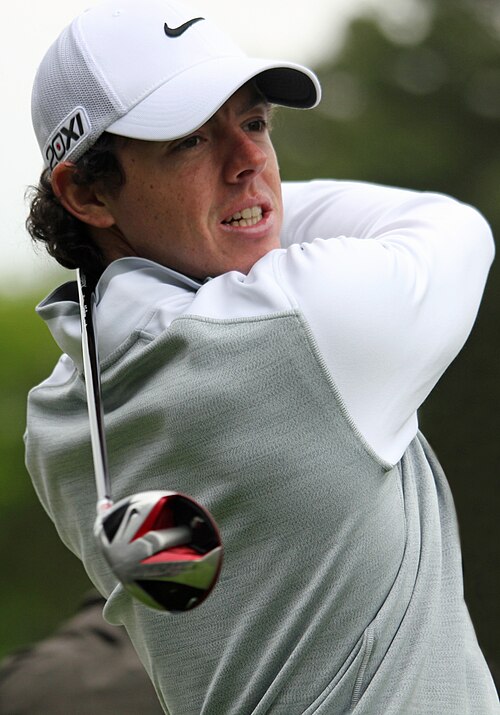
Rory McIlroy Signals Shift: Why Welcoming LIV Golf Defectors Back Is ‘Good Business’ for the PGA Tour
In a move that signals a dramatic recalibration of the golf landscape, Rory McIlroy has openly acknowledged that the PGA Tour should consider the return of players from the rival LIV Golf circuit as a matter of ‘good business’. The six-time major champion’s comments, made Friday after the second round of the Truist Championship in Charlotte, mark a notable softening of his previously hardline stance against the breakaway league and its defectors.
McIlroy, long seen as one of the most vocal defenders of the PGA Tour during the bitter schism with LIV Golf, now appears to be reading the tea leaves of a shifting financial reality. With Saudi Arabia’s Public Investment Fund (PIF) reportedly pulling its direct financial backing after this year, the future of LIV is clouded in uncertainty. And for McIlroy, pragmatism is now trumping principle.
“It’s a question if (players) do want to come back,” McIlroy said, reflecting on the potential for reintegration. “Obviously we have seen the quotes over the last few days. And, you know, it seems like … it all depends on what happens to LIV. But if it is a scenario where they have the option to come back and play on the traditional tours, you know, I think Brian Rolapp has said anything that makes this Tour stronger, anything that makes the DP World Tour stronger, I think everyone should be open to that. That’s just good business practice.”
This is not the same Rory McIlroy who once declared he would “rather retire” than play alongside LIV defectors. This is a mature, pragmatic leader recognizing that the golf ecosystem is too fractured to sustain indefinitely. Let’s break down what this means for the future of professional golf.
The Great Softening: From ‘Dead to Me’ to ‘Good Business’
To understand the seismic nature of McIlroy’s latest comments, one must revisit the past two years. McIlroy was the face of the PGA Tour’s resistance, often using his platform to criticize the 54-hole, no-cut format of LIV Golf and the players who jumped ship for guaranteed riches. He famously called the defectors “duplicitous” and claimed the Saudi-backed league was a threat to the sport’s integrity.
Yet, the landscape has changed. The initial shock and anger have subsided, replaced by a cold, hard look at the business of golf. The proposed “framework agreement” between the PGA Tour, DP World Tour, and PIF has stalled, but the door for reunification has never been completely shut. McIlroy’s recent admission that he was “too judgmental” of LIV players earlier in the process was the first crack in the armor. Now, he’s openly advocating for a pragmatic reunion.
“I think everyone sort of knows my views on LIV and where it stands in the game of golf. I don’t think I need to rehash any of that,” McIlroy added. “It’s never been for me and, look, it doesn’t mean that LIV is going to go away. They’re going to go and try and find alternative investment, whatever that may look like.”
This is a critical admission. McIlroy is no longer betting on LIV’s demise. Instead, he is preparing for a scenario where the PGA Tour must coexist—or reabsorb—the talent that left. And he sees a clear financial upside.
The Business Case for Reunification
McIlroy’s reference to Brian Rolapp, the PGA Tour’s CEO, is telling. Rolapp has consistently emphasized that the Tour’s primary goal is to emerge from this conflict stronger than before. From a pure business perspective, bringing back the LIV Golf defectors makes undeniable sense.
Consider the following factors that make reintegration a ‘good business’ move:
- Star Power Returns: Names like Jon Rahm, Brooks Koepka, Bryson DeChambeau, and Phil Mickelson still move the needle. Their absence has diluted the strength of field at many regular PGA Tour events, reducing TV ratings and sponsor interest.
- Sponsor Confidence: Corporate partners are eager for stability. A fractured golf world creates uncertainty. A unified product—with the best players competing weekly—is far easier to sell to broadcasters and advertisers.
- Global Reach: The DP World Tour has been hit especially hard. If top LIV players return to the European circuit, it revitalizes the pathway for young European talent and strengthens the Ryder Cup ecosystem, which is the sport’s crown jewel.
- Legal & Financial Closure: The ongoing lawsuits and player suspensions have been a drain on resources. A structured return would end the litigation and allow the Tour to focus on growth rather than defense.
McIlroy’s shift is not about forgiveness; it is about economics. He understands that the PGA Tour cannot afford to be the “weaker” product. If LIV folds or restructures, the Tour must be ready to absorb its talent quickly to prevent a third-party investor from creating another rival league.
What Happens to LIV Golf’s Roster?
The biggest question mark remains the fate of the players themselves. Many signed multi-year, guaranteed contracts with LIV Golf. If the PIF pulls funding, those contracts become void or renegotiable. McIlroy acknowledged this uncertainty, noting that LIV will “go and try and find alternative investment.”
However, the path back to the PGA Tour is not without obstacles. The Tour has already established a “Player Impact Program” and elevated event structures that reward loyalty. Many fans and players still harbor resentment toward those who left for LIV. A blanket amnesty is unlikely.
Here are the most likely scenarios for reintegration:
- Structured Re-entry: Players may be required to serve a suspension period, pay fines, or donate a portion of their LIV earnings to charity or the PGA Tour’s pension fund.
- Limited Status: Defectors may not automatically regain full Tour status. They might need to earn their way back through sponsor exemptions, qualifying tournaments, or a special “reinstatement” category.
- Hybrid Model: Some experts predict a future where LIV exists as a limited-event “world tour” under the PGA Tour umbrella, similar to the current relationship with the DP World Tour. This would allow the Saudi investment to remain in golf without disrupting the traditional season.
McIlroy’s tone suggests he is open to a graceful exit for LIV players. “If it is a scenario where they have the option to come back and play on the traditional tours… I think everyone should be open to that,” he said. This is a far cry from the “dead to me” rhetoric of 2022.
Expert Analysis: The Power of Pragmatism
As a sports journalist who has covered this saga from the first rumblings in 2021, I can tell you this: Rory McIlroy is the canary in the coal mine. When the most principled opponent of LIV starts talking about “good business practice,” the chess game has changed.
McIlroy’s evolution is not weakness; it is leadership. He sees that the sport is bleeding money and attention. The constant drama of “us vs. them” is exhausting for fans and damaging for the product. By publicly endorsing a pragmatic return, McIlroy is giving cover to other Tour loyalists who may have been privately hoping for the same thing.
Furthermore, McIlroy’s comments come at a time when the PGA Tour is negotiating its own new media rights deal. The value of that deal is directly tied to the quality of the product. A Tour that includes Rahm, Koepka, DeChambeau, and McIlroy competing weekly against Scottie Scheffler and Xander Schauffele is a product that commands a premium price. A Tour that is missing half its stars is a discount product.
Prediction: Within the next 12 to 18 months, we will see a formal pathway for LIV players to return to the PGA Tour. It will likely involve financial penalties and a phased return, but the door is now wide open. McIlroy’s “good business” comment is the final signal that the war is over. The reconstruction has begun.
Conclusion: A New Chapter for Golf
Rory McIlroy’s admission that bringing back LIV Golf players is “good business” is more than just a headline. It is a strategic pivot that redefines the next decade of professional golf. The era of absolute division is ending, replaced by a cold, calculated calculation of what is best for the sport’s bottom line.
The fans, ultimately, are the winners. The prospect of seeing a unified leaderboard again—where the best players in the world compete head-to-head without asterisks or boycotts—is the future that everyone has been waiting for. McIlroy, the former crusader, is now the architect of that peace.
As he walked off the course at the Truist Championship, tied for eighth and still chasing his next major title, McIlroy left no doubt: the game of golf is finally ready to heal. And it’s not personal. It’s just business.
Source: Based on news from Deadspin.
Image: CC licensed via commons.wikimedia.org