Ruben Amorim’s Manchester United Dream Ends: Darren Fletcher Steps Into the Breach
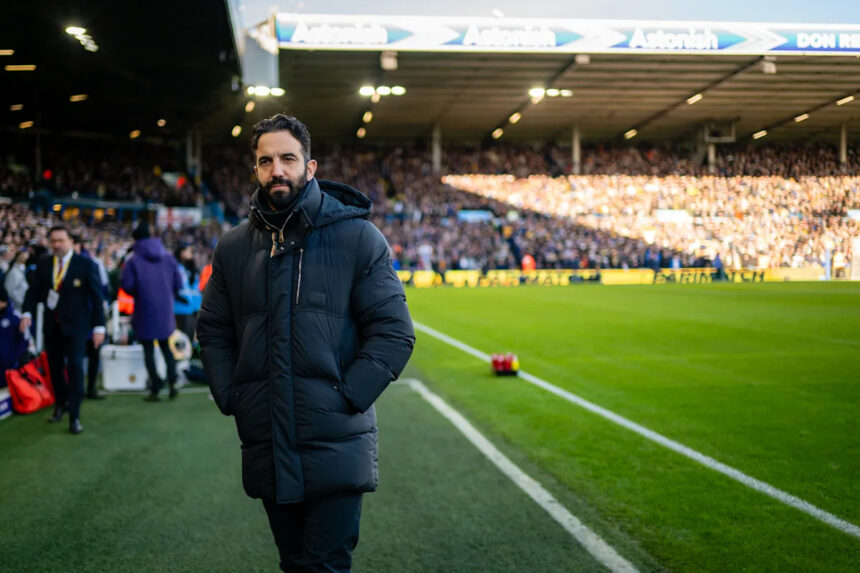
The Ruben Amorim era at Manchester United is over, cut short after a turbulent 47-game tenure that promised tactical revolution but delivered only stagnation and strife. In a terse Monday morning statement, the club confirmed the Portuguese coach’s departure, installing former midfielder and current Technical Director Darren Fletcher as interim manager. The move, while sudden, feels like the inevitable culmination of weeks of mounting tension, poor results, and a damning statistical record that ultimately proved indefensible. Fletcher’s first task is to steady a listing ship for Wednesday’s crucial Premier League encounter with Burnley, with United’s European ambitions hanging by a thread.
A Project Unraveled: The Cold, Hard Numbers Behind the Sacking
While the final days were dominated by public friction, the decision to sack Ruben Amorim was rooted in a performance ledger that fell disastrously short of Manchester United’s expectations. The club’s statement pointed to “underperformance against strategic objectives,” and the data paints a stark picture of a team that lost its identity and its way.
Amorim’s record of just 15 wins from 47 Premier League games is, by itself, a sackable offense for a club of this stature. However, a deeper dive reveals a more troubling pattern. His side exhibited a chronic inability to break down organized opposition. When matches against the traditional ‘top six’ and newly promoted sides are removed, Amorim’s United won just seven of 28 matches against the Premier League’s established middle class. This points to a tactical rigidity that better-prepared opponents easily nullified.
Furthermore, the team’s attacking impotence became a hallmark. They failed to score in nearly 30 percent of all Premier League matches under his guidance, a shocking figure for a squad containing attacking talent. The much-heralded 3-4-2-1 system, which brought Amorim success at Sporting CP, never consistently translated to the Premier League, often leaving United’s forwards isolated and the midfield overrun.
- Win Rate: A mere 32% in the Premier League.
- Goalscoring Woes: Blanked in 14 of 47 league games.
- Mid-Table Struggles: Consistently dropped points against teams outside the elite.
From Press Conference Powder Keg to Point of No Return
The statistical failure created the kindling, but the explosive press conferences surrounding the Leeds United match provided the spark. In the days leading up to the game, Amorim’s demeanor was described as detached and frustrated. After a tense 1-1 draw, he lit the fuse.
In a remarkable breach of club protocol, Amorim directly called out Director of Football Jason Wilcox by name, stating he felt “the support from certain areas of the club has not been as promised.” This public airing of grievances was a clear point of no return. It confirmed reports that, despite a summer spend exceeding £200 million on prime-age players and a further £20 million in January for specialist wing-back Patrick Dorgu, Amorim felt betrayed by the hierarchy. His argument centered not on the amount spent, but on not getting *his* specific targets to fully execute his system—a classic and often fatal disconnect between a manager’s vision and a recruitment department’s strategy.
The board, faced with a manager publicly challenging a key executive while simultaneously failing to get results on the pitch, had only one viable option. The contentious press conferences made his position untenable, transforming a footballing decision into a necessary act of corporate preservation.
The Fletcher Interim: A Safe Pair of Hands or a Bold New Direction?
In stepping up, Darren Fletcher represents a stark contrast to his predecessor. Where Amorim was an external, ideological appointment, Fletcher is club heritage personified. A five-time Premier League winner with United as a player, he has served as a coach and Technical Director, giving him an intimate understanding of the club’s culture, its current squad, and the pressures of the role.
His immediate mandate is clear: restore stability, simplify the message, and reconnect the dressing room. He is unlikely to insist on a complex 3-4-2-1 system, potentially reverting to a more familiar back four and seeking to unleash the individual qualities of United’s attacking players. As a former midfielder, his focus will likely be on shoring up a soft center and improving the team’s tempo and fight.
However, Fletcher’s challenge is immense. The league table presents a paradox: United sit sixth, just outside the Champions League places on goal difference, yet they are also a mere four points above 14th-place Crystal Palace. This precarious position means every match carries enormous weight. The squad is a blend of expensive misfits, inconsistent stars, and youthful promise, and Fletcher must find a formula to secure points immediately. His interim period will be judged on whether he can stop the rot and provide a platform for a late push for Europe, or if the team’s fragile confidence collapses entirely.
What’s Next for United? Navigating a Critical Crossroads
The appointment of Fletcher on an interim basis suggests the club is buying time to conduct a thorough search for a permanent successor. This next appointment will be the most critical in a decade. The failed Amorim experiment proves that a “project” manager with a strict system cannot succeed without absolute, unwavering alignment from the top down.
The new manager, whether it’s a proven winner or another rising star, will demand clarity on the club’s sporting direction. The power dynamic between the manager, the Director of Football (Jason Wilcox), and the incoming CEO (Omar Berrada) must be clearly defined. The summer transfer window will be a huge test of this new structure.
Predictions for the Fletcher Tenure:
Expect a short-term bounce in morale and effort. Fletcher’s connection to the club’s glory days will resonate with fans and players initially. Results will be mixed, but the football will likely become more direct and passionate. His success will be measured less by a top-four finish—a tall order—and more by whether he leaves the squad in a cohesive, fighting state for the next permanent boss.
The conclusion is inescapable: Ruben Amorim’s sacking is a story of a philosophical mismatch that deteriorated into public warfare, all underpinned by a catastrophic failure to win football matches. His project, bold in conception, proved brittle in execution. Now, Darren Fletcher, a son of the club, is tasked with applying a tourniquet. He must use his deep-rooted understanding of United to provide the stability and identity that Amorim so conspicuously lost. For the Glazers and the new football leadership, this episode must serve as a painful lesson: vision without results is empty, and alignment from boardroom to pitch is not a luxury—it is the very foundation of success at a club where the margins for error have never been smaller.
Source: Based on news from Yahoo Sports.