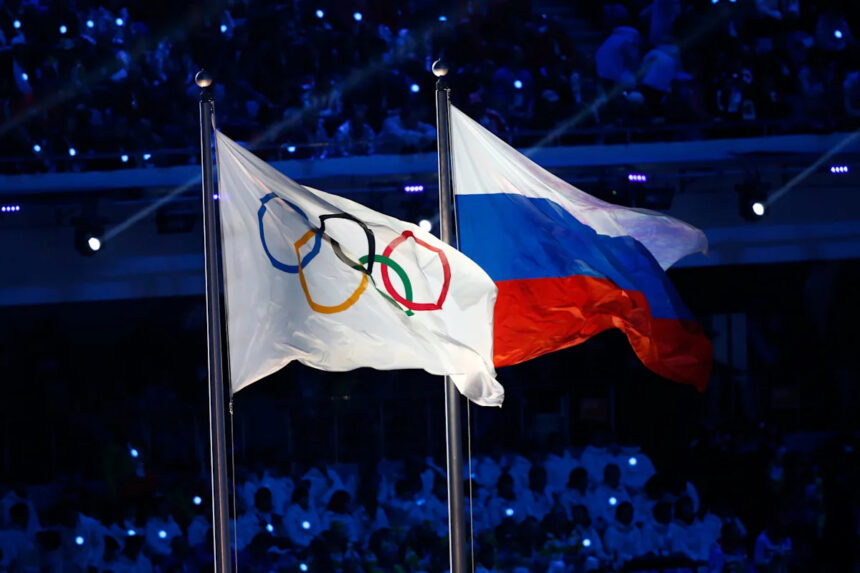
Russia and Belarus to Compete Under Own Flags at 2026 Paralympics, Marking Controversial Return
In a decision that reshapes the geopolitical landscape of international sport, the International Paralympic Committee (IPC) has confirmed that Russia and Belarus will participate under their own national flags at the Milano Cortina 2026 Paralympic Winter Games. This announcement, following a complex series of legal and membership battles, ends a ban imposed after Russia’s 2022 invasion of Ukraine and sets the stage for a Games fraught with political tension and sporting consequence. A combined contingent of just ten para-athletes from the two nations is expected, but their presence will loom large over the event.
The Road to Reinstatement: A Timeline of Legal and Political Maneuvers
The path to this moment has been neither straightforward nor universally accepted. The initial ban by the IPC and most international sports federations was a direct response to the war in Ukraine and aimed to uphold the Olympic Truce. However, the landscape shifted dramatically in late 2025 and 2026 through a combination of member votes and legal challenges.
The critical turning points were:
- September 2025 IPC General Assembly: Member organizations voted to lift the partial suspensions of the Russian Paralympic Committee and the National Paralympic Committee of Belarus, restoring their full membership rights. This made them technically eligible for the Games.
- Sport-Specific Federation Bans: Despite the IPC’s move, the individual International Federations governing each Paralympic sport maintained their own bans, creating a significant barrier to entry.
- The CAS Landmark Decision (December 2025): Russia and Belarus won a crucial appeal at the Court of Arbitration for Sport (CAS) against the International Ski and Snowboard Federation (FIS). This ruling effectively forced FIS, and by precedent other federations, to open qualification pathways.
As the IPC stated, this legal sequence made both National Paralympic Committees “eligible to apply for bipartite slots through FIS” for the winter sports program. The small number of athletes—ten in total—reflects the truncated and contentious qualification process they faced.
Expert Analysis: The Implications for the Paralympic Movement and Beyond
This development is more than a simple administrative update; it represents a seismic shift with profound implications. From a sporting governance perspective, the CAS decision has asserted its authority, potentially limiting the power of individual federations to impose blanket bans based on geopolitical criteria. This creates a complex precedent for future conflicts.
Furthermore, the return under national flags—as opposed to the neutral status imposed on some Russian and Belarusian athletes in other recent competitions—is a highly symbolic victory for Moscow and Minsk. It frames their participation not as a privilege granted by the international community, but as a right successfully litigated and won. This distinction will undoubtedly fuel debate about the separation of sport and state, a principle already under immense strain.
The impact on the Milano Cortina Paralympics atmosphere is a primary concern for organizers. While the IPC has emphasized its commitment to a “unified and peaceful world through sport,” the presence of these delegations will test that unity. Protests, both subtle and overt, from other athletes or nations are a distinct possibility. The focus for many will be on ensuring the Games remain a celebration of para-athletic excellence, but the political undercurrent will be unavoidable.
Predictions for Milano Cortina and the Future of International Sport
The 2026 Winter Paralympics will now be a pivotal case study in reintegration. The small size of the Russian and Belarusian delegations may mitigate some operational friction, but each medal ceremony featuring their flags and anthems will be a globally televised moment loaded with meaning.
We can anticipate several key developments:
- Increased Scrutiny on Athlete Conduct: Any perceived political gesture or comment from athletes or officials of these delegations will be magnified and could trigger immediate disciplinary action from the IPC.
- Potential for Boycotts or Protests: While unlikely to be formal, individual athletes or teams may choose symbolic gestures, such as avoiding podiums or interviews, to express their stance. Ukraine’s team, in particular, will compete under extraordinarily difficult circumstances.
- A New Precedent for Olympic Sport: All eyes will now turn to the International Olympic Committee (IOC) and the 2026 Winter Olympics. The Paralympic precedent, driven by a CAS ruling, increases pressure for a similar reinstatement for the Olympic Games, though the IOC maintains its own independent authority.
- Long-Term Fractures: This episode may deepen divisions within the global sports community, with some nations and federations viewing the return as a necessary normalization, and others seeing it as a moral failure that rewards aggression.
A Fraught Conclusion: Sport in a Divided World
The return of Russia and Belarus to the Paralympic fold under their own flags is not a resolution, but the opening of a new and contentious chapter. It is the product of legal triumph rather than diplomatic reconciliation. The Milano Cortina 2026 Paralympic Winter Games will now serve as the arena where this difficult reality is performed on a global stage.
The core mission of the Paralympic Movement—to showcase the extraordinary power of the human spirit—faces one of its greatest tests. Can the athletic achievements of ten individuals transcend the profound geopolitical rift their nations represent? The world will be watching, not just the results on the slopes and the snow, but the interactions, the ceremonies, and the silent messages sent from every corner of the Games. The hope for a unified celebration of sport remains, but it is now tempered by the hard truth of a divided world, where even the pinnacle of athletic competition cannot fully escape the shadows of conflict. The legacy of Milano Cortina will be defined by how it navigates this impossible balance.
Source: Based on news from Yahoo Sports.