Russia’s Olympic Payback: Cash Payouts for Banned Winter Athletes Ignite Political Firestorm
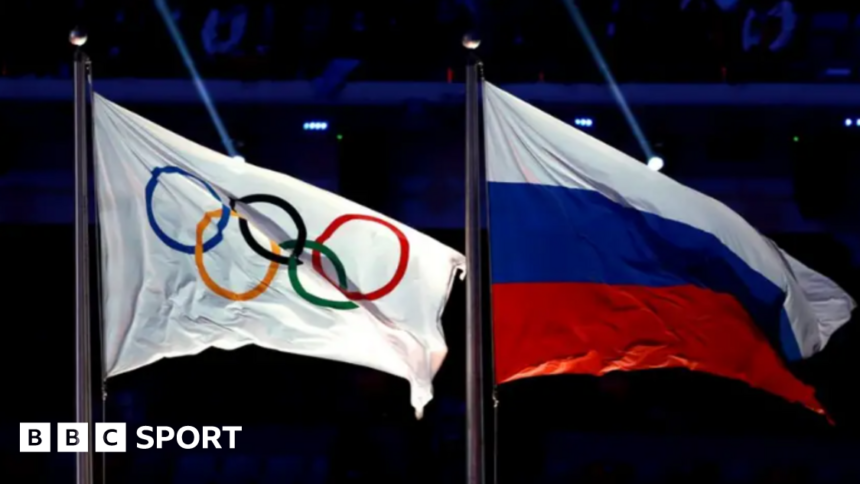
In a move that blurs the lines between athlete welfare and geopolitical defiance, the Russian Olympic Committee (ROC) has announced it will issue monetary awards to 116 athletes barred from competing at the recent Winter Olympics in Milan-Cortina. This decision, framed by Russian officials as compensation for “treacherous political decisions,” represents a new front in the ongoing collision between sport and state, four years after the invasion of Ukraine triggered widespread bans. As the dust settles on an Olympics that saw a mere 13 Russians compete as neutrals, this financial gesture is less about consolation and more about a calculated statement, challenging the very foundations of international sport’s sanction regime and raising profound questions about the future of athletic neutrality.
The Sanctions Era: A Timeline of Athletic Exile
To understand the weight of the ROC’s payout, one must revisit the seismic shift that fractured the sporting world. Following Russia’s full-scale invasion of Ukraine in February 2022, a near-universal consensus emerged among global sports bodies. The International Olympic Committee (IOC) recommended the exclusion of Russian and Belarusian athletes and officials, a call heeded by the vast majority of International Federations.
The landscape of elite competition transformed overnight. Russian teams were banned from football’s World Cup, the athletics world championships, and the ice hockey world championships, among countless others. The athlete ban was not merely symbolic; it was a comprehensive isolation aimed at denying Russia the soft-power platform of international sport. For winter sports athletes, whose careers hinge on a four-year Olympic cycle, the timing was particularly devastating. Many saw their lifetime dreams for the 2022 Beijing and 2026 Milan-Cortina Games evaporate.
The IOC’s subsequent creation of a pathway for Individual Neutral Athletes (AINs) – competitors without national symbols, anthems, or flags, and who expressly did not support the war – offered a sliver of opportunity. Yet, the process was stringent and politically fraught. Only 13 Russian athletes ultimately met the strict neutrality criteria for the 2026 Winter Games, a tiny fraction of the nation’s typical delegation.
The ROC’s Counter-Stroke: Payments as Political Instrument
The announcement by Russian Sports Minister and ROC chairman Mikhail Degtyarev is a masterclass in political messaging. By awarding “monetary bonuses” to the 116 banned athletes, the Russian state accomplishes several objectives simultaneously.
- Domestic Narrative Control: It positions the Russian state, not the international sports community, as the ultimate patron and protector of its athletes. This reinforces a siege mentality and redirects athlete frustration outward.
- Undermining Neutrality: The payment directly contrasts with the IOC’s neutral athlete framework. It signals to Russian athletes that loyalty to the state is more valuable—and lucrative—than competing under a neutral banner, potentially discouraging future applications for neutral status.
- Challenging Sanction Efficacy: The move attempts to negate the punitive financial impact of bans on athletes, suggesting Russia can simply create its own parallel system of reward.
“This is not a goodwill gesture; it’s a geopolitical maneuver,” notes Dr. Anya Petrova, a senior fellow specializing in sport and politics at the Global Institute for International Studies. “The Kremlin is weaponizing athlete grievance. By cutting these checks, they are making a clear statement: ‘The West can deny you a podium, but we will give you a paycheck. Your value is tied to the motherland, not the Olympic Charter.’ It effectively turns these athletes into pawns in a much larger information war.”
The cash payments serve as a potent symbol of resistance, creating an alternative economy of prestige that exists entirely outside the Western-led Olympic structure.
Expert Analysis: The Unraveling of “Neutral Sport”?
This development exposes the deepening cracks in the concept of politically neutral sport. The IOC’s neutral athlete pathway was always a precarious compromise, an attempt to balance the principle of athlete inclusivity with the need for political accountability. Russia’s payout scheme aggressively tests that compromise.
“The fundamental assumption of the neutral athlete model is that an individual can be separated from the state,” explains sports sociologist Professor Liam Carter. “Russia is now explicitly rejecting that. By financially rewarding those who were excluded *because* of their state’s actions, they are re-forging that link. It asks: can an athlete truly be neutral when their home government is so actively involved in crafting the narrative around their exclusion?”
Furthermore, this action risks creating a two-tier system among Russian athletes themselves: a small group who competed neutrally in Milan-Cortina, and a larger, state-compensated group who did not. This could sow internal division or, conversely, increase social pressure on neutral athletes, painting them as less patriotic for having engaged with the “treacherous” international system.
The Russian Olympic Committee is leveraging financial power to control the story, ensuring that the dominant narrative within Russia is one of state-sponsored support in the face of unjust persecution, rather than one of athletic isolation due to geopolitical aggression.
Future Predictions: Escalation and a Fractured World Stage
The ROC’s decision is unlikely to be an endpoint, but a catalyst for further escalation. Several key developments are now on the horizon.
- Retaliatory Measures from Sports Bodies: The IOC and International Federations may view these payments as a form of undue state interference and association, potentially further tightening eligibility rules for any future neutral athletes from Russia.
- Normalization of Parallel Systems: Russia, possibly alongside allies like Belarus, may accelerate the development of its own “friendship games” or expanded BRICS sports festivals, offering prize money and glory as an alternative to the traditional Olympic circuit.
- Increased Pressure on Neutral Athletes: Athletes considering a neutral path for the 2028 Los Angeles Summer Games will now do so under the shadow of this state-endorsed financial reward for those who stay home. Their choice becomes more politically charged than ever.
- Legal and Ethical Challenges: Questions may arise about the tax implications and ethical standing of athletes accepting state payments tied directly to an internationally condemned war.
The dream of a unified, apolitical global games is fading. We are moving toward a bifurcated model of international sport, where geopolitical blocs host their own premium events, and the Olympics risks becoming just one option among others for nations in opposition to the current world order.
Conclusion: Medals, Money, and the New Cold War in Sport
The Russian Olympic Committee’s decision to pay its banned winter athletes is a watershed moment. It transcends athlete compensation and enters the realm of symbolic warfare. This is not merely about reimbursing lost potential earnings; it is about rejecting the legitimacy of the sanctions themselves and constructing a counter-narrative of resilience and state loyalty.
The action ensures that the invasion of Ukraine will have a lasting, tangible legacy in the world of sports, long after the final medals were awarded in Milan-Cortina. It sets a precedent where athletic success and participation are no longer the ultimate currencies; instead, political fealty and contribution to a national story of defiance are rewarded directly by the state.
As the world looks ahead to Los Angeles 2028, the rules of engagement have changed. The battlefield is no longer just the track or the slope, but the very structures of international sport. Russia’s payout is a bold opening move in a new, protracted game where the stakes are nothing less than the soul and future of the Olympic movement itself. The finish line for this conflict is nowhere in sight.
Source: Based on news from BBC Sport.