Salah’s Anfield Return: A Roar of Reconciliation After a Week of Turmoil?
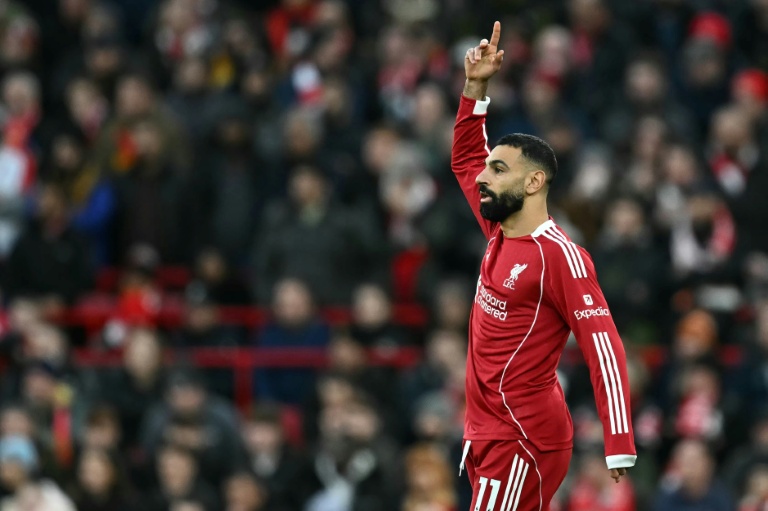
The roar that greeted his introduction said everything about his standing and nothing about the preceding week’s chaos. When Mohamed Salah peeled off his tracksuit and entered the Anfield fray in the 26th minute against Brighton, replacing the injured Joe Gomez, the sound was one of unadulterated affirmation. Just seven days earlier, the Egyptian King had launched explosive comments at the club hierarchy and manager Arne Slot, accusing Liverpool of throwing him “under the bus” and declaring their relationship non-existent. His return to action in a tense 1-0 victory, sparked by Hugo Ekitike’s first-minute goal, was more than a tactical substitution. It was the first, crucial step in a high-stakes dance of reconciliation between a club legend and a new regime finding its feet.
A Storm of His Own Making: Deconstructing the Leeds Outburst
To understand the significance of Salah’s return, one must first reckon with the startling nature of his outburst. After being named on the bench for a third consecutive match—Liverpool’s 3-3 draw at Leeds—a visibly frustrated Salah approached the waiting media. His words were pointed and personal.
- “They threw me under the bus,” he stated, a dramatic accusation suggesting he was being made a scapegoat for the team’s inconsistent early-season form under Slot.
- Even more telling was his blunt assessment of his relationship with the new boss: “I have no relationship with him.” In a few short sentences, Salah shattered any illusion of a smooth transition, exposing a potentially fractious rift at the club’s core.
The comments sent shockwaves through the football world. Was this the beginning of the end for Salah’s storied Liverpool career? Was Arne Slot, still imprinting his philosophy, already losing the dressing room’s most influential figure? The silence from the club in the days that followed was deafening, a calculated move that only amplified the tension ahead of the Brighton fixture.
Anfield’s Verdict: The Crowd’s Roar Versus the Manager’s Decision
All narratives converged on Saturday at Anfield. With Liverpool clinging to a precarious early lead, the injury to Gomez forced Slot’s hand earlier than any tactical plan might have dictated. The call for Salah was met with a wall of sound, a clear message from the Anfield faithful. Their loyalty, forged through years of goals and glory, remained firmly with their number 11. The optics were powerful: the supporter base unequivocally backing the player, implicitly urging the manager to reintegrate his star asset.
Salah’s performance itself was a microcosm of the situation—sharp in flashes, but understandably not yet at full synchrony with the team’s flow. He demanded the ball, drove at defenders, and linked play intelligently. There was no visible animosity on the pitch between player and manager, though the body language experts will dissect every glance from the touchline. Crucially, his introduction did not disrupt the team’s shape or resolve; Liverpool ground out the win, with Salah contributing to the defensive effort as much as the attack. This was not a triumphant, match-winning return, but a functional and professionally executed one. In the context of the week’s drama, that was perhaps the most positive outcome Slot could have hoped for.
Expert Analysis: Power Plays, Transitions, and Legacy
From a tactical and managerial perspective, this saga is a classic case of new-manager versus established-star dynamics. Arne Slot is implementing a system with a ferocious, coordinated press—a system that demands extreme physical output. At 32, Salah is managing his minutes, and Slot’s initial reluctance to start him could be viewed as a pragmatic, if poorly communicated, attempt to manage his fitness for the long campaign.
However, Salah’s reaction was a power play. It was a public reminder of his influence, his legacy, and his continued self-belief as a world-class starter, not a squad player. By going public, he shifted the pressure squarely onto Slot. The manager now faces a delicate balancing act:
- Asserting Authority: Slot cannot be seen to capitulate to player power, as it would undermine his project from the outset.
- Utilizing an Asset: Pragmatically, a happy and motivated Mohamed Salah is still Liverpool’s most potent match-winner. Integrating him fully is essential for success.
- Managing the Message: The “no relationship” line is the most damaging. Slot must now build a private, professional bridge, and fast.
The cheerful reception from the crowd also sends a clear message to the club’s owners: Salah’s icon status is untouchable. Moving him on, if it ever becomes a consideration, would be a public relations minefield.
What Comes Next? Predictions for the Salah-Slot Era
The Brighton cameo has calmed the immediate fire, but the embers still glow. The path forward for Liverpool hinges on the next few weeks. Here is what to expect:
1. A Gradual Reintegration: Salah will likely start the next Premier League match. Slot cannot afford to bench him again without provoking a full-blown crisis. The “managed minutes” argument will now be applied more subtly, perhaps with earlier substitutions.
2. Behind-the-Scenes Diplomacy: The “no relationship” comment must be addressed privately. Expect the club’s senior figures, perhaps including senior players, to mediate. A clear, professional understanding on roles and communication is non-negotiable.
3. Performance as the Ultimate Healer: All football disputes fade with winning goals. If Salah returns to the starting XI and delivers a match-winning performance, the Leeds comments will swiftly be framed as a passionate blip. The narrative will pivot to “Salah Fires Again.”
4. A Lingering Question of Longevity: This incident, however, has pulled forward the conversation about Salah’s long-term future. It has exposed a fragility in the relationship that didn’t exist under Jurgen Klopp. This season has now become a critical audit of his fit in Slot’s system and his value to the club’s next cycle.
Conclusion: A Fragile Peace, Forged in Victory
Mohamed Salah’s return to the Anfield turf against Brighton was not a conclusion, but a compelling new chapter. The crowd’s roar was a testament to his indelible legacy, a force that even a disgruntled week in the headlines could not diminish. For Arne Slot, the episode has been a brutal, early lesson in managing mega-wattage talent and the expectations that orbit them. The 1-0 victory provides crucial cover for both men—a result that validates Slot’s approach and a platform for Salah’s reintegration.
The explosive comments from Leeds have left a permanent mark. Trust, once questioned publicly, must now be rebuilt privately. The coming months will reveal whether this was a temporary rupture in a successful transition or the first crack in a foundation. For now, a fragile peace reigns. It is a peace held together by three points, the unwavering adoration of the Kop, and the shared, unspoken understanding that Liverpool’s ambitions this season still run through the boots of Mohamed Salah. The bridge has been crossed, but the path ahead requires careful navigation.
Source: Based on news from Yahoo Sports.