Scotland’s Namibia Nightmare Continues as Oman Triumph in Rain-Hit Clash
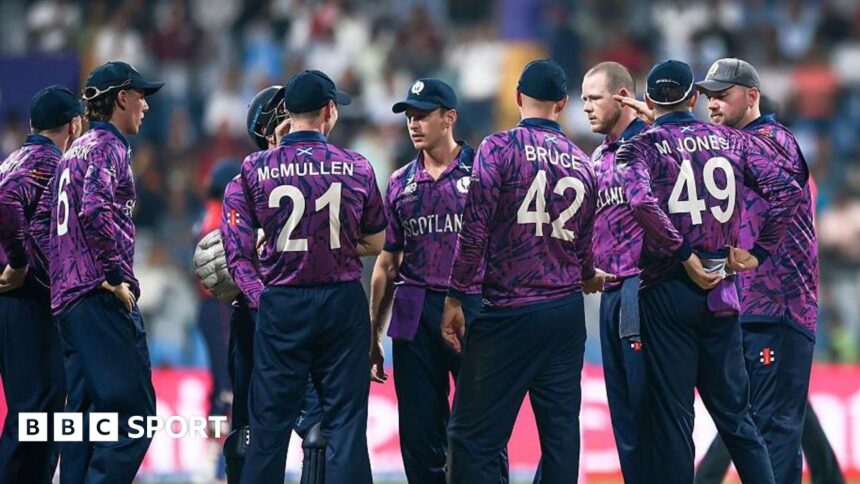
The dark clouds gathering over Windhoek proved a fitting metaphor for Scotland’s fortunes. In a frustratingly familiar script of their World Cup League Two tour of Namibia, Richie Berrington’s side saw another contest truncated by weather before succumbing to a disciplined Oman by 12 runs. This T20 encounter, Scotland’s first since their dramatic late entry to the ICC Men’s T20 World Cup in February, was meant to be a statement of intent. Instead, it became a story of missed opportunities and a stark reminder of the challenges that lie ahead on the global stage.
A Faltering Start in the Desert
Having already seen multiple One-Day Internationals washed away on this trip, Scotland would have been desperate for a full, uninterrupted contest to shake off the rust. Oman’s captain, Aqib Ilyas, had no such hesitation upon winning the toss, electing to bat first on a surface promising runs. The Scottish bowling attack, however, started with commendable control. The early overs were tight, building pressure that led to the key wicket of the dangerous Kashyap Prajapati.
Just as Oman looked to be stabilizing, the Scottish seamers struck again, reducing them to a precarious position. Yet, cricket is a game of partnerships, and Oman constructed two crucial ones that ultimately defined the match. The middle order, led by a composed half-century from Ayaan Khan (51), provided the backbone. He found a willing ally in Shoaib Khan, and later, the lower order erupted with Kaleemullah’s late blitz of 43 runs from just 19 balls—a brutal assault that propelled Oman to a highly competitive 163 for 7. For Scotland, what looked like a par-score target had ballooned into a daunting chase, with those final five overs leaking a torrent of runs.
Scotland’s Chase: A Catalogue of Catastrophe
The Scottish reply never found its rhythm. The top order, so often their engine room, spluttered and stalled against the crafty Oman attack. The loss of early wickets, including the prized scalp of captain Berrington, put the middle order under immediate strain. Oman’s bowlers, particularly the spin duo of Aqib Ilyas and the magnificent Bilal Khan (4-26), exploited the mounting pressure and a pitch offering subtle turn. Bilal’s four-wicket haul was a masterclass in death bowling, executing precise yorkers and clever slower balls to dismantle the Scottish lower order.
Amidst the collapse, there were flickers of resistance. Matthew Cross battled to a top-score of 24, but his dismissal felt like the final nail in the coffin. The required run rate, which had crept into the teens, proved insurmountable. The tailenders swung valiantly, but the task was too great, and Scotland finished their 20 overs stranded at 151 for 9. The scorecard told a grim story:
- Top-order failure: No partnership exceeded 35 runs.
- Spin stranglehold: Oman’s spinners combined for 5 wickets at an economy under 7.
- Death over disparity: Scotland lost 5 wickets in the final four overs, mirroring their own bowling struggles at the death.
Expert Analysis: What Went Wrong for the Scots?
This defeat cannot be dismissed as mere rustiness. The patterns are concerning for a side with imminent World Cup ambitions. The primary issue lies in death-overs bowling. The concession of 70+ runs in the final five overs of an innings is a recipe for disaster in modern T20 cricket. The execution of yorkers and wide lines was lacking, and Oman’s lower order capitalized mercilessly.
Equally troubling was the batting fragility under pressure. With a clear target and a required rate, the innings lacked a coherent chase strategy. There was no one to anchor and accelerate simultaneously, a role George Munsey often fulfills when in form. His early departure left a void others could not fill. Furthermore, the middle-order collapse against spin highlighted a potential technical weakness on turning tracks, a condition they will certainly face in the Caribbean during the T20 World Cup.
From an Oman perspective, this was a triumph of experience and smart cricket. They read the conditions better, adapted their game plan after a shaky start, and their senior players—Ayaan Khan with the bat and Bilal Khan with the ball—delivered when it mattered most. Their fielding was also sharp, applying constant pressure.
Looking Ahead: World Cup Warning or Mere Blip?
For Scotland, this Namibia tour is rapidly becoming a wake-up call. The rain has denied them valuable game time, and the matches they have played have exposed critical flaws. The late entry to the T20 World Cup was a monumental boost, but this performance is a sobering reminder that opportunity must be matched by performance.
The road to the World Cup now looks more arduous. The management must address:
- Death bowling strategies: Identifying clear roles for the final overs and practicing high-pressure execution.
- Batting depth and flexibility: Ensuring the line-up can handle both early wickets and the demand for a late surge.
- Mental resilience: Moving on from this disrupted tour and rebuilding confidence quickly.
For Oman, this victory is a massive confidence booster in the League Two context and beyond. It proves their capability to compete with and beat a top Associate side, reinforcing their own growing reputation in world cricket.
Conclusion: A Storm to Weather
The rain in Windhoek may eventually clear, but the storm clouds over Scotland’s preparations are lingering. Their loss to Oman was a comprehensive one, decided by superior game management in the clutch moments. While the unique frustrations of a rain-marred tour are a mitigating factor, the deficiencies in death-overs execution and chase management are tangible concerns.
This match was more than a tri-series fixture; it was a litmus test. Scotland failed it. The T20 World Cup awaits, a stage where there is no room for such profligacy. The talent within this Scottish squad is undeniable, but talent alone does not win tight games. As they depart Namibia, the homework is clear: they must find a way to close out innings with the ball and construct them with the bat. Otherwise, their long-awaited World Cup appearance risks being as brief and disappointing as their outing in the Namibian desert.
Source: Based on news from BBC Sport.