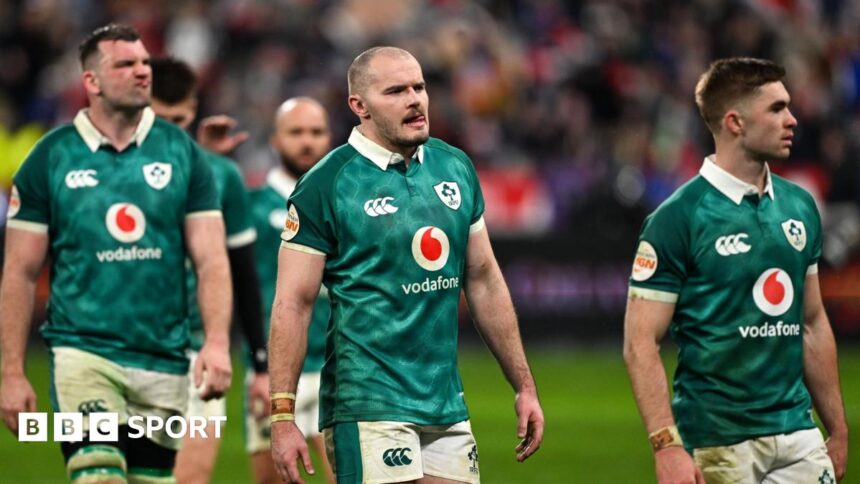
The Gauntlet is Thrown: Unprecedented Scrutiny Descends on Ireland After Parisian Reality Check
The walk from the tunnel into the roaring cauldron of the Stade de France is one of rugby’s ultimate tests. For Ireland, that walk on a febrile Parisian night was supposed to be a statement of intent, a step towards solidifying a burgeoning dynasty. Instead, it became a 90-minute masterclass in pressure, exposure, and the brutal reality of life at the very pinnacle of the sport. Ireland’s return to the scene of their 2023 World Cup heartbreak was not a redemption song, but a stark revelation: the scrutiny and pressure on this Irish team has reached a new, unforgiving level.
A Parisian Nightmare: Two Minutes That Defined a New Reality
With the home fans still buzzing from a spectacular pre-match light show and a spine-tingling La Marseillaise, the atmosphere was pure intimidation. Ireland, the world’s number two side, the consistent champions, were meant to be immune. The opening sequence proved otherwise. It took France just two minutes to issue their manifesto. Dynamite winger Louis Bielle-Biarrey, collecting the ball on the left, delivered a moment of chilling clarity. His audacious chip over the head of young fly-half Sam Prendergast wasn’t just a kick; it was a declaration. As he blazed past, chasing his own genius, the entire Irish defensive structure was instantly, and nervously, scurrying backwards.
This was the new pressure in microcosm. Every opponent, especially a wounded France, now sees Ireland as the benchmark. The tried-and-tested moves are deployed with extra venom, the physical collisions carry greater intent, and every error is a golden opportunity to dethrone the king. That Charles Ollivon knocked on from the ensuing chaos was a temporary reprieve, a stay of execution. The message, however, was received loud and clear: Ireland would be granted no room to breathe, no moment of peace. The gauntlet had been thrown down in the most dramatic fashion imaginable.
Anatomy of the Pressure: Why the Magnifying Glass is So Intense
This isn’t merely the pressure of a single loss in a tough away fixture. This is a cumulative, multi-layered scrutiny born from unprecedented success and a seismic shift in expectation. Ireland is no longer the plucky underdog; they are the hunted.
- The Andy Farrell Legacy: Under Farrell, Ireland has scaled historic heights: a series win in New Zealand, a Grand Slam, a dominant Six Nations era, and a long stint at world number one. The benchmark for success is now perfection. Any deviation is analyzed as potential decline.
- The World Cup Quarterfinal Ghost: The Stade de France is now a house of haunting memories. The Parisian crowd’s roar is a constant reminder of the one hurdle this golden generation has yet to clear. Every visit is laden with psychological baggage, a narrative they are forced to confront.
- The Transitional Phase: The gradual phasing out of iconic leaders like Johnny Sexton has created a leadership vacuum in key moments. New playmakers like Jack Crowley and Sam Prendergast are learning their trade under a global spotlight their predecessors did not initially face.
- The Target on Their Backs: Every team now lifts their performance by 10-15% against Ireland. As seen with Bielle-Biarrey’s early chip, opponents are playing riskier, more ambitious rugby because beating Ireland is the ultimate scalp.
The analysis is no longer just about winning or losing, but about the erosion of an aura of invincibility. The pressure is a compound interest of past achievements and future expectations.
The Road Ahead: Navigating the Crucible of Expectation
How Ireland respond to this intensified glare will define the next chapter of the Andy Farrell era. The coming months are less about rugby drills and more about mental fortitude.
First, the leadership group must evolve. With Sexton gone, figures like Peter O’Mahony, James Ryan, and Caelan Doris must become the steadying force not just tactically, but emotionally. They must insulate the younger players from the external noise and rebuild the team’s defensive confidence from the inside out.
Second, tactical flexibility is non-negotiable. Opponents have deeply studied Ireland’s phase-play structure and kicking game. The coaching team, led by the astute Farrell, must introduce new layers, contingency plans, and perhaps a more varied attacking shape to break the stranglehold of aggressive defensive lines like France’s.
Finally, embracing the villain role. Ireland must shed any residual underdog mentality and fully embrace being the team everyone wants to beat. This requires a different kind of swagger—a cold, relentless efficiency that can silence hostile crowds like the one in Paris, rather than be cowed by it.
Verdict: The Defining Test of a Generation
The nightmarish return to the Stade de France was more than a scoreboard defeat. It was a rite of passage into a new stratum of international rugby. The scrutiny and pressure on Ireland has been irrevocably dialled up. They are now measured against their own past dominance and the world’s desperate desire to topple them.
This heightened pressure is not a condemnation; it is the ultimate back-handed compliment. It signifies that Irish rugby has arrived at a destination it long sought. The question now is whether they can build a permanent residence there. The path forward is paved with intense examination, where every chip kick over a fly-half’s head will be a test of nerve, and every visit to a fortress like Paris will be a psychological war. For Andy Farrell and his men, the mission is clear: evolve or be consumed by the very standards they set. The world is watching, more closely than ever before.
Source: Based on news from BBC Sport.