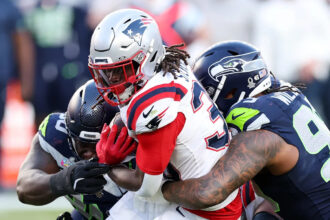
Super Bowl LX: Seahawks Soar, But Halftime Show Divides a Nation
In the record books, Super Bowl LX will forever belong to the Seattle Seahawks. A dominant defensive performance and a vintage game-winning drive sealed their second Lombardi Trophy in a heart-stopping 24-21 victory. But for millions of Americans, the true legacy of this year’s big game won’t be a goal-line stand or a miraculous catch. It will be the unprecedented cultural schism that unfolded during the halftime intermission. As global superstar Bad Bunny took the stage for the official NFL show, a significant portion of the audience tuned out—not for snacks, but for a rival broadcast: Turning Point USA’s “All-American Halftime Show,” creating a live, prime-time case study in America’s deepening cultural and political divides.
A Halftime Show of Two Americas
The stage was set for controversy months ago. The NFL’s selection of Bad Bunny, the Puerto Rican reggaeton titan, was a calculated embrace of a massive, young, and diverse global audience. Yet, his vocal political stances, including sharp criticism of former President Trump and U.S. immigration policies, made him a lightning rod. His insistence on performing primarily in Spanish was celebrated as a landmark moment for Latinx representation but was simultaneously framed by critics as exclusionary. The NFL, no stranger to halftime controversy, braced for impact.
Meanwhile, Turning Point USA, the conservative student organization, saw an opportunity. In the wake of the tragic passing of its founder, Charlie Kirk, the group announced its counter-programming event: a halftime show dedicated to “faith, family, and freedom.” Promising a starkly different tone, it was explicitly positioned as an alternative for viewers who felt alienated by the mainstream spectacle. This wasn’t just a different channel; it was a declaration of a separate cultural universe.
The result was a surreal Sunday night phenomenon. In living rooms across the country, remote controls became instruments of identity. The split-screen wasn’t on television; it was in the national consciousness.
Dueling Spectacles: A Tale of Two Stages
On the official broadcast, Bad Bunny’s halftime show was a vibrant, high-energy assault on the senses. A cascade of neon, pyro, and pulsating dembow rhythms filled the stadium. He opened with a medley of his global hits, the Spanish lyrics echoing through the arena as a sea of fans sang every word. It was unapologetically itself—a celebration of Latino culture on America’s biggest stage. For his supporters, it was a historic, empowering moment of visibility. For his detractors, it confirmed their fears of a changing national identity.
Concurrently, the Turning Point USA alternative broadcast offered a deliberate contrast. It featured patriotic ballads, prayers led by prominent evangelical figures, and solemn tributes to Kirk and American service members. The tone was reverent, the aesthetics clean and traditional. Where Bad Bunny’s show was a party, TPUSA’s was a sermon. It spoke directly to a segment of America feeling culturally besieged, offering a halftime show that felt, to them, like a return to “traditional” values.
The metrics of this divide are still pouring in, but early data suggests a staggering viewership split. While Bad Bunny undoubtedly commanded the larger overall audience, TPUSA’s stream reportedly attracted millions—a number that would dwarf the ratings of many prime-time network shows. The question isn’t just “who watched,” but “what does this mean for the future of mass-audience events?”
Expert Analysis: The Fragmentation of the Mainstream
“This was a watershed moment, but not for the reasons most people think,” says Dr. Alisha Chen, a professor of Media and Cultural Studies at Stanford University. “The NFL halftime show has long been the last bastion of true, appointment-viewing monoculture. Last night, that shattered. We’ve officially entered the era of the ‘choose-your-own-adventure’ national event.”
Chen points out that this goes beyond political preference. “It’s about curation. Audiences are no longer passive recipients of a single cultural product. They are actively curating their own experiences based on identity, values, and algorithm. The Super Bowl halftime show controversy is no longer about a wardrobe malfunction or a contentious lyric; it’s about the very idea of a shared national narrative.”
Sports marketing analyst Ben Rossi adds a practical dimension: “The NFL’s calculus is global. Bad Bunny moves merchandise and drives international TV deals in a way a legacy rock act simply cannot. They are playing the long game for a global fanbase. TPUSA, however, demonstrated the immense, monetizable intensity of a niche audience. Both strategies can be ‘successful’ commercially, but they pull the country in opposite directions.”
Predictions: What This Means for Sports and Culture
The fallout from Super Bowl LX’s halftime rift will reverberate for years, influencing everything from advertising to league politics.
- Hyper-Targeted Halftime Shows: Future major events may experiment with officially sanctioned, simultaneous alternative streams tailored to different demographics or interests, effectively monetizing the fragmentation.
- The Politicization of Sports Partnerships: Brands and leagues will face increased pressure to align with specific cultural visions. Sponsor loyalty will be tested not just by product quality, but by perceived values.
- Rise of the “Counter-Programmed” Event: Major cultural moments—awards shows, political debates, even Olympic ceremonies—will now face organized, well-produced alternative broadcasts. The competition for attention is now a competition for ideology.
- Player and Celebrity Advocacy: Artists and athletes like Bad Bunny will recognize their role as not just entertainers but as commanders of massive attention economies. Their platform choices will become even more strategically significant.
Conclusion: Victory on the Field, Division in the Living Room
The Seattle Seahawks are champions, their victory a testament to teamwork and execution. Yet, the defining story of Super Bowl LX is that there was no unified national halftime. In one channel, a vision of a multilingual, pluralistic, and brashly modern America. On another, a vision rooted in patriotic tradition and conservative Christian values. Both attracted millions of passionate viewers.
The Seahawks win Super Bowl glory, but the battle for the soul of the American audience appears to have ended in a draw—or perhaps, a permanent separation. The great American campfire, where we all gathered to watch the same show, has splintered into a million smaller, hotter fires, each burning with its own fuel. The challenge that remains is whether anything can ever bring them back together again, or if the future of shared experience is simply choosing your side.
Source: Based on news from Yahoo Sports.