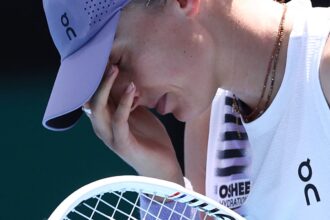
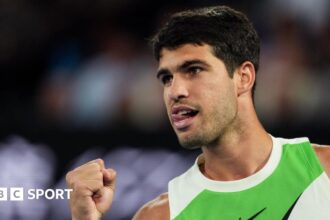
Sinner’s Sunshine: Italian Phenom One Win From Historic Double in Miami
The Florida sun has always favored the game’s greats, but this spring, it shines brightest on Jannik Sinner. With a performance of chilling efficiency and explosive power, the 22-year-old Italian has stormed into the Miami Open final, placing himself on the precipice of a feat untouched for seven years. By dismantling world No. 5 Alexander Zverev 6-3, 6-1, Sinner is now one victory away from completing the coveted ‘Sunshine Double’—winning Indian Wells and Miami back-to-back—a milestone last achieved by the legendary Roger Federer in 2017. This isn’t just a hot streak; it’s a systemic takeover, signaling the arrival of a new, dominant force in men’s tennis.
The Miami Masterclass: Dissecting the Zverev Demolition
Friday’s semifinal was billed as a heavyweight clash between two of the tour’s most in-form players. What transpired was a stunning demonstration of Sinner’s evolved game. From the first ball, Sinner exerted a form of pressure so intense it cracked the foundation of Zverev’s typically rock-solid game. The statistics tell a brutal story: Sinner won an astonishing 100% of his first-serve points in the opening set and faced zero break points in the entire match. His aggressive baseline supremacy neutralized Zverev’s serve and forehand, turning defense into offense with breathtaking speed.
Key to the victory was Sinner’s tactical flexibility. He absorbed Zverev’s power and redirected it with interest, using his flatter, penetrating groundstrokes to deny the German any rhythm. The match was a case study in controlled aggression, a signature of Sinner’s coach, Darren Cahill. “He’s playing with a level of confidence and clarity we haven’t seen before,” noted one courtside analyst. “He’s not just hitting winners; he’s constructing points with the maturity of a multiple Grand Slam champion.”
- Relentless Return Pressure: Sinner attacked Zverev’s second serve, winning 62% of those points and never allowing the German to settle.
- Impenetrable Defense: His improved movement and wingspan turned potential winners from Zverev into opportunities to counter-punch.
- Clinical Conversion: He converted three of his five break points, while extinguishing any hint of a Zverev comeback with unwavering focus.
The Sunshine Double: A Rarity That Defines Greatness
Completing the Sunshine Double is one of the most arduous tasks in tennis. The back-to-back Masters 1000 events in Indian Wells and Miami demand excellence across different conditions, surfaces, and a grueling six-week stretch against the deepest fields in the sport. Since its inception, only a select group of legends have accomplished it: Jim Courier, Michael Chang, Pete Sampras, Marcelo Ríos, Andre Agassi, Roger Federer (who did it three times), and Novak Djokovic. Its rarity underscores its significance—it’s a testament to endurance, adaptability, and sustained dominance.
For Sinner to join this list would be profoundly symbolic. It would transcend a mere title win, marking his official entry into the pantheon of the sport’s elite performers. Since his breakthrough Grand Slam at the Australian Open, Sinner has played with the weight of expectation, not burden, transforming it into fuel. Winning in Miami would cement his status as the undisputed world No. 1-in-waiting and the man to beat on all surfaces. The historical gravity of matching Federer’s 2017 feat adds an extra layer of narrative to an already compelling final.
The Final Hurdle: Scouting the Championship Match
Standing between Sinner and history is either the towering Bulgarian Grigor Dimitrov or the relentless Russian Daniil Medvedev. Each presents a unique stylistic challenge. A final against Medvedev would be a blockbuster rematch of last year’s Miami final, where Medvedev prevailed. It would offer Sinner a chance for redemption and a clear measure of his growth over the past 12 months. Their contrasting styles—Medvedev’s deep-set, metronomic counter-punching versus Sinner’s first-strike, line-painting aggression—create a fascinating chess match.
If it’s Dimitrov, the challenge shifts. The Bulgarian, enjoying a magnificent resurgence at 32, plays with a varied, all-court artistry that can disrupt rhythm. His touch, slice, and net play could attempt to draw Sinner out of his baseline comfort zone. However, Sinner’s current form suggests he is equipped for any puzzle. His serve has become a major weapon, his net play has improved dramatically, and his mental resilience, once a question mark, is now a pillar of his game.
Sinner’s path to victory will hinge on a few critical factors:
- Maintaining First-Serve Lethality: His serve has been a lockdown tool, saving energy and applying instant scoreboard pressure.
- Managing Emotional Energy: The prospect of history can be a distraction. His team’s focus will be on treating this as just another match.
- Imposing His Tempo: Whether against Medvedev’s grinding or Dimitrov’s flair, Sinner must dictate play with his forehand and take time away from his opponent.
Conclusion: The Dawn of the Sinner Era
Jannik Sinner’s march to the Miami final is more than a successful tournament run; it is the culmination of a meticulously planned ascent. From the promising teen with fiery hair and explosive shots to the composed, complete champion of today, his evolution has been a masterclass in player development. Reaching this point, on the verge of the Sunshine Double, confirms a seismic shift in the men’s game.
The final will be a test, but Sinner has passed every examination presented to him in 2024 with near-perfect marks. He is playing a brand of tennis that seems not only victorious but inevitable. If he lifts the trophy in Miami, the message will be unequivocal: the Sinner era is not coming; it has arrived. The sunshine of Florida has found its new king, and the rest of the tour is playing for second place. One win stands between him and a legacy-defining achievement—and based on the evidence of the last six weeks, betting against him would be a very cold proposition indeed.
Source: Based on news from Sky Sports.