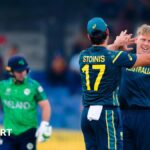
Smith’s Shock Call-Up: Captaincy Conundrum Emerges After Marsh’s Unfortunate Injury
In a turn of events that has sent shockwaves through the cricketing world, Australia’s T20 World Cup campaign has been thrown into immediate disarray. Captain Mitchell Marsh has been ruled out of the team’s opening match against Oman due to a rare and painful medical condition described as “testicular bleeding.” The sudden vacancy at the helm and in the batting order has prompted a dramatic recall for one of modern cricket’s most storied figures: Steve Smith. This isn’t just an injury substitution; it’s a seismic shift that forces a tactical and leadership rethink for the tournament favorites, raising urgent questions about the immediate and long-term direction of the Australian side.
A Medical Setback with Major Sporting Consequences
The injury to Mitchell Marsh is as unusual as it is unfortunate. Described by team officials as a “testicular bleeding” incident sustained during a training session, the condition has sidelined the all-rounder for at least the crucial first fixture. While the full medical details remain private, the condition is understood to be acutely painful and requires careful management to prevent complications. Marsh’s absence is a triple blow: he is the team’s captain, a powerful top-order batsman, and a handy seam-bowling option. His dynamic presence and recent leadership of the T20 side were considered cornerstones of Australia’s title defense strategy.
The swift call-up of Steve Smith underscores the seriousness of the situation. Smith, a former captain across all formats and a player with a proven track record in high-pressure tournaments, was initially a surprising omission from the original 15-man squad. His inclusion was seen as a contingency for middle-order batting, but Marsh’s injury now opens a far more significant discussion. With vice-captain Matthew Wade likely to lead in Marsh’s immediate absence, Smith’s vast experience and tactical acumen make him a compelling candidate to assume the captaincy should Marsh’s recovery extend deeper into the tournament.
Steve Smith: The Ultimate Wild Card in the Caribbean
Steve Smith’s return to a T20 World Cup squad is a narrative few predicted. His role in the shortest format has been debated for years, often seen as an anchor in an era of relentless power-hitting. However, to underestimate Smith is to ignore a career built on adaptability and genius. His recall is not merely sentimental; it is a strategic masterstroke born of necessity.
- Tactical Flexibility: Smith provides a completely different dimension to the Australian batting lineup. In conditions where wickets might be tricky or chase requires nuance, his ability to manipulate the field and rotate strike is invaluable.
- Big-Match Temperament: There are few players in world cricket with Smith’s pedigree in knockout games. His experience in winning World Test Championships and ODI World Cups brings an immeasurable calm to the dressing room.
- Leadership Insurance: Should Marsh’s absence be prolonged, Australia suddenly has a former captain with over 70 international wins ready to step in. Smith’s on-field cunning and deep understanding of the game are undeniable assets.
However, his inclusion necessitates a reshuffle. Does he slot into Marsh’s number three role, or does he stabilize the middle order, allowing the likes of Glenn Maxwell and Marcus Stoinis to play with more freedom? This decision will define Australia’s batting philosophy for the entire tournament.
Navigating the Leadership Labyrinth
The immediate succession plan sees wicketkeeper Matthew Wade taking the reins for the Oman match. Wade has captaincy experience in franchise cricket and is a fierce competitor. But the larger question looms: if Marsh is out for the Super Eight stage or beyond, who leads the team?
Matthew Wade offers continuity and a fiery, aggressive style. Pat Cummins, the ODI and Test skipper, is in the squad and understands the weight of national captaincy better than anyone. Then there is Steve Smith, whose second chapter as an Australian leader has been one of redemption and quiet excellence whenever called upon.
Choosing a permanent replacement is a delicate balance. Appointing Cummins could unify the leadership across formats but adds to his immense workload. Sticking with Wade rewards his deputy status. Turning to Smith, however, would be a fascinating full-circle moment—a testament to his enduring value and the team’s pragmatic pursuit of a second T20 crown. The selectors’ decision will reveal their priority: is it maintaining a specific T20 ethos, or is it simply deploying the most tactically astute leader available?
Predictions and Ramifications for Australia’s Campaign
This injury irrevocably alters the trajectory of Australia’s World Cup. Initially, they were a settled unit with a clear, power-based identity under Marsh. Now, they are a team in flux, forced to integrate a legendary player with a contrasting style at the eleventh hour.
Short-term, expect some instability. The batting order will be experimented with, and the bowling balance—now missing Marsh’s overs—will need adjusting. Mitchell Starc, Pat Cummins, and Josh Hazlewood may have to bowl more of their full allotment early on.
Long-term, however, Smith’s presence could prove to be a secret weapon. In the high-pressure knockout matches on potentially worn Caribbean pitches, his game intelligence could be the difference between a flailing collapse and a championship-winning score. His leadership, if called upon, would be meticulous and relentlessly focused on opposition weaknesses.
The biggest prediction is one of heightened drama. Australia’s path just became more complicated, but also more intriguing. They have been forced to blend their brute force with one of the game’s great technicians. This fusion could either be disjointed or brilliantly unpredictable.
A Tournament Defined by Unforeseen Drama
The shocking nature of Mitchell Marsh’s injury and the consequential recall of Steve Smith is a stark reminder that World Cups are often won and lost in the chaotic, unforeseen moments. What began as a painful medical episode for a key player has spiraled into a profound test of Australia’s squad depth and strategic flexibility.
While the hope is for Marsh’s swift and full recovery, the reality is that Australia must now plan for a campaign that may not include their chosen captain. In Steve Smith, they have not just a replacement player, but a potential captaincy successor and a tactical wild card of the highest order. His journey from squad outsider to central figure is a subplot brimming with intrigue. As the tournament unfolds, this moment of crisis may well be remembered as the pivotal juncture where Australia’s campaign, against all odds, found its most experienced and steely nerve. The quest for a second T20 World Cup title has just become a far more compelling story.
Source: Based on news from Sky Sports.