Sobbing Jones Among Australian Open Injuries as Physical Toll Defines Early Rounds
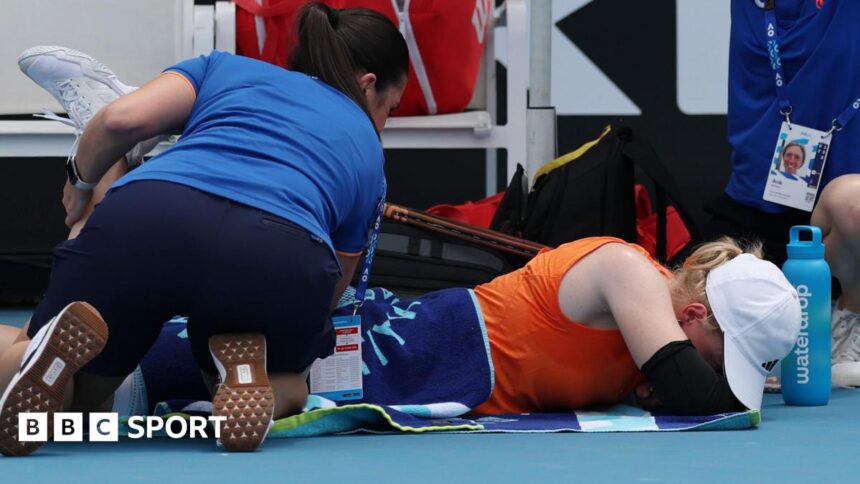
The Australian Open, a tournament synonymous with searing heat and grueling physical battles, has once again lived up to its punishing reputation. While the spotlight often shines on triumphant victories, the opening days in Melbourne have been equally defined by heartbreak and the stark sound of bodies breaking down. The most visceral image of this brutal reality was the sight of Britain’s Francesca Jones, sobbing uncontrollably on Court 3, her dream shattered not by an opponent’s winner, but by her own failing physique.
The Heartbreak on Court 3: Francesca Jones’s Agony
For Francesca Jones, this Australian Open was more than just another Grand Slam. It was a beacon of opportunity. Having overcome a congenital condition that left her with only three fingers and a thumb on each hand and three toes on each foot to even reach the professional tour, every main-draw appearance is a monumental achievement. Her aim was clear: to secure a first main-draw win at a major and reach the second round for the first time.
That dream unraveled painfully and publicly against Polish qualifier Linda Klimovicova. From the early stages, Jones’s movement was severely compromised. Each change of direction was a visible struggle, her face etched with a mixture of pain and frustration. The valiant effort to push through, to honor the competition and her own incredible journey, was heartbreaking to witness. After surrendering the first set 6-2 and falling behind 3-2 in the second, the dam broke. Overwhelmed by physical incapacity and emotional devastation, the 25-year-old retired from the match, collapsing into loud, body-wracking sobs at her chair. It was a raw moment that transcended sport, a cruel reminder of how fragile athletic aspirations can be.
Key Factors in Jones’s Match:
- Early Mobility Issues: The problem was evident from the start, negating her baseline game.
- Emotional Toll: The frustration of a constrained body after years of overcoming physical odds was immense.
- Valiant Effort: Her attempt to continue showcased her trademark resilience, making the ultimate retirement harder.
A Broader Theme: Cramps and Collapses Plague Day Two
Jones’s distress was not an isolated incident. It became part of a disturbing pattern on day two, where the tournament’s physical demands extracted a heavy toll. The theme of early retirements highlighted a potential crisis of conditioning and adaptation in the modern game.
In a stunning upset on Rod Laver Arena, men’s eighth seed Felix Auger-Aliassime, a player known for his powerful game and Grand Slam pedigree, was forced to retire in his fourth set against qualifier Dominic Thiem. The culprit? Severe cramping that left the Canadian star immobile and in clear agony. On the women’s side, the scene was even more alarming. Canadian qualifier Marina Stakusic, after a brave effort, was overcome by full-body cramps so severe she could not walk. She was wheeled off the court in a wheelchair, a chilling sight that underscored the extreme conditions.
These incidents raise critical questions for players and tours:
- Pre-Season Preparation: Are the short off-seasons adequate for players to build the resilience needed for best-of-five-set matches in often extreme conditions?
- Schedule Density: Does the packed tennis calendar allow for proper recovery, leading to accumulated fatigue before majors even begin?
- Hydration & Nutrition Science: Despite advanced knowledge, debilitating cramps remain a frequent tournament-ender, suggesting an ongoing battle with individualized body chemistry.
Expert Analysis: Why the Australian Open Breaks Bodies
As a sports journalist observing the tour, the cluster of injuries and retirements at this year’s Australian Open is alarming but, in some ways, predictable. The tournament presents a unique “perfect storm” of physical challenges.
The “Season-Start Shock” is a primary factor. Players transition from a limited off-season—often interrupted by exhibition events—directly into high-stakes, best-of-five-set tennis. Unlike the clay or grass swings, there is no gradual build-up. The body is asked to perform at its absolute peak intensity without a competitive ramp-up, leading to soft tissue injuries and muscular failures like cramping.
Secondly, Melbourne’s variable conditions are a stealth adversary. While day two was not excessively hot, the combination of residual summer heat, often high humidity, and fluctuating temperatures between day and night sessions plays havoc with players’ hydration and muscle elasticity. A player can feel physically prepared but still fall victim to a sudden cramp as conditions on court change.
Finally, the immense psychological pressure of a Grand Slam cannot be discounted. The stress of the moment—for a seed like Auger-Aliassime, a qualifier like Stakusic, or a milestone-seeker like Jones—can exacerbate physical tension and accelerate fatigue, creating a vicious cycle where the mind pushes a body that is already on the edge.
Predictions and Repercussions for the Tour
The fallout from this brutal start will resonate beyond Melbourne. We can anticipate several consequences:
Increased Scrutiny on Scheduling: The Player Councils and the ATP/WTA will face renewed pressure to examine the calendar. The push for a longer, more meaningful off-season to allow for proper physical development will gain significant momentum. Players are not machines, and this Australian Open has vividly illustrated the human cost of a non-stop schedule.
Hyper-Personalized Conditioning Programs: The one-size-fits-all approach to fitness is dead. We will see top players investing even more in their personal teams to develop tailored conditioning and nutritional plans specifically for the demands of the Australian Open. This includes advanced heat acclimation protocols and bespoke hydration strategies that go beyond drinking electrolytes.
Mental Resilience as a Key Metric: Francesca Jones’s tearful exit reminds us that the psychological component of managing injury and pain is paramount. Players who can objectively assess their body’s signals under duress—knowing when to fight and when to live to fight another day—may preserve their careers longer. The narrative will shift slightly from “never give up” to “strategic preservation.”
Conclusion: The Unforgiving Nature of Grand Slam Glory
The Australian Open has once again proven to be the most physically demanding gatekeeper in tennis. The sobbing of Francesca Jones, the cramped agony of Felix Auger-Aliassime, and the wheelchair exit of Marina Stakusic are not mere footnotes to the tournament; they are central to its story. They remind us that before the champion lifts the trophy, the event is a war of attrition fought on muscle, sinew, and willpower.
For Jones, the journey back will be as much about healing the emotional wound as the physical one. Her story of overcoming immense odds is well-known, and this setback, however cruel, is just another chapter. The tennis world, having seen her tears, will undoubtedly rally behind her next attempt. For the sport’s governing bodies, the images from Melbourne must serve as a catalyst for change. The pursuit of Grand Slam glory should not come at such a frequent and devastating cost to the athletes who provide the drama. The 2024 Australian Open will be remembered for its winners, but its opening days have been tragically defined by those it broke along the way.
Source: Based on news from BBC Sport.