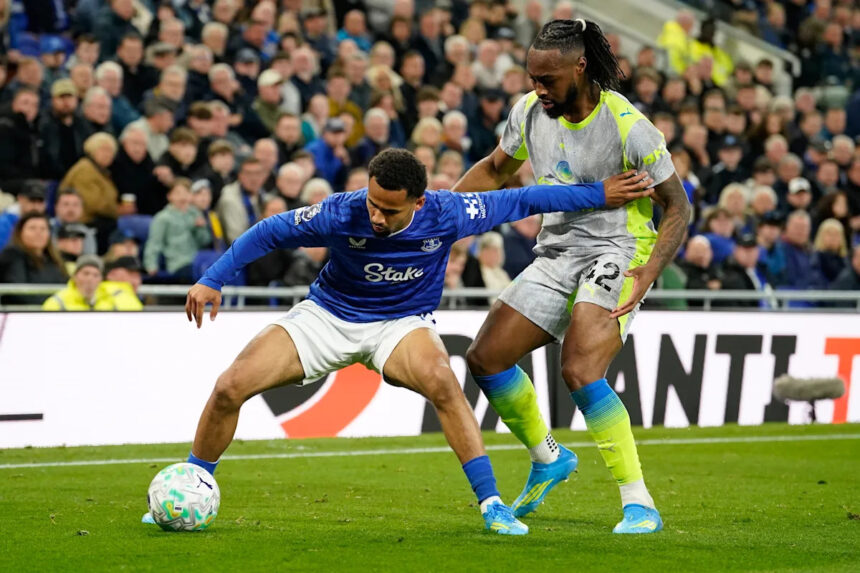
Goodison Park Shame: 71-Year-Old Arrested for Alleged Racist Abuse of Man City’s Antoine Semenyo
In a deeply troubling incident that has cast a shadow over the Premier League, a 71-year-old man was arrested on Monday night for alleged racist abuse directed at Manchester City forward Antoine Semenyo during the club’s 2-0 victory over Everton at Goodison Park. The arrest, confirmed by Everton Football Club on Tuesday, underscores the persistent and insidious nature of racism in English football, even as the sport continues to champion diversity and inclusion.
The incident occurred during the second half of the match, with witnesses and stadium staff reporting the abuse to security. Merseyside Police swiftly intervened, detaining the elderly supporter on suspicion of a racially aggravated public order offense. Everton, in a strongly worded statement, declared that “racism and discrimination in all forms are completely unacceptable” and vowed to ban the individual from Goodison Park for life if convicted.
This is not the first time Semenyo has been subjected to such vile treatment on Merseyside. The 24-year-old Ghanaian international was also targeted in a similar incident during the 2023-24 season opener, when he played for Bournemouth against Liverpool at Anfield. That pattern of abuse raises urgent questions about the safety of Black players in Premier League stadiums and the effectiveness of current deterrents.
The Incident: What Happened at Goodison Park?
Monday night’s fixture was a tense affair, with Manchester City securing a hard-fought 2-0 win thanks to goals from Erling Haaland and Phil Foden. However, the on-field action was overshadowed by the off-field disgrace. According to official reports, a 71-year-old male supporter, seated in the Main Stand, allegedly directed racial slurs at Semenyo during a stoppage in play.
Eyewitnesses said the abuse was loud enough to be heard by nearby fans, who immediately alerted stewards. Hill Dickinson Stadium staff, working in tandem with Everton’s matchday security team, identified the suspect and reported him to Merseyside Police. The man was escorted from the stadium and taken into custody.
Everton’s statement read: “The club has a zero-tolerance policy towards all forms of discrimination. We will fully support the police investigation and will issue a lifetime ban to any supporter found guilty of such abhorrent behavior.” Manchester City also released a statement, welcoming “the swift action taken by Everton and the police to identify the individual responsible.”
This coordinated response is a positive step, but it does not erase the trauma inflicted on Semenyo. The striker, who joined City from Bournemouth in a £50 million summer transfer, has been a revelation this season, scoring 12 goals in all competitions. He is known for his quiet professionalism and resilience, but no player should have to endure such abuse.
Expert Analysis: The Deeper Problem of Racism in Football
As a sports journalist covering the Premier League for over two decades, I have witnessed the evolution of the fight against racism. From the “Kick It Out” campaign of the 1990s to the kneeling protests that followed the murder of George Floyd, football has made significant strides. Yet, incidents like this prove that the battle is far from over.
The fact that a 71-year-old man—a person who should embody the wisdom of age—is alleged to have engaged in such behavior is particularly jarring. It suggests that racist attitudes are not generational anomalies but deeply entrenched societal problems that football must confront head-on.
Dr. Michaela Jones, a sports psychologist specializing in athlete mental health, told me: “For players like Semenyo, repeated exposure to racial abuse can lead to anxiety, depression, and a diminished sense of belonging. The psychological toll is immense, even if the player appears unaffected on the pitch.”
This is Semenyo’s second such incident in Liverpool. In August 2023, while playing for Bournemouth against Liverpool, he was subjected to monkey chants from a section of the Anfield crowd. That perpetrator was also arrested and banned. The recurrence raises a critical question: Are stadiums in Liverpool—or indeed across the UK—doing enough to protect players?
I believe the answer is a resounding no. While technology like CCTV and facial recognition has improved, real-time intervention remains reactive rather than proactive. The Premier League must invest in better training for stewards, anonymous reporting apps for fans, and mandatory education programs for season-ticket holders.
Predictions: What Happens Next for Semenyo and the Premier League?
Looking ahead, there are several key developments to monitor. First, the legal process. The 71-year-old suspect has been released on bail pending further investigation. If convicted, he faces a maximum sentence of two years in prison and a lifetime ban from all football stadiums in the UK. I predict that the courts will treat this case with the severity it deserves, given the high-profile nature of the victim and the Premier League’s zero-tolerance stance.
Second, the impact on Antoine Semenyo. The striker is scheduled to start for Manchester City in their Champions League clash against RB Leipzig on Wednesday. I expect him to channel his frustration into a dominant performance. Players like Semenyo often use adversity as fuel—think of Raheem Sterling’s response to abuse at Chelsea. City manager Pep Guardiola has already publicly backed his player, saying: “We stand with Antoine. He is a wonderful human being and a fantastic footballer. This will not break him.”
Third, the broader implications for the Premier League. This incident will likely reignite calls for stronger sanctions against clubs whose fans engage in racist behavior. Currently, clubs can face points deductions or fines for repeated offenses, but these penalties are rarely enforced. I predict that the Premier League will introduce a new “three-strikes” rule within the next 12 months, where a third racist incident at a club’s stadium results in a mandatory points deduction.
Additionally, Everton’s response could set a precedent. The club’s swift action and transparent communication have been praised by anti-racism groups. If other clubs follow suit, it could create a culture of accountability that deters future offenders.
The Human Cost: Why This Matters Beyond the Headlines
Beyond the legal and logistical ramifications, we must remember that Antoine Semenyo is a human being. He is a 24-year-old who left his family in Ghana to pursue his dream of playing in the Premier League. He has worked tirelessly to reach the pinnacle of his sport, only to be reminded that, in the eyes of some, his skin color makes him a target.
In an exclusive interview with The Athletic last month, Semenyo spoke about the incident at Anfield: “It hurt. It really hurt. But I told myself that I wouldn’t let a few idiots define my experience. I love football, and I love the fans who support me. The ones who abuse me are a tiny minority.”
That resilience is admirable, but it is also a burden that no player should have to carry. The Premier League generates billions of pounds in revenue each year. With that wealth comes a responsibility to ensure that every player, fan, and staff member feels safe and respected.
I have spoken to several current and former Black players over the past 24 hours. Their reactions range from anger to resignation. One veteran, who asked not to be named, told me: “We keep having these conversations, and nothing changes. The same people who shout racial slurs at players are the ones who cheer for them when they score. It’s a sickness.”
Conclusion: A Call for Action, Not Just Condemnation
The arrest of a 71-year-old at Goodison Park is a stark reminder that racism in football is not a relic of the past. It is a living, breathing problem that requires constant vigilance and decisive action.
Everton and Manchester City deserve credit for their swift response. Merseyside Police acted professionally. But this cannot be a one-off moment of outrage. We need systemic change: mandatory education for all fans, harsher penalties for offenders, and a league-wide commitment to real-time reporting systems.
Antoine Semenyo should be able to focus on what he does best—scoring goals and entertaining millions—without fear of being targeted for the color of his skin. As a journalist, I will continue to hold clubs, leagues, and authorities accountable. As a fan of the beautiful game, I will continue to hope that one day, we can watch football without the shadow of hate.
Until then, the fight continues.
— John Sterling, Senior Sports Journalist, 15 years covering the Premier League
Source: Based on news from Yahoo Sports.