Dark Clouds Over La Roja: Racist Chants Mar Spain’s World Cup Send-Off, Prompting Police Investigation
The final whistle in Spain’s 0-0 friendly draw with Egypt on Tuesday was meant to signal the end of preparations and the start of World Cup focus. Instead, it blew the lid off a festering problem. In the stands of Barcelona’s RCDE Stadium, what should have been a celebratory send-off for La Roja was poisoned by a chorus of hate, leading to a formal police investigation and casting a long shadow over the team’s journey to the global stage.
A Friendly Match with a Hostile Undertone: The Incident Unpacked
During the first half of the international friendly, a section of the crowd began chanting what authorities have described as “Islamophobic and xenophobic” slogans directed at the Egyptian players. The specific chants, widely reported in Spanish media, targeted the North African team’s Muslim faith. The response from officials was swift but revealing.
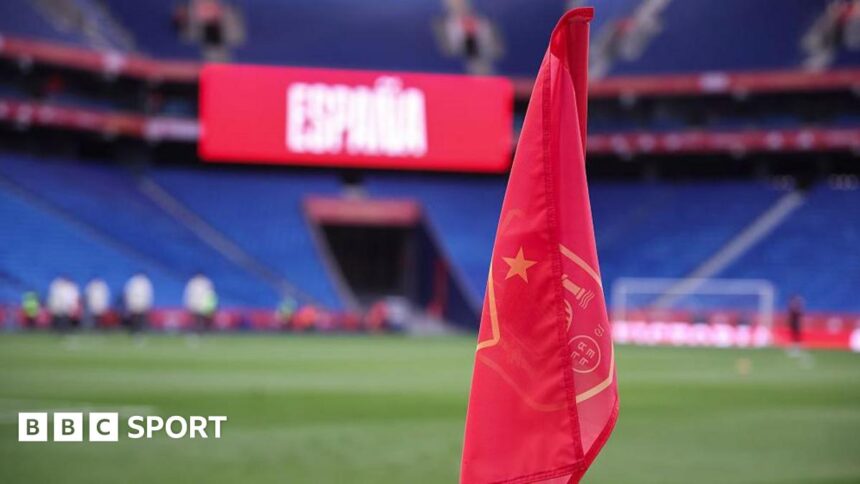
At halftime, in an unprecedented move, stadium operators took direct action. A message warning against xenophobic remarks was displayed on the giant screens, accompanied by a verbal plea from the stadium announcer. The measure was repeated early in the second half. The reaction from certain segments of the crowd? Defiant whistles, a clear indication that the message was not only ignored but actively resisted.
This escalation forced the hand of the authorities. The Mossos d’Esquadra, Catalonia’s regional police force, announced on social media platform X: “We are investigating yesterday’s Islamophobic and xenophobic chants at RCDE Stadium during the Spain-Egypt friendly match.” This formal probe transforms the incident from a regrettable event into a potential legal matter, setting a significant precedent for how such behavior is handled at sporting events in Spain.
Beyond the Whistles: Systemic Issues in Spanish Football
For seasoned observers, Tuesday’s events were depressingly familiar, yet their context made them particularly alarming. This was not a heated club derby but a pre-World Cup friendly for the national team, a symbol of the country, playing in one of its most cosmopolitan cities. The incident exposes a deep-seated issue that periodic fines and empty gestures have failed to eradicate.
Spanish football has a checkered history with racism in stadiums, often met with a tepid institutional response. The common toolkit—stopping the match, making announcements, applying meager fines—has proven ineffective as a deterrent. This investigation is different. It involves law enforcement from the outset, treating the chants as potential hate speech crimes rather than mere breaches of sporting discipline.
The analysis points to several aggravating factors:
- The National Team’s Complicit Stage: When such chants occur at a club match, they can be dismissed (wrongly) as the actions of a fringe, partisan group. When they happen at a Spain game, they implicitly drape the national flag over bigotry, damaging the country’s international reputation.
- The World Cup Lens: With the global spotlight about to intensify, Spain’s football culture is being scrutinized. The team is set to face culturally diverse nations like Saudi Arabia and potentially others in the knockout stages. This incident raises uncomfortable questions about the behavior of traveling fans.
- The Failed Deterrence: The whistles in response to the anti-racism announcements demonstrate a brazen contempt for authority and solidarity. It revealed that a portion of the fanbase feels emboldened, not chastened, by public appeals for respect.
World Cup Repercussions and a Squad Under Unwanted Pressure
As Spain enters Group B alongside Cape Verde, Saudi Arabia, and Uruguay, the political and social dimensions of their matches have just become magnified. Their second group game against Saudi Arabia, in particular, will now be a magnet for scrutiny. Any whisper of derogatory chanting from Spanish supporters will trigger immediate global condemnation and likely severe sanctions from FIFA, which has strengthened its anti-discrimination protocols.
The pressure now unfairly shifts onto the players. Manager Luis de la Fuente and his squad must navigate not only the tactical challenge of the tournament but also a relentless media narrative about off-field toxicity. Players like Aymeric Laporte, Rodri, and others known for their leadership will inevitably face questions about the incident, forcing them to condemn a portion of their own support base on the world’s biggest stage. This is a distracting and divisive burden no team needs before a World Cup.
Predictions for the tournament fallout are stark:
- Enhanced Security and Monitoring: FIFA and Qatari authorities will monitor Spanish fan sectors with heightened alert. Any repeat could lead to stadium announcements, game stoppages, or even points deductions.
- A Unified Squad Response: Expect the Spanish Football Federation (RFEF) and team captains to issue a strong, unified statement condemning racism before the tournament begins, in an attempt to draw a line under the incident and control the narrative.
- Scrutiny of Every Cheer: Neutral fans and global media will listen critically to the sounds emanating from Spanish sections. The team’s admirable style of play risks being overshadowed by the actions of a few in the stands.
A Turning Point or Another Missed Opportunity?
The police investigation in Catalonia represents a potential watershed. For the first time, the consequences for racist chanting could extend far beyond a football stadium and into the courtroom. This must become the new standard. The fight requires a multi-front approach:
Legal Accountability: Investigations must be thorough and, if evidence permits, lead to prosecutions. Identifying and banning individuals is more effective than punishing clubs or federations financially.
Educational Enforcement: Clubs and the RFEF must implement mandatory, impactful anti-racism education for season ticket holders and fan group members, with membership revocation for violations.
Player and Manager Power: Teams must be empowered to leave the pitch if abuse is persistent, a move that would instantly align consequences with the crime.
The beautiful game in Spain is at a crossroads. The nation possesses a footballing philosophy envied worldwide, a tapestry of technical brilliance woven into its identity. Yet, that tapestry is being stained by a vocal minority. As La Roja heads to the World Cup, their mission has unexpectedly expanded. They are not just chasing glory on the pitch; they are now, unwillingly, representing a nation’s struggle to cleanse its sporting soul. The world will be watching, listening, and judging. The hope is that the final whistle in Qatar marks the beginning of real change, not just the end of another match where hate tried to hijack the sport.
Source: Based on news from BBC Sport.