Steelers at a Crossroads: Art Rooney’s Planned Pitch, Mike Tomlin’s Stunning Exit
The Pittsburgh Steelers, an organization synonymous with stability and sustained success, have been thrust into their most profound transition in nearly two decades. In a stunning turn of events, head coach Mike Tomlin, the man who never had a losing season, has chosen to walk away. While owner Art Rooney II was prepared to offer Tomlin the keys to the franchise for 2026 and beyond, the coach’s decision, while surprising, has opened a new, uncertain chapter for one of the NFL’s flagship franchises.
The Fork in the Road: A Meeting That Never Was
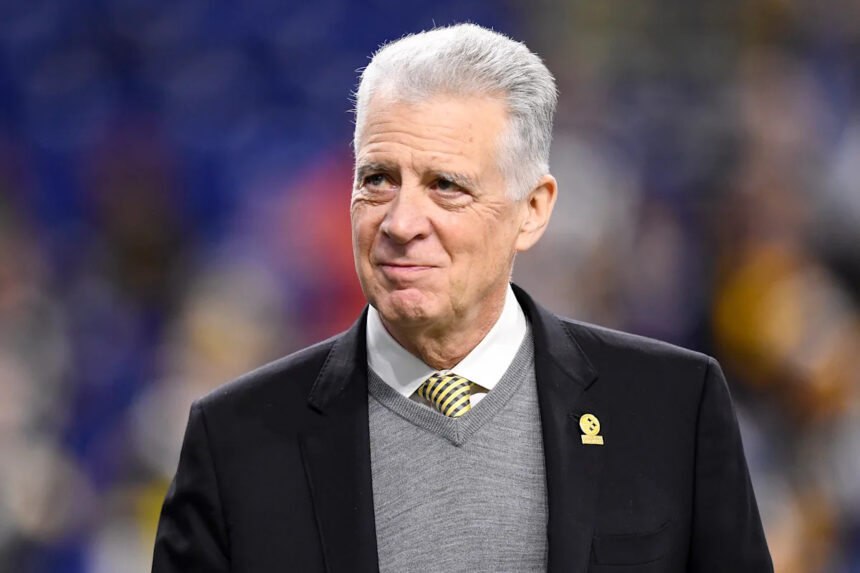
Art Rooney II stood before reporters on Wednesday, a picture of poised stewardship, yet the undercurrent was one of seismic shift. He revealed a plan that was never executed: a post-season conversation with Mike Tomlin to chart the course for 2026. Rooney was ready to “run it back,” to extend a partnership that had delivered 19 years of relentless competitiveness.
“We were expecting to have that conversation on Tuesday,” Rooney stated, acknowledging the abrupt change in script. The anticipated football strategy session morphed into a farewell. While Rooney admitted he didn’t see the specific decision coming, his reaction spoke volumes about his read on Tomlin’s state of mind. He wasn’t shocked. This key phrase suggests Rooney had sensed a weariness, a contemplation in Tomlin that perhaps the public and media had missed amidst the grind of another playoff chase.
The owner’s respect for Tomlin was palpable. He declined to discuss contract specifics or the mechanisms of Tomlin’s departure, focusing instead on the man. Rooney characterized the move as family related, a powerful and often definitive reason in the high-pressure world of NFL coaching. Crucially, Rooney said he did not attempt to talk Tomlin out of his decision, a sign of deep mutual respect and an acknowledgment that when the personal calculus changes, no football argument can counter it.
Dissecting an Unprecedented Legacy and a Sudden End
Mike Tomlin’s resignation marks the end of an era defined by remarkable consistency. His resume with the Steelers is the stuff of modern NFL legend:
- 193-114-2 regular-season record, a .628 winning percentage.
- Zero losing seasons in 19 years, a streak unmatched by any contemporary.
- 13 playoff appearances, seven AFC North titles, three AFC Championships.
- A Super Bowl victory in 2008 (XLIII) and a second appearance in 2010.
Yet, the recent years created a complex backdrop. While the “no losing seasons” streak remained a point of pride, playoff success had become elusive. The team’s last playoff victory came in the 2016 season, and the manner of recent postseason exits—including the 30-6 wild-card loss to Houston that preceded this decision—fueled a growing narrative of stagnation. For a coach as fiercely competitive as Tomlin, the standard in Pittsburgh is always the Lombardi Trophy, not just a winning record.
The analysis here is twofold. First, Tomlin’s departure on his own terms, at 53, allows him to preserve his legacy intact—an untarnished Steelers icon who left when he decided, not when the game pushed him out. Second, it spares the organization a potentially messy succession down the line. Rooney’s revelation that Tomlin said he was not looking to get back into coaching any time soon reinforces the family-first nature of this choice and adds a layer of finality.
Contractual Intricacies and the Steelers’ Path Forward
While Tomlin steps away, his contract remains a piece of business with implications. He is still under contract for two more seasons. This creates an interesting, albeit likely dormant, scenario:
- Compensation for Tomlin: Should Tomlin have a change of heart and wish to coach elsewhere before his Steelers deal expires, Pittsburgh would be entitled to draft-pick compensation from the hiring team.
- No-trade clause: Reports indicate Tomlin’s deal includes this provision, meaning he would have full control over any potential destination if a move were negotiated.
Rooney’s refusal to delve into these details signals the Steelers are treating this as a clean, respectful break, not a transactional negotiation. The focus now shifts entirely to one of the most coveted head coaching vacancies in recent memory. The Steelers’ job is a rarity: a top-tier franchise with a championship-caliber defense, a young offensive core, and a patient ownership group that provides the runway for a long-term vision. The pressure, however, will be immense. The successor isn’t just replacing a coach; he’s following a man who became a pillar of the city.
Predictions: Navigating the Post-Tomlin Landscape
The NFL world now turns its gaze to the South Side. The Steelers’ search will be the defining story of their offseason. Expect a process that is thorough but likely not prolonged. Key predictions for the road ahead:
The Search Scope: The Steelers will cast a wide net, but their history suggests a preference for candidates with strong leadership qualities, defensive acumen, and the ability to handle the unique Pittsburgh spotlight. Both experienced head coaches and top coordinators will be in the mix.
Internal Culture Test: The first major test for the new regime will be maintaining the “Steelers Way”—the tough, disciplined, and accountable culture that Tomlin and his predecessors fiercely upheld. Any slippage will be immediately noticeable.
The Tomlin Factor: Do not expect a quick return. If his family-related hiatus is as stated, Tomlin will likely spend at least a year or two away from the sidelines, potentially in a media role. His eventual return to the NFL, when it happens, will trigger a massive bidding war, with the Steelers’ compensation clause looming in the background.
Fanbase Reaction: Initially, shock and gratitude will dominate. However, the grace period for the new coach will be shorter than many expect. The standard in Pittsburgh is, and always will be, championships. The “no losing season” streak, a Tomlin hallmark, will become an immediate and daunting benchmark for his successor.
Conclusion: The End of an Era, The Start of a New Standard
Mike Tomlin’s decision to step down is a watershed moment for the Pittsburgh Steelers. Art Rooney II’s readiness to continue the partnership underscores the value the organization placed on Tomlin’s leadership, even amid recent playoff frustrations. That Rooney wasn’t shocked by the finale tells us this was less about football philosophy and more about a man making a life choice after two decades of unparalleled grind.
The Steelers now face their most critical hire since they plucked a 34-year-old Mike Tomlin from relative obscurity in 2007. The legacy Tomlin leaves is one of unwavering consistency, profound leadership, and a Super Bowl crown. His departure closes a golden chapter, but it also presents a rare opportunity for renewal. The pressure on the next head coach will be immense, but so is the potential. The Steelers’ standard hasn’t changed; only the man tasked with upholding it has. The post-Tomlin era begins not with a stumble, but with the sober, determined planning of an ownership group that knows better than anyone what it takes to win.
Source: Based on news from Yahoo Sports.