Suns Owner Mat Ishbia Declares War on Tanking: “Losing Behavior Done by Losers”
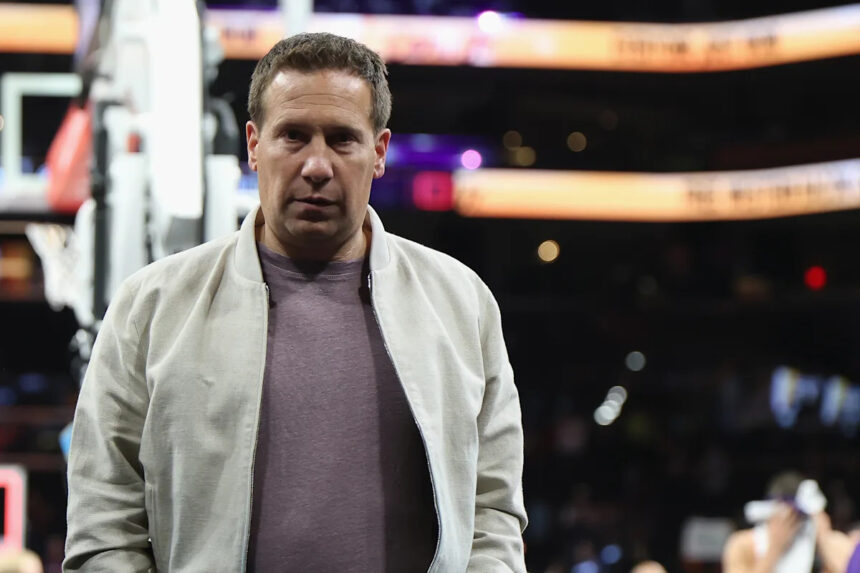
The eternal tug-of-war between competition and construction in professional sports has erupted into a public, owner-level feud. Two days after Dallas Mavericks governor Mark Cuban suggested the NBA should lean into the strategic benefits of “tanking,” Phoenix Suns and Mercury owner Mat Ishbia launched a blistering counter-offensive on social media, framing the practice not as a savvy front-office tool, but as a moral failing that strikes at the heart of the league’s integrity.
The Owner vs. Owner Battle Over Basketball’s Soul
The debate ignited when Mark Cuban, in a discussion on X, argued that the NBA should embrace the reality of tanking—the act of intentionally fielding a non-competitive roster to secure a higher draft pick—and simply “make it more entertaining.” This pragmatic, if cynical, view from a respected owner opened the door for a forceful rebuttal. Enter Mat Ishbia, the aggressive, win-now owner of the Phoenix Suns. His response was not a measured policy discussion; it was a full-throated condemnation.
“This is ridiculous! Tanking is losing behavior done by losers,” Ishbia wrote. “Purposely losing is something nobody should want to be associated with. Embarrassing for the league and for the organizations.”
This stark dichotomy—tanking as strategy versus tanking as disgrace—highlights a fundamental philosophical rift among the league’s power brokers. Ishbia, who acquired the Suns in 2023 and immediately orchestrated a blockbuster trade for Kevin Durant, operates from a position of relentless, asset-depleting ambition. His worldview leaves no room for purposeful failure.
Ishbia’s Core Argument: Integrity, Fans, and a “Prop Bet” Scandal
Ishbia’s thread didn’t just criticize; it escalated the stakes of the conversation dramatically. He moved the issue beyond front-office chess and into the realm of sports integrity and fan betrayal.
- Impact on Integrity: “This is much worse than any prop bet scandal. This is throwing games strategically,” he asserted, a striking comparison that directly challenges the league’s current focus on gambling-related infractions.
- Betrayal of Paying Fans: He emphasized the experience of the ticket-buying supporter, calling it “horrible for fans that pay to watch and cheer on their team.”
- Unfair Competition: Ishbia also noted the ripple effect, arguing it’s “horrible for all the real teams that are competing for playoff spots,” suggesting tanking teams distort the competitive landscape.
His solution is not a tweak, but a demand for “massive changes.” Crucially, he places his faith squarely in the hands of Commissioner Adam Silver, writing, “I have complete confidence that with his leadership, he will fix it.” This public vote of confidence is also a subtle but clear call to action for the league office.
Adam Silver’s Conundrum: Can the Draft Lottery Truly Be Fixed?
Commissioner Adam Silver has long been aware of the tanking dilemma. The league has already implemented reforms to the draft lottery odds, flattening the probabilities to reduce the incentive for having the absolute worst record. Yet, as Cuban’s comments and the perennial behavior of rebuilding teams show, the incentive remains. The core of the issue is the inherent conflict in the NBA’s system: it simultaneously incentivizes winning championships and, for those far from contention, incentivizes losing to acquire the transformative talent needed to eventually win.
Potential fixes Silver could explore, often debated by analysts, include:
- The “Wheel” or Non-Lottery System: A radical decoupling of draft order from record, such as a predetermined, rotating order of selection.
- Play-In Tournament for Draft Position: Having non-playoff teams compete in a tournament for the top picks, forcing them to win meaningful games.
- Further Flattened Lottery Odds: Expanding the teams with equal top odds, making the “race to the bottom” even less fruitful.
- Aggressive Anti-Tanking Penalties: Unprecedented fines, loss of picks, or other sanctions for proven cases of “shutting down players.”
Each solution carries unintended consequences. The challenge for Silver is to design a system that maintains hope for downtrodden franchises without encouraging them to abandon competition entirely—a needle that has proven incredibly difficult to thread.
The Future of the Fight: Predictions for the NBA’s Next Move
Ishbia’s very public salvo is significant. It signals that the anti-tanking faction is not merely a league office concern, but a passionate cause for at least one influential, new-generation owner. This could galvanize other owners who prioritize immediate competitive integrity and gate revenue over long-term rebuilds. We can predict several outcomes from this escalating debate.
First, the league office will be pressured to formally revisit the issue. While major changes mid-season are unlikely, the Competition Committee will undoubtedly place it on the agenda. Second, the owner’s meetings will feature more heated discussion, with Ishbia and like-minded owners facing off against those from markets that may see cyclical rebuilding as a necessity. Finally, the NBA may pilot more aggressive measures, perhaps starting with stricter oversight of player rest and “shut-down” decisions for healthy players on non-contending teams.
The ultimate prediction is that the NBA, under Silver, will enact another reform within the next 2-3 years. The public relations damage of being labeled a league that tacitly endorses “throwing games,” as Ishbia put it, is too great. However, any fix will be a compromise. The league cannot eliminate rebuilding, but it can and will seek to mandate that it be done with a baseline of competitive effort.
Conclusion: A Line in the Sand for the Modern NBA
Mat Ishbia’s comments are more than a hot take; they are a line in the sand. By framing tanking as “losing behavior done by losers,” he has morally charged an issue often discussed in clinical, strategic terms. He has connected it directly to fan trust, the sanctity of the nightly product, and the league’s credibility. While Mark Cuban’s view represents a cold realism about roster construction, Ishbia’s represents a purist’s demand for unadulterated competition.
This owner-level clash ensures that tanking is no longer a shadow strategy but a front-burner crisis for the NBA. Adam Silver, a commissioner prized for his innovative problem-solving, now faces one of his most delicate tasks: satisfying owners like Ishbia who demand absolute integrity, while not crippling the ability of smaller-market teams to ever realistically improve. The fix, when it comes, will define the next era of NBA basketball—determining whether the pursuit of future talent can ever ethically justify the abandonment of present effort. For Ishbia and the fans he champions, the answer must be a resounding no.
Source: Based on news from Yahoo Sports.