Survival or FA Cup Glory? The Ultimate Football Fan’s Dilemma
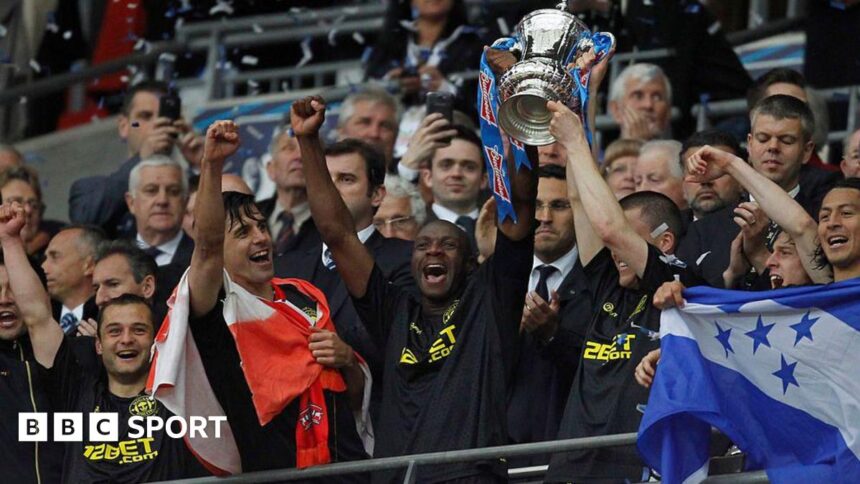
The question hangs in the smoky air of the pub, as potent and divisive as the pint in your hand: Would you take relegation for an FA Cup win? For most supporters, it’s a hypothetical exercise in tortured loyalty. For the fans of Wigan Athletic, it is history. In 2013, they achieved the impossible and the unthinkable in the same, dizzying month: a last-gasp Ben Watson header to slay Manchester City at Wembley, followed by the cold, hard reality of relegation from the Premier League just three days later. They became the ultimate case study, forcing every fan to confront the soul of their support. Is the enduring magic of a day in the sun worth a potential year—or more—in the shadows?
The Unforgettable Alchemy of Cup Glory
Let’s first define the prize. For the majority of clubs outside the financial stratosphere, a major trophy is a generational event. Ask yourself: How many major finals have you seen your team win? For fans of perhaps 14-16 Premier League clubs, the honest answer is none. The modern game is structured towards predictability; the same clubs cycle through the Champions League places, hoovering up the domestic cups as consolation prizes.
This is why the FA Cup retains its mystical pull. It is the vehicle for immortality. The day out at Wembley, the palpable tension that is entirely different from league fare, the collective dream of an entire town or city riding on ninety minutes. Winning a cup is a permanent entry in the history books. It’s tangible. You can touch the replica trophy, watch the DVD decades later, point to the faded scarf in the attic. It provides stories to tell grandchildren, a shared cultural touchstone that defines a community. It is, in its purest form, why we fell in love with football in the first place: the glorious, unpredictable pursuit of glory.
Consider the evidence of its impact:
- Legacy Over Logic: Fans remember heroes, not league positions. Roberto Di Matteo’s Chelsea tenure is defined by a Champions League win, not his league record.
- Community Cohesion: A cup run galvanizes a city like nothing else, creating shared memories that transcend the sport itself.
- The “I Was There” Factor: Witnessing your club lift a major trophy is a bucket-list moment that decades of stable mid-table finishes can never provide.
The Brutal Economics of Premier League Survival
Now, let’s examine the cost. The Premier League is not just a football competition; it is a financial superstate. Relegation represents a catastrophic economic event, with consequences that can cripple a club for years. The loss of broadcast revenue—now over £100 million per season—is a cliff edge. It triggers clauses in player contracts, forces fire-sales of assets, and can lead to a spiral of austerity and further decline.
Survival, therefore, is not about cowardice or a lack of ambition. It is about existential preservation. It is the guarantee of another season in the global spotlight, another year of financial windfall that can fund infrastructure, squad development, and long-term stability. Choosing survival is choosing a future. It is the pragmatic, responsible path. The league table, they say, never lies, and its brutal arithmetic dictates a club’s very viability.
The argument for pragmatism is powerful:
- Financial Cataclysm: The parachute payments are a cushion, not a replacement, for Premier League riches.
- Player Exodus: Relegation often triggers a mass exodus of top talent, dismantling a squad overnight.
- The “Sunderland ‘Til I Die” Syndrome: As documented, relegation can begin a cycle of decline that is incredibly difficult to arrest, leading to years in the lower leagues.
Wigan’s Legacy: Blessing or Curse?
Wigan’s story is the Rosetta Stone for this debate. For their fans, that May in 2013 is a paradox forever frozen in time. They have the moment—the iconic, against-all-odds FA Cup victory—that fans of far bigger clubs would envy. They saw their team walk up the Wembley steps, lift the oldest trophy in football, and qualify for Europe. That memory is bulletproof.
Yet, the aftermath has been harsh. Relegation began a turbulent period featuring further drops, administration, and a fight for the club’s very existence. The question for them is stark: Was the trade-off worth it? Speak to a Latics fan, and you’ll likely get a nuanced, emotional answer. The pain of the subsequent struggles is real and ongoing. But would they surrender that day, that trophy, to have stayed up? Most would offer a defiant, heart-led “no.” The glory was pure; the struggle is part of their story. It proved that even in a sport dominated by money, magic can still happen.
The Verdict: Heart, Head, and the Nature of Fandom
So, survival or glory? The answer reveals what kind of fan you are, and what you believe football is for.
The Head’s Choice: Survival. This is the rational, forward-thinking position. It prioritizes the club’s health, its future, and the promise of more seasons competing at the highest level. It accepts that football is now a business and that sustainability is the ultimate goal. This fan dreams of a slow, steady build, perhaps a European push, and the chance to compete for cups without the sword of Damocles hanging overhead.
The Heart’s Choice: FA Cup Glory. This is the romantic, visceral, and emotional position. It argues that football is about moments, not spreadsheets. It believes that the eternal memory of triumph outweighs the transient status of a 17th-place finish. This fan lives for the stories they will tell, for the proof that their club, against all financial logic, reached the pinnacle. They accept potential hardship as the price for a piece of immortality.
In an age where the game feels increasingly sanitized and predictable, the FA Cup final remains one of the last bastions of true, unscripted drama. The Premier League guarantees income; the FA Cup offers legend. For the billionaire owner, the choice is simple: survival. For the fan who paints their face, travels the length of the country, and passes their allegiance to their children, the choice is agonizingly complex.
Prediction: As financial disparities grow, this dilemma will only become more acute. We may see more “cup specialist” teams sacrifice league footing for a glory shot, while others will treat the cups with outright disdain, fielding weakened teams to secure their Premier League lifeline. The tragedy—and the beauty—of modern football is that both strategies are, in their own way, correct.
Conclusion: The Glory is Forever
When you strip it all back, football fandom is not a rational exercise. It is a lifelong emotional investment. We endure countless forgettable 1-1 draws, dreary midweek defeats, and seasons of mediocrity for those few, fleeting moments of unadulterated joy. The Premier League survival is a statistic; an FA Cup win is a shared heirloom.
So, if the genie offered the deal—the trophy, the open-top bus parade, the eternal place in history, at the cost of a season in the Championship—could you refuse? Knowing the potential consequences, my hand, trembling with guilt and giddy anticipation, would still reach for the cup. Because decades from now, on a cold Tuesday night watching a league fixture, you can close your eyes and be back at Wembley, the sun on your face, watching your captain raise the cup. Survival keeps you in a league. Glory makes you part of football’s forever story. And isn’t that why we’re all here?
Source: Based on news from BBC Sport.