Dom Taylor’s Darts World Shatters: A Tale of Grief, Deception, and a Sincere Apology
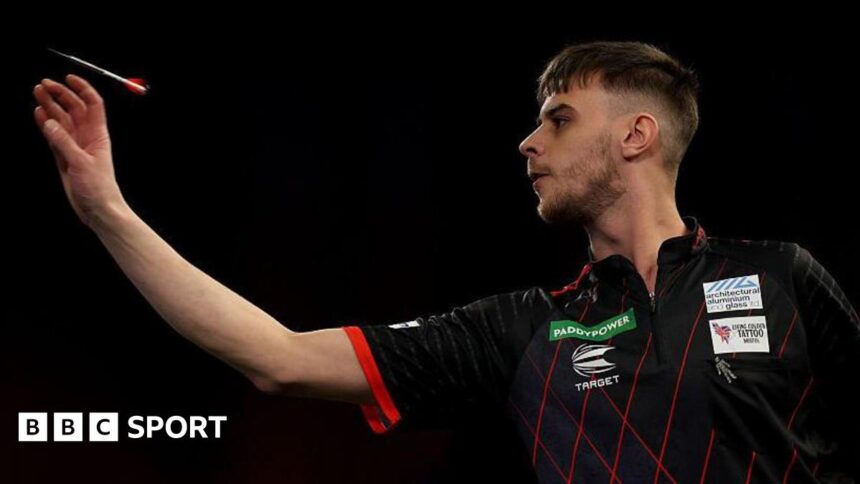
The raucous, festive atmosphere of Alexandra Palace, the spiritual home of world darts, was pierced this week by a sobering and deeply human story. Dom Taylor, a 27-year-old English dart player ranked 65th in the world, saw his World Championship dream dissolve not on the oche, but in a laboratory. Following a first-round victory, a failed anti-doping test has led to his exclusion from the tournament, triggering a wave of shock and a raw, remorseful apology from the player himself, citing a profound personal struggle.
The Stunning Revelation and a “Blatant Lie” Exposed
The Darts Regulation Authority (DRA) confirmed the news on Friday, stating Taylor was tested in line with ongoing anti-doping procedures after his initial match. The result was positive for a banned substance. In a swift and emotional statement, Taylor did not contest the finding. Instead, he offered a startlingly frank admission. “I am sincerely sorry,” he began, before confronting his own actions head-on. He apologized for what he termed “blatant lying“—presumably to authorities or to himself in the lead-up to the test. This immediate acceptance of culpability marked a significant departure from the often legalistic denials that follow such announcements.
Taylor’s journey at Ally Pally had started with promise. His victory over Oskar Lukasiak was a career highlight on the sport’s biggest stage. Yet, the triumph is now irrevocably tainted. The DRA’s protocols, which mirror the seriousness of those in more physically demanding sports, underscore darts’ commitment to integrity. This incident serves as a stark reminder that professional darts is not immune to the scandals that plague global athletics.
Behind the Headlines: A Personal Trauma Unveiled
What transforms this story from a simple disciplinary case into a human tragedy are the reasons Taylor provided. The Dartford thrower revealed his mental health has been severely impacted by a series of personal traumas. Most devastatingly, he referenced the anniversary of his daughter’s death. This glimpse into his private hell paints a complex picture of an athlete in crisis, grappling with unimaginable grief while trying to perform at the pinnacle of his profession.
Sports psychologists often note that athletes are not impervious to life’s catastrophes; their arena simply becomes the backdrop for their pain. Taylor’s admission suggests a potential link between his mental state and the decision that led to the failed test. Was it a misguided attempt to self-medicate? A lapse in judgment born from despair? While not excusing the violation, it provides a critical context often missing from doping narratives. The key facts of his situation are harrowing:
- World Ranking of 65th at the tournament’s start, indicating a player on the cusp of breaking through.
- Exclusion from the PDC World Darts Championship at his career’s most visible moment.
- A direct apology for “blatant lying,” showing rare public self-flagellation.
- The profound impact of personal grief, including the anniversary of his daughter’s death, on his mental health.
Expert Analysis: Integrity, Compassion, and the Road to Rehabilitation
From a sporting governance perspective, the DRA had no choice. The integrity of competition is non-negotiable. Allowing a player who tested positive to continue would undermine the entire anti-doping framework and be grossly unfair to competitors. The swift action reinforces that darts, despite its pub-game origins, is a serious professional sport with stringent rules.
However, the court of public opinion often operates differently. Taylor’s raw honesty about his mental health and personal tragedy will likely generate a measure of public sympathy that a standard doping case would not. The challenge for the DRA now is to balance its necessary disciplinary process—which will likely involve a significant ban—with support mechanisms. Does the sport have adequate resources to assist players in such profound distress? This case may prompt a wider conversation about mental health support within the PDC system, moving beyond pure punishment toward holistic athlete welfare.
Taylor’s vow that he will be “back to prove himself” is a typical athlete’s refrain, but here it carries the weight of someone fighting battles on multiple fronts. His comeback will not merely be about reclaiming a ranking spot; it will be a public journey of personal rehabilitation and regaining trust.
Predictions and the Path Forward for Dom Taylor
The immediate future for Dom Taylor is bleakly predictable. A ban from all DRA-sanctioned events is inevitable. The length will depend on the substance involved, the circumstances, and his cooperation. Given his immediate admission and the mitigating context of his mental health, he may argue for a reduction from a standard four-year suspension. However, the DRA must be careful not to set a precedent where personal tragedy becomes a carte blanche for rule-breaking.
Long-term, Taylor’s career is at a crossroads. The stigma of a doping violation is severe, and sponsors will vanish. His prediction of a return will be tested by time and his own ability to heal. The darts community, famously supportive but fiercely proud of its clean image, will be watching. A genuine, sustained period of contrition and transparency will be essential. His story could, in years to come, become one of two things: a cautionary tale about the consequences of poor choices under pressure, or a remarkable narrative of redemption, where a player overcame immense personal and professional downfall to return.
The wider impact on darts is significant. This is one of the highest-profile doping cases in the sport’s modern era. It will lead to increased scrutiny of anti-doping measures and likely more frequent testing. For fans, it’s an unwelcome reminder that the glitter and glamour of Ally Pally can mask darker struggles happening just off-stage.
Conclusion: A Sobering Moment in the Spotlight
Dom Taylor’s failed test is more than a sports disciplinary headline. It is a profoundly human story of a man seemingly broken by grief, making a catastrophic error as his professional moment arrived. His sincere apology and shocking honesty about his “blatant lying” and mental health struggles complicate the narrative, inviting empathy without absolving responsibility. The Darts Regulation Authority acted correctly to protect the sport’s integrity, but this case exposes the delicate intersection of mental health, personal tragedy, and the rigid demands of professional competition.
As the darts world moves on, with the spotlight returning to the arrows flying at the Ally Pally stage, Dom Taylor begins a lonely exile. His path back will be long, scrutinized, and inextricably linked to his personal healing. His promise to return and prove himself may be the flicker of hope he needs. Whether that flame can endure the winds of consequence and regret remains the most poignant unanswered question of this whole, sad affair.
Source: Based on news from BBC Sport.