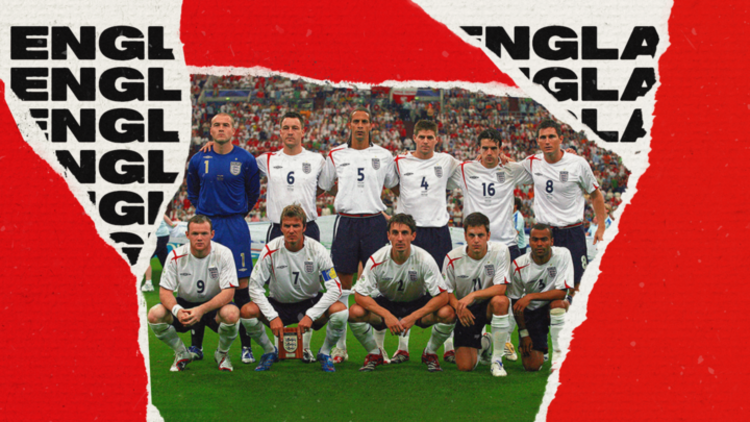
The Summer a Golden Generation Lost Its Shine: Inside England’s 2006 World Cup Meltdown
It was supposed to be the moment. The summer of 2006. A squad so brimming with Premier League royalty, Champions League winners, and individual genius that the rest of the world looked on with a mixture of envy and respect. England had a spine of world-class talent: a goalkeeper who could win you points single-handedly, a midfield that could dictate any game, and a forward line that boasted the Premier League’s top scorer. This was the ‘golden generation’—a phrase that now makes those who wore the shirt wince with regret.
“I don’t look back at that time with any type of happiness,” admits Rio Ferdinand, the elegant centre-back who was supposed to anchor this defensive fortress. Ask him about the label ‘golden generation’ and he doesn’t just dismiss it; he destroys it. “Actually, he precedes that assessment with an expletive when considering the label,” sources confirm. “I feel embarrassed when I say it,” Ferdinand confesses in The Golden Generation, the new BBC documentary that dissects why this star-studded team—tipped to end 40 years of hurt since the 1966 triumph—unravelled so spectacularly on the biggest stage.
This is the story of that summer. Not a celebration, but an autopsy. A look at how a collection of the most gifted footballers England has ever produced managed to turn promise into paralysis, and talent into trauma.
The Weight of the Crown: Why the ‘Golden Generation’ Label Was Doomed
To understand the failure, you have to understand the pressure. The 2006 squad was not just good on paper; it was generational. David Beckham, Steven Gerrard, Frank Lampard, Paul Scholes (who had just retired from internationals but his shadow loomed large), John Terry, Ashley Cole, Wayne Rooney, and Michael Owen. These were not just players; they were icons. They had won the Champions League, the Premier League, and the FA Cup. They were the best of the best.
Yet, Ferdinand’s reaction to the label is telling. The term ‘golden generation’ was not a badge of honour; it was a millstone. It created an expectation of inevitability. “I feel embarrassed when I say it,” he says, and that embarrassment stems from the gap between perception and reality. The media and the public believed that talent alone would win tournaments. The players, however, knew the terrifying truth: talent is a prerequisite, but it is not a guarantee.
The label set a standard that was impossible to meet. Every match was a referendum on their legacy. Every draw was a crisis. Every tactical tweak was a national debate. The players were not just playing for a trophy; they were playing to validate a prophecy. And when a prophecy hangs over your head, it is very hard to swing your leg freely.
The Tactical Trap: Why England’s Stars Could Not Shine Together
The most damning evidence in The Golden Generation documentary is the tactical analysis. England had the parts, but they didn’t have the engine. The central midfield pairing of Steven Gerrard and Frank Lampard is the classic example. Both were box-to-box dynamos for their clubs. Both scored goals. Both demanded the ball. But together, they were a puzzle that manager Sven-Göran Eriksson could never solve.
Eriksson’s rigid 4-4-2 formation forced square pegs into round holes. Instead of a holding midfielder to allow both to roam, England had a static system. The result? Two of the best midfielders in the world spent their time stepping on each other’s toes. They were brilliant individually, but as a pair, they were neutered.
- Lack of Tactical Balance: No natural defensive midfielder to shield the back four.
- Positional Clashes: Both Gerrard and Lampard played best as a central ‘free 8’, not as a disciplined two.
- Over-Reliance on Beckham: The captain was the primary creator, but his game was built on crosses, not through-balls.
- Rooney’s Isolation: Wayne Rooney was the breakout star, but he was often forced to play as a lone striker or out of position.
The result was a team that looked terrifying on paper but played with the fluidity of a traffic jam. They beat Paraguay, Trinidad & Tobago, and Ecuador, but they did so without flair. The style was functional, not fearsome. And in a tournament where Italy, France, and Germany were playing with tactical intelligence, England was playing with brute force that lacked direction.
The Portugal Curse: The Quarter-Final Catastrophe
If the group stage was a warning, the quarter-final against Portugal was the explosion. The match on July 1, 2006, in Gelsenkirchen is a scar on the memory of every English fan. It was the moment the golden generation officially lost its shine.
The game started with promise, but it quickly descended into chaos. In the 62nd minute, Wayne Rooney—the 20-year-old who was supposed to be the saviour—was sent off for a stamp on Ricardo Carvalho. The red card was the catalyst. England, down to ten men, defended valiantly. They took the game to penalties. But the shootout was a horror show. Lampard, Gerrard, and Carragher all missed. England lost 3-1 on penalties.
But the failure went deeper than the spot kicks. The players were exhausted. The Premier League season is a marathon, and the World Cup demands a sprint. By the time the quarter-final rolled around, key players like Rooney (just back from a broken foot), Owen (injured early in the tournament), and Beckham (subbed off with injury and tears) were running on fumes. The squad was not just tactically unbalanced; it was physically broken.
Ferdinand’s reflection is poignant. “I don’t look back at that time with any type of happiness.” The defeat was not just a loss; it was a confirmation of the label’s curse. The golden generation had choked. They had the talent to win, but they lacked the collective psychology to handle the moment. They were individuals fighting for their own legacy, not a team fighting for a single cause.
Expert Analysis: What Could Have Been and What Went Wrong
As a sports journalist who has watched this story for two decades, the tragedy of 2006 is that it was avoidable. The squad had the defensive solidity of Italy (Terry, Ferdinand, Cole, Neville) and the attacking firepower of Brazil (Rooney, Owen, Beckham). But the missing piece was cohesion.
Eriksson’s failure to find a system that maximized his stars is the first sin. He should have played a 4-1-3-2 with a dedicated defensive midfielder (like Owen Hargreaves, who was criminally underused until the Portugal game) to free up Gerrard and Lampard. He should have allowed Rooney to drop deep and link play, rather than forcing him to chase long balls.
The second sin was the culture of entitlement. The documentary suggests that the players were too comfortable. They had the best hotels, the best facilities, and the best media treatment. But they didn’t have the hunger of a squad that had been through the fire. Compare them to Italy’s 2006 squad—a team of veterans who had faced Serie A scandals and personal demons. Italy had grit. England had glitz.
Predictions for the Future: If England wants to avoid repeating 2006, the lesson is clear. The current generation (Kane, Bellingham, Foden) must learn that talent alone is not enough. The 2006 squad had more individual ability than the 2018 semi-finalists, but the 2018 team had a manager (Gareth Southgate) who created a collective spirit. The golden generation failed because they were a collection of stars. The next generation must be a team of brothers.
Conclusion: The Shine That Never Was
The summer of 2006 was supposed to be the coronation. Instead, it was the funeral of a dream. The ‘golden generation’ label, once a source of pride, is now a source of shame for the men who wore it. Rio Ferdinand’s words echo through the years: “I feel embarrassed when I say it.”
The BBC documentary The Golden Generation does not offer easy answers. It shows that the failure was not due to a lack of talent, but a failure of system, psychology, and leadership. England’s stars were victims of their own hype. They were so busy being golden that they forgot how to be sharp.
As we look back, we must remember that the golden generation did not lose its shine because it was overrated. It lost its shine because it was mismanaged. The talent was real. The potential was enormous. But in the heat of a German summer, under the glare of a billion eyes, the promise melted away. And all that remains is the quiet, painful admission from a world-class defender: “I don’t look back at that time with any type of happiness.”
Source: Based on news from BBC Sport.