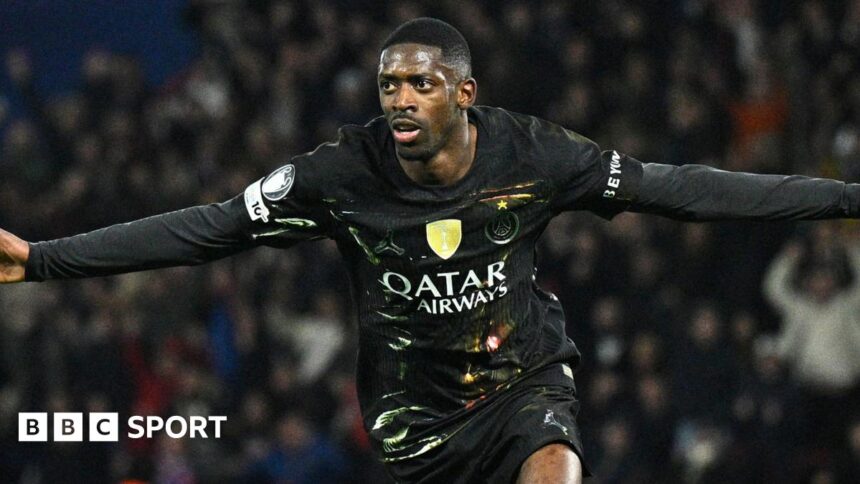
The Tactical Fluidity That Makes PSG So Impressive: How Luis Enrique’s Shape-Shifters Conquered Europe
For years, Paris Saint-Germain was the ultimate paradox of modern football. A club with infinite resources, a glittering galaxy of superstars, and a trophy cabinet groaning with domestic silverware, yet perpetually haunted by the ghost of Champions League failure. The narrative was tired: a collection of brilliant individuals, but never a cohesive, ruthless team. Then came 2025, and everything changed. Under the meticulous guidance of Luis Enrique, PSG finally lifted the Champions League trophy, not by outspending their rivals, but by out-thinking them. Now, as the holders march into the semi-finals of this season’s competition—hosting Bayern Munich in the first leg on Tuesday (20:00 BST)—they are not just defending a title. They are redefining what tactical football looks like in the modern era.
This is not the PSG of Lionel Messi, Neymar, and Kylian Mbappe. That team, for all its star power, often felt static, predictable, and fragile against elite opposition. This current incarnation is something far more dangerous. It is a fluid, shape-shifting organism where a winger becomes a full-back, a midfielder becomes a centre-forward, and a defender orchestrates the attack. It is the most impressive football the club has ever played, and it is built on a single, revolutionary principle: total positional interchangeability.
The Death of the Fixed Position: Luis Enrique’s “Dream” Squad
Earlier this month, Luis Enrique made a telling comment that perfectly encapsulates his philosophy. He stated, “it would be a dream to have 20 players who can play everywhere.” This was not a casual remark. It is the tactical blueprint that has turned PSG from a collection of egos into a relentless, unpredictable machine. The manager has systematically dismantled the traditional notion of a fixed starting XI, instead cultivating a squad of multi-functional athletes who can rotate roles seamlessly during the flow of a match.
The result is a system that is almost impossible to scout. Opponents cannot prepare for a specific threat because that threat is constantly moving. In the build-up phase, PSG often morphs into a 3-2-5 or a 2-3-5, but these numbers are misleading because the players wearing the shirt numbers are not sticking to their zones. A central defender like Marquinhos can surge into midfield to create a numerical overload, while a winger like Ousmane Dembélé drops deep to receive the ball and initiate a counter-attack from a full-back position.
This fluidity is not accidental chaos; it is a highly drilled, cognitive system. Every player must understand the space being vacated by a teammate and fill it immediately. The key tactical elements include:
- Constant Rotation in the Final Third: Forwards and midfielders swap positions without hesitation. A striker like Randal Kolo Muani might drift wide to drag a centre-back out of position, opening a central corridor for a runner from deep.
- Inverted Full-Backs as Playmakers: Nuno Mendes and Achraf Hakimi are not traditional wing-backs. They are instructed to invert into central midfield zones, acting as extra passers to break the opposition press.
- The “False” Structure: PSG’s shape in possession looks like a 4-3-3, but it is a mirage. Within seconds, it can become a diamond, a box midfield, or a back three, depending on where the ball is.
This approach has confused and outplayed some of the best teams in the world. Manchester City, Real Madrid, and now Bayern Munich have all struggled to pin down PSG’s players because the players refuse to stay pinned down.
From Galaxy of Stars to a Collective Machine
The irony of PSG’s current success is that it was achieved by letting go of the very stars that defined the club’s “Galácticos” era. The departure of Messi, Neymar, and eventually Mbappe was not a step backward; it was a liberation. Those players, while individually genius, often demanded the ball in specific areas, slowing down the tempo and making the team predictable. Luis Enrique’s system requires a different kind of intelligence: selflessness and spatial awareness.
Look at the current squad. Vitinha has transformed from a peripheral figure into the metronome of the team, capable of playing as a deep-lying playmaker, a box-to-box runner, or even a false winger. Warren Zaïre-Emery, at just 19 years old, is the ultimate embodiment of this fluidity. He can be a defensive shield, a dribbler in tight spaces, or a goal-scoring threat arriving late in the box. He is not a midfielder; he is a football player who happens to start in the middle of the pitch.
Even the forwards have been reprogrammed. Bradley Barcola, once a raw winger, now drifts centrally to combine with the midfielders, while Dembélé has learned to play as a roaming creator rather than a predictable one-on-one specialist. The result is a team that attacks with a swarm mentality. They don’t rely on a single superstar to bail them out; they overwhelm the opposition through positional overloading and temporal disorientation—making the defenders unsure of who to mark and when.
This collective ethos is why they are now strong contenders to repeat last year’s impressive feat. They are no longer a team that prays for individual brilliance. They are a team that suffocates the opponent with tactical intelligence.
How PSG Will Unlock Bayern Munich: The Semi-Final Blueprint
Tuesday’s first leg against Bayern Munich at the Parc des Princes presents a fascinating tactical chess match. Bayern, under their own management, are a high-pressing, vertical team. They will look to exploit the spaces that PSG’s fluidity can sometimes leave vacant in transition. However, this is where Luis Enrique’s system is most dangerous. PSG’s rotations are designed to create escape routes against the press.
Here is how PSG’s tactical fluidity will likely dismantle Bayern’s defensive structure:
- Targeting the Half-Spaces: Bayern’s full-backs are aggressive. PSG will use their inverted midfielders (Vitinha and Zaïre-Emery) to occupy the half-spaces between Bayern’s centre-backs and full-backs. This forces Bayern’s midfielders to make impossible choices: step out and leave a gap, or stay compact and allow PSG to receive the ball in dangerous areas.
- The Hakimi-Mendes Overlap: By inverting one full-back while the other stays wide, PSG creates a 2v1 situation on the flanks. If Bayern’s winger drops to cover, the central space opens. If the full-back stays tight, the inverted midfielder has time to pick a pass.
- Second-Phase Attacks: PSG’s fluidity is most potent after a failed clearance. Because their players are not in fixed positions, they are always in motion to pick up loose balls. Expect to see Dembélé or Barcola pop up in central areas to win the second ball and immediately launch a counter-attack.
Prediction: Bayern will try to sit deep and hit on the counter, but PSG’s positional rotations will eventually create a numerical overload in the middle third. The first leg will be tight, but PSG’s ability to shift from a 4-3-3 to a 3-2-5 in possession will overwhelm Bayern’s defensive lines. I predict a 2-1 win for PSG in Paris, setting up a controlled performance in the return leg.
The Legacy of a Shape-Shifting Champion
What Luis Enrique has built at PSG is more than just a winning team. It is a tactical evolution. The days of the “Galáctico” model—where you buy the best player for each position and let them play—are officially over at the highest level. The future belongs to squads of adaptable, intelligent players who can execute multiple roles within a single match.
PSG’s 2025 Champions League triumph was not a fluke. It was the culmination of a philosophy that prioritizes cognitive flexibility over raw talent. By creating a team where a defender can be a playmaker, a winger can be a striker, and a midfielder can be a defender, Luis Enrique has made PSG the most tactically impressive team in Europe.
As they prepare to face Bayern Munich, the rest of the continent is watching. Can anyone stop a team that refuses to be defined by a formation? Can anyone prepare for a system that changes its identity every ten minutes? The answer, so far, has been a resounding no. The Paris Saint-Germain that once choked under the weight of individual expectation is gone. In its place is a fluid, intelligent, and terrifyingly effective machine. The dream of 20 players who can play everywhere is becoming a reality, and it is a nightmare for the rest of Europe.
The semi-final awaits. The fluidity remains. And PSG look poised to reign again.
Source: Based on news from BBC Sport.