Tiger Woods’ Shadow and Support: Fans Rally at Houston Open Amidst Latest Legal Turmoil
The spectacle of a PGA Tour event is a symphony of sounds: the crisp thwack of a driver, the polite applause ringing from a distant green, the whispered calculations of a yardage book. But during the second round of the Texas Children’s Houston Open, a different, more persistent hum emerged from the gallery. It was the sound of a conversation that refused to be confined to the fairways, a debate playing out in hushed tones and bold sartorial statements, all centered on one absent figure: Tiger Woods.
While the tournament’s contenders battled Memorial Park Golf Course, Woods was over a thousand miles away, processing the aftermath of a car crash and a DUI arrest in Florida. The incident, where police reported signs of impairment though Woods was uninjured, sent seismic waves through the sports world. Yet, on the ground in Houston, the reaction from fans presented a complex portrait of modern fandom—a blend of unwavering loyalty, concerned discourse, and a public grappling with the complicated legacy of a fallen idol.
A Gallery Divided: Jerseys and Judgment in Equal Measure
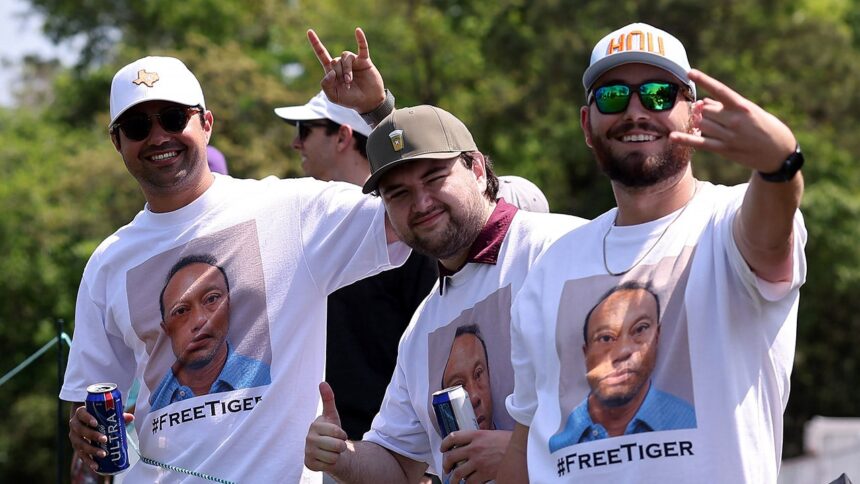
Walking the ropes at Memorial Park, the dichotomy was striking. Amidst the sea of golf polos and tournament logos, flashes of Tiger’s iconic Sunday red and black appeared, worn not by the man himself, but by his devotees. Fans proudly posed for photos in Woods-branded attire, their support visibly undimmed by the morning’s headlines. This was more than just old merchandise; it was a deliberate, visual statement of allegiance.
Yet, in the same breath, the tournament became an impromptu public forum. At concession stands, on shuttle buses, and leaning against gallery ropes, fans dissected the news with the fervor of sports talk radio hosts. Conversations pivoted from club selection to legal ramifications, from recovery timelines to personal accountability. The DUI arrest became an unavoidable subplot to the tournament’s own narrative, forcing the golf world to once again confront the human being behind the legendary highlight reel.
Beyond the Headlines: The Athlete Addiction Conversation Reignited
The incident did more than generate tabloid fodder; it reignited a critical, somber discussion about the pressures facing elite athletes. Analysis from voices like Fox News’ Mark Meredith provided the factual framework of the arrest, but deeper context came from those who have walked the lonely path of professional sports. Former NFL player Randy Grimes, now a prominent advocate, highlighted the acute vulnerability of athletes transitioning from structured, adrenaline-fueled careers.
Grimes’ perspective sheds a crucial light on the Woods saga. The cycle of physical pain, surgical recovery, and psychological toll creates a perfect storm. For a competitor like Woods, whose identity is so deeply rooted in physical dominance and control, the loss of that capability can be catastrophic.
- The Pressure Cooker: Lifetime spent in a high-stakes, performative environment with immense scrutiny.
- The Pain Management Trap: Chronic injuries often lead to prescribed medications, which can lay the groundwork for dependency.
- Identity Crisis in Retirement (or Inactivity): The loss of routine, purpose, and the “warrior” identity can lead to profound emptiness.
- The Enabling Bubble: Wealth and fame can insulate individuals from early interventions and honest feedback.
This framework moves the discussion beyond mere scandal and into a more nuanced understanding of a public health crisis within professional sports. Woods is not an anomaly; he is a high-profile case in a pattern that has affected countless athletes across disciplines.
The Unbreakable Bond: Why Fan Support Persists
Despite the serious nature of the event, the visible fan support in Houston begs the question: why does the bond between Tiger and his fans seem so resilient? The answer lies in the profound, two-decade-long emotional investment.
Tiger Woods transformed golf. He brought an unprecedented athleticism, dominance, and cultural relevance to a sport often perceived as static. For millions, his career is the backdrop to their own lives—remembering where they were for the 2005 Masters chip-in or the 2008 U.S. Open win on a broken leg. This creates a reservoir of goodwill that is incredibly difficult to deplete. Furthermore, fans have already navigated the career-threatening scandals and injuries of 2009 and beyond. For many, this latest chapter is viewed not as a new betrayal, but as a tragic continuation of a long, public struggle, eliciting compassion as much as disappointment.
Their support is not necessarily an endorsement of his actions, but rather a testament to the indelible mark he has left on them as spectators. It is a hope for redemption, a longing for one more miraculous comeback, not just on the course, but in life.
Predictions: A Crossroads for Legacy and Livelihood
The path forward for Tiger Woods is shrouded in uncertainty, with ramifications for his legacy, his career, and his personal well-being.
Immediate Future: The legal process will take precedence. A swift and transparent handling of the case, followed by a demonstrable commitment to a treatment program, will be the first steps in managing public perception. Expect his public appearances to be on hold indefinitely.
Competitive Golf: The already-slim prospects of a meaningful competitive return have likely evaporated. The physical challenge was already immense; layering on this significant personal and legal turmoil makes the focus required for Tour golf nearly impossible. His competitive appearances may be relegated to ceremonial starts at major championships, if at all.
Long-Term Legacy: Woods’ legacy is now irrevocably bifurcated. He will forever be the undeniable golf titan—the 15-time major winner who changed the game. Simultaneously, his story will also be a cautionary tale about the perils of fame, pain, and the struggle for equilibrium after the roar of the crowd fades. How he addresses this chapter in the years to come will determine which facet of his story resonates most powerfully in the end.
Conclusion: More Than a Sports Story
The Texas Children’s Houston Open will crown a champion, but its most lasting image may be of fans in Tiger red, standing in the Texas sun, embodying a conflict that extends far beyond the out-of-bounds stakes. The Tiger Woods narrative is no longer solely a sports story. It is a complex American saga about genius and frailty, public adoration and private pain, spectacular triumph and human failing.
The fans in Houston, with their mixed expressions of concern and loyalty, reflected that complexity back at us. They reminded the world that while the athlete can be judged by scores and trophies, the man is subject to the same battles as anyone else—only under a microscope of unimaginable intensity. The road ahead for Tiger Woods is not the back nine at Augusta; it is far more treacherous and personal. And as the golf world moves on to the next tournament, a significant portion of its heart remains with a fallen star, hoping not for a birdie putt, but for a lasting peace.
Source: Based on news from Fox Sports.