Tiger Woods at a Crossroads: Masters Return Murky, Ryder Cup Captaincy in Doubt Amidst Boardroom Battles
The image is iconic: Tiger Woods, bathed in the golden light of an Augusta Sunday, slipping on the green jacket for a fifth time. It’s a vision that fuels the dreams of golf fans every spring. But as the 2025 Masters draws nearer, the man himself is painting a far more complex and uncertain picture of his future, one where boardroom negotiations hold as much weight as backswings, and his legendary competitive fire is measured against the stark reality of a rebuilt body.
- The Lingering Question: Will Tiger Walk Augusta’s Fairways in 2025?
- “Boardroom Hours vs. Practice Hours”: The New Tiger Priority
- The Ryder Cup Captaincy: A Job He Wants, But Does He Have the Time?
- Expert Analysis & Predictions: Reading Between the Lines
- The Evolving Legacy: From Pure Competitor to Architect
The Lingering Question: Will Tiger Walk Augusta’s Fairways in 2025?
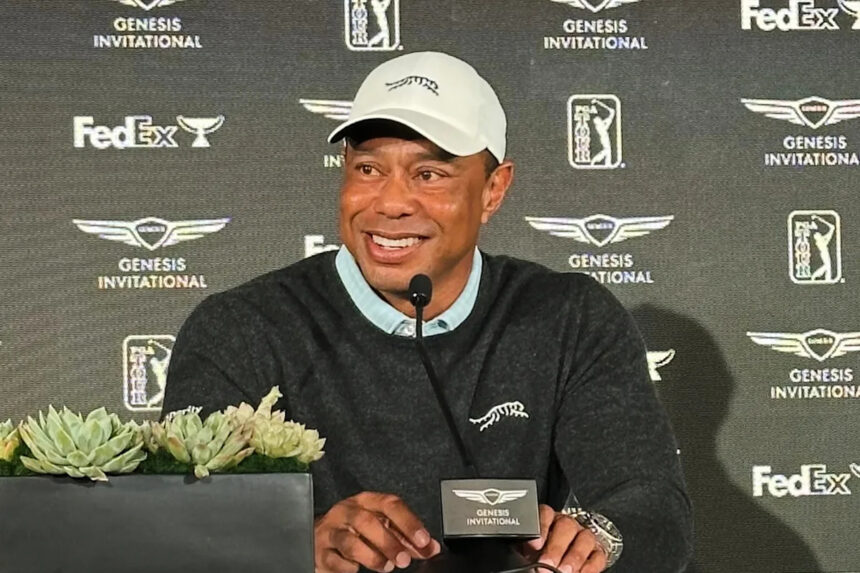
Speaking at the Genesis Invitational, an event he hosts, Tiger Woods offered no definitive answer on a potential return to the Masters, which begins just under two months from now. This ambiguity is rooted in a familiar foe: his health. Following a seventh back surgery to replace a disk, Woods’s physical capacity remains a day-to-day equation. His last competitive appearance at Augusta was in 2024, where he achieved a historic feat, making the cut for a record 24th consecutive time, a testament to his unparalleled mastery of the course even in a diminished physical state.
However, making the cut and contending are two different challenges. The undulating terrain of Augusta National is a brutal test for a healthy athlete, let alone one with a fused back and multiple leg surgeries. Woods’s preparation is no longer the singular, obsessive practice routine of his prime. His current reality involves a meticulous balancing act between rehabilitation, limited practice windows, and managing pain and inflammation. The decision to play will come down to a simple, brutal calculus: can his body withstand 72 holes of major championship pressure on one of the world’s most demanding walks?
- Historic Legacy: A five-time Masters champion, Woods’s presence alone electrifies the tournament.
- Physical Hurdle: A seventh back surgery and the cumulative effect of past injuries make preparation sporadic.
- The Cut Streak: The record 24 consecutive cuts made is a powerful motivator, but preserving his body may take precedence.
“Boardroom Hours vs. Practice Hours”: The New Tiger Priority
Perhaps the most revealing comment from Woods this week was his comparison of his current workload to his legendary practice ethic. “I thought I spent a lot of hours practicing in my prime,” Woods stated. “It doesn’t compare to what we’ve done in the boardroom.” This single sentence frames the new chapter of Tiger Woods’s career. He is no longer just a player; he is a pivotal power broker in the most turbulent period in modern golf history.
As a key member of the PGA Tour’s transaction subcommittee, Woods is deeply embroiled in negotiations with the Saudi Public Investment Fund (PIF), backers of LIV Golf. His focus has shifted from shaping shots to reshaping the PGA Tour schedule and its fundamental financial structure. This role consumes time and mental energy that was once exclusively reserved for competition. The “boardroom hours” are not just an obligation; they are, in Woods’s view, a critical duty to secure the future of the tour he helped build. This leaves far fewer hours for the grinding rehab and practice necessary to prepare his body for major championship golf.
The Ryder Cup Captaincy: A Job He Wants, But Does He Have the Time?
The uncertainty extends beyond his playing schedule to a coveted leadership role: the captaincy of the U.S. Ryder Cup team for the 2027 matches at Adare Manor in Ireland. It is a position seemingly tailor-made for Woods, a competitor whose presence alone can shift the intensity of any match. Yet, for the second time, Woods has cast significant doubt on his ability to accept.
He previously turned down the captaincy for the 2025 matches at Bethpage, citing time constraints. The reason remains unchanged. “Those hours also are an obstacle in his decision,” he acknowledged, referring directly to the immense boardroom and tour governance commitments. Being a modern Ryder Cup captain is a multi-year, all-consuming endeavor involving player relationships, logistical planning, and strategic preparation. Woods does not do things halfway. If he cannot commit fully, he will not commit at all, believing it would be a disservice to the team and the role.
The PGA of America, which selects the captain, faces a dilemma. Do they wait for Tiger, hoping his schedule clears? Or do they move to another qualified candidate, knowing that a Woods captaincy in Ireland would be a monumental event for the sport globally?
Expert Analysis & Predictions: Reading Between the Lines
As a golf analyst, parsing Tiger’s comments requires listening to what he doesn’t say as much as what he does. The silence on a Masters commitment is deafening. In years past, when he felt ready, he has been more direct. This hesitancy suggests his body is simply not cooperating at the level required for him to feel confident.
Prediction for the Masters: The odds increasingly lean against a Tiger Woods appearance in 2025. The combination of his surgical recovery, lack of competitive reps, and overwhelming off-course duties creates a perfect storm of obstacles. I predict he will announce his withdrawal in the weeks leading up to the tournament, prioritizing long-term health and his off-course mission.
Prediction for the Ryder Cup: The 2027 captaincy is still in play, but the clock is ticking. Woods’s deep involvement in tour governance is not a short-term project. If a definitive framework agreement with the PIF is reached in the next 12-18 months, it could free up the mental space required. However, if negotiations drag on, the PGA of America will likely be forced to look elsewhere, perhaps to a figure like Stewart Cink or a previous vice-captain, with an understanding that Woods’s influence will be felt strongly in the team room regardless of his official title.
The Evolving Legacy: From Pure Competitor to Architect
The narrative around Tiger Woods is undergoing its most profound shift yet. He is transitioning, in real-time, from the game’s most fearsome competitor to one of its most influential architects. The drive that once fueled 15 major championships is now channeled into securing the PGA Tour’s future. While fans yearn for one more magical Sunday charge, Woods is engaged in a different kind of battle, one with higher stakes for the entire sport.
His immediate future, as he stated, includes “just about everything but golf.” The Masters and the Ryder Cup captaincy represent the powerful pull of his past and the legacy he built on the course. But the boardroom represents his present and future responsibility. Tiger Woods is at a crossroads, not between retirement and playing, but between two defining roles in golf history: the greatest player of his generation and a foundational architect of the game’s next era. For now, the architect appears to be holding the driver.
Source: Based on news from Yahoo Sports.