Tiger Woods Released on Bail After DUI Arrest: A Shattering Chapter in a Storied Career
The meticulously constructed narrative of Tiger Woods’s career, one defined by superhuman resilience and a relentless pursuit of greatness, encountered a jarring and dangerous new chapter on Friday. The golf icon was released on bail just hours after a harrowing single-vehicle crash led to his arrest on suspicion of driving under the influence. This incident, unfolding on a quiet Florida road near his home, presents not just a legal quandary but a profound human and professional crisis, casting a long shadow over his arduous comeback from physical ruin and personal scandal.
The Crash: A Narrow Escape on Jupiter Island
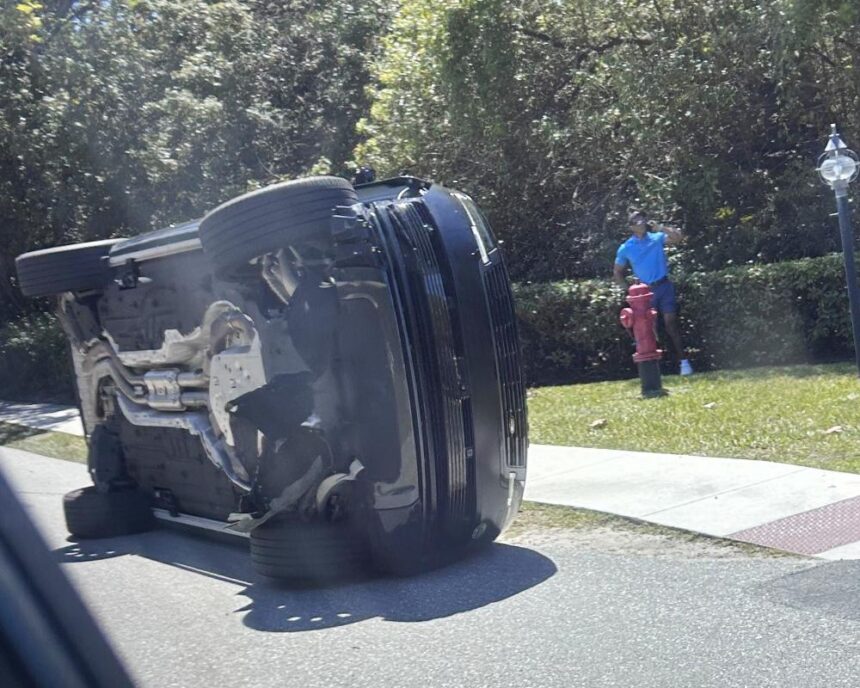
According to Martin County Sheriff John Budensiek, the sequence of events was both dramatic and alarmingly common. Shortly before 2 p.m. on a narrow two-lane road with a 30mph speed limit, Woods was driving his Land Rover at a “high rate of speed.” He approached a truck that was slowing to turn into a driveway. In an attempt to overtake, Woods’s vehicle clipped the truck’s trailer, veered off the roadway, and slid along the pavement before coming to a rest on its driver’s side.
Miraculously, Woods, who was alone in the vehicle, was able to extricate himself through the passenger-side window. The physical damage to the luxury SUV was significant, a twisted monument to the force of the impact. For a man whose body has been pieced back together through multiple surgeries, including a recent spinal fusion, the escape without major injury was itself a stroke of fortune. However, the real trouble began when deputies made contact with the disoriented golf legend.
The Arrest and Puzzling Impairment
At the scene, authorities immediately noted signs of impairment. Woods was subjected to standard roadside sobriety tests, which he reportedly failed, leading to his custody. The subsequent investigation took a curious turn. A breathalyzer test administered by law enforcement revealed a 0.00% blood alcohol concentration, definitively ruling out alcohol as the cause.
This critical detail shifted the focus entirely. Investigators concluded the impairment was likely due to prescription medication or other drugs. This aligns with Woods’s well-documented history of battling severe pain and undergoing numerous surgical procedures. However, the situation grew more legally complex when Woods, upon being transported to the county jail, refused to submit to a urinalysis test. This refusal, under Florida law, carries an automatic administrative penalty and bolstered the charges against him.
He was ultimately booked and charged with:
- DUI with property damage
- Refusal to submit to a lawful DUI test
No illegal substances were found in his vehicle, leaving the specific cause of his impairment an open, and now fiercely scrutinized, question.
Expert Analysis: Legal Peril and Personal Crossroads
From a legal standpoint, Woods faces serious but manageable charges. His release on his own recognizance is standard. However, the refusal of the urine test complicates his defense. “In the court of public opinion and the actual courtroom, that refusal is often interpreted as an admission of guilt,” states a former Florida prosecutor specializing in DUI cases. “The state will argue he knew what was in his system and chose not to provide evidence. His defense will likely center on the legality of the stop and the procedures followed, but the physical evidence of the crash and the officer’s observations are powerful for the prosecution.”
Beyond the legalities, this incident represents a catastrophic failure of judgment for a man who has spent the last six years carefully rehabilitating his image. After the 2009 scandal and his very public “hitting bottom” DUI arrest in 2017—which he attributed to an unexpected reaction to prescription medication—Woods had seemingly entered a period of humble, focused redemption. His 2019 Masters victory was framed as the ultimate comeback story, not just in sport, but in life.
“This shatters that narrative completely,” observes a veteran sports psychologist. “The trust he rebuilt with fans, sponsors, and his family is now severely damaged. This isn’t about a golf swing; it’s about a pattern of behavior involving vehicles and impairment. It points to potential, and deeply concerning, personal struggles that extend far beyond the fairway.”
Predictions: Fallout for Brand, Legacy, and Career
The immediate and long-term consequences for Tiger Woods will be multifaceted and severe.
Sponsorship and Brand Impact: While major partners like Nike have stood by him through previous scandals, this second DUI-related incident tests the limits of corporate patience. Endorsement deals often contain strict morality clauses. We can expect a period of radio silence from sponsors, with some potentially quietly distancing themselves or not renewing contracts. His own TGR Ventures empire will be in crisis management mode.
PGA Tour Status and Playing Future: The PGA Tour does not have a specific policy for off-course legal issues, so no immediate suspension is likely. However, the practical impact is immense. This mental and personal turmoil, on top of his physical fragility, makes any near-term return to competition highly improbable. The focus shifts from “when will he play?” to “what is he doing to address this?”
Legacy and Public Perception: The indelible stain on his legacy deepens. He will now be remembered not just as the greatest golfer of his generation and a comeback king, but also as a figure plagued by recurrent personal demons. The 2019 Masters victory will remain historic, but its context as a story of full redemption is irrevocably altered.
Conclusion: A Darker, More Complicated Redemption Story
Tiger Woods’s arrest is more than a celebrity mugshot. It is a distressing signal that the battles he faces off the course may be more complex and enduring than any back surgery or major championship pressure. The absence of alcohol points directly to the dangerous intersection of chronic pain management and personal responsibility. His refusal of the urine test suggests a moment of panic or calculation that will haunt him legally.
This episode is a stark reminder that the climb back to the summit of sport, while herculean, can be simpler than the journey toward personal stability. Tiger Woods has conquered golf’s toughest layouts and his own broken body. Now, he faces a far more profound test—one where the hazards are internal, the rules are unclear, and the stakes are the very integrity of his life’s second act. The world watched him rise, fall, and rise again. Now, it holds its breath, wondering if this latest crash is the end of the road or the beginning of his toughest, and most necessary, recovery yet.
Source: Based on news from Yahoo Sports.