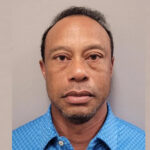
Tiger Woods Announces Step Away from Golf, Will Seek Treatment Following Florida Incident
The world of golf, and indeed the global sports community, was rocked this week not by a record-breaking score, but by a sobering personal announcement. Tiger Woods, the 15-time major champion whose career has been a decades-long saga of transcendent triumph and devastating setback, revealed he will step away from the game to seek professional treatment. This decision comes in the wake of a harrowing single-vehicle rollover in Florida and a subsequent arrest for Driving Under the Influence (DUI), a one-two punch that has cast a long shadow over his arduous comeback from spinal fusion surgery.
A Disturbing Sequence: From Crash to Courtroom
The incident that precipitated this latest chapter unfolded not on the manicured fairways of Augusta, but on a quiet Florida road in the pre-dawn hours. According to police reports, Woods was found asleep at the wheel of his running Mercedes-Benz, which was parked awkwardly on the side of the road with significant damage. The vehicle showed signs of a recent rollover. Body camera footage from the arresting officers painted a stark and disoriented picture of the golf legend, struggling through field sobriety tests. While his blood-alcohol level was reportedly below the legal limit, he was charged with DUI after authorities suspected impairment from prescription medication. In a statement, Woods attributed the incident to “an unexpected reaction to prescribed medications,” vehemently stating alcohol was not involved, but taking full responsibility for his actions.
This episode is frighteningly separate from his legendary on-course focus. The key facts are critical to understanding the gravity of the situation:
- Single-Vehicle Rollover: Woods’ car sustained major damage, a stark reminder of the physical danger involved.
- DUI Arrest: The charge, based on suspected prescription drug impairment, marks a serious legal and personal low.
- Medication Reaction: Woods cited an unexpected interaction between prescribed medications as the cause, highlighting a complex issue of pain management.
- Voluntary Step Away: His announcement to seek treatment is a proactive, if forced, acknowledgment of a problem that extends beyond the golf swing.
Expert Analysis: The Intersection of Pain, Pressure, and Peril
From a sports journalism perspective, this incident cannot be viewed in isolation. It is the latest, and perhaps most alarming, data point in a complex graph charting Woods’ physical and psychological battle over the last decade. “We have been watching a man wage a very public war against his own body for years,” notes Dr. Anya Petrova, a sports psychologist who has followed Woods’ career. “The multiple back surgeries, the knee procedures—each one requires a cocktail of pain management and rehabilitation. The mental toll of constant pain, coupled with the immense pressure to return to his former dominance, creates a perfect storm for missteps.”
This is not the first time Woods’ off-course life has derailed his career, but the context is profoundly different. The scandals of 2009 were about personal failings amid peak physical prowess. The 2017 DUI arrest was a cry for help related to back surgery recovery. Today, we see a 47-year-old athlete whose skeletal frame is held together by screws and fused vertebrae, whose walk is sometimes a pained shuffle, yet whose competitive fire still burns. The prescription medication pathway is a treacherous one for athletes in chronic pain, a tightrope walk between function and fog. Woods’ statement suggests he fell off that tightrope, with potentially catastrophic consequences.
Furthermore, the legacy management is now acutely delicate. The narrative of “the comeback” at the 2019 Masters was one of sport’s greatest stories. Now, the narrative risks being overshadowed by concerns for his well-being. Sponsors, while largely standing by him with statements of support for his health, must now weigh the image of a golfer seeking treatment against the image of the champion they invested in.
Predictions: What’s Next for Tiger Woods and the Game of Golf?
Predicting Tiger Woods’ path has always been a fool’s errand, but this incident creates clearer, if more somber, contours for the future.
1. A Long and Private Road to Treatment: Woods’ step away will not be a brief hiatus. Effective treatment for prescription medication issues, intertwined with chronic pain management, is a lengthy process. His return to public life will be cautious and likely preceded by a carefully managed statement of recovery. Competitive golf is the farthest thing from the immediate priority.
2. A Redefined Role in Golf: When he does return to the public sphere, his role within the sport may permanently shift. The dream of a sustained competitive comeback to challenge Jack Nicklaus’ major record now seems more distant than ever. His future influence may lean heavier into his TGR Ventures initiatives, course design, and mentorship through his foundation. We may see Captain Woods at the Ryder Cup before we see Contender Woods at the Masters.
3. The Void in the Sport: Golf continues to produce thrilling young talent, from Scottie Scheffler to Rory McIlroy. However, Woods’ absence—first physical, now total—leaves a vacuum no one can fill. Television ratings, tournament energy, and overall casual fan interest still spike when he is in the field. His prolonged absence will force the PGA Tour to continue accelerating its promotion of its new stars, but the “Tiger Effect” will remain a missed, potent force.
Conclusion: A Champion Facing His Greatest Challenge
Tiger Woods has stared down putts to win major championships, overcome swing overhauls, and conquered a broken body to win a fifth green jacket. Yet, the challenge he now faces may be his most formidable. It is not played out before roaring galleries or on high-definition screens, but in the quiet, determined work of recovery and health management. The Florida incident is a tragic reminder that the scars from his physical battles run deep, affecting realms far beyond his golf game.
His decision to step away and seek treatment, while born of crisis, is the first responsible shot he has hit in this new ordeal. It is an acknowledgment that the man who once seemed superhuman is engaged in a profoundly human struggle. The world of golf awaits his return, whenever and in whatever form that may be. But for now, the only leaderboard that matters is Tiger Woods’ journey back to personal well-being. His legacy as the game’s transformative figure is already etched in stone. His future, and the hope of his fans, now rests on his ability to win a different kind of game, one where the only trophy is a healthy and stable life after sport.
Source: Based on news from Yahoo Sports.
Image: CC licensed via www.hippopx.com