Tiger Woods’ Calculated Return: TGL Finals Set Stage for Masters Mystery
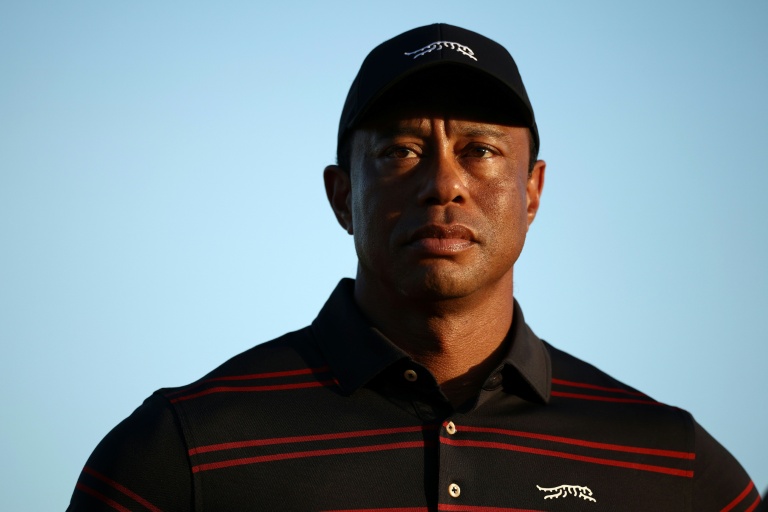
The silhouette against a simulator screen may be a far cry from the golden hour glow of Augusta National, but its significance resonates just as deeply in the world of golf. Tiger Woods, the sport’s most enduring and scrutinized figure, is set for a tentative, yet telling, return to competitive action. This Tuesday, Woods will captain his Jupiter Links GC squad in the finals of the TGL, the tech-forward indoor golf league. This appearance arrives just weeks after the 15-time major champion tantalizingly suggested that a journey down Magnolia Lane in April for the Masters was not “off the table.” More than a exhibition, this simulator showdown serves as a critical, real-time diagnostic on the state of Woods’ game and, more importantly, his body, as the golf world holds its breath for another potential comeback chapter.
The Long Road Back: A Timeline of Resilience and Recovery
To understand the weight of this week’s TGL appearance, one must appreciate the arduous path that led here. Tiger Woods’ career in the last decade is a medical chart of perseverance. His epic 2019 Masters victory, which ended an 11-year major drought, now stands as a miraculous peak amidst a series of devastating valleys.
The most severe blow came in February 2021, when a single-vehicle car crash in Los Angeles resulted in severe leg injuries so traumatic that doctors considered amputation. His subsequent return to walk 72 holes at the Masters in 2022 was hailed as a triumph of will. However, the underlying wear-and-tear persisted. After withdrawing from the 2023 Masters and undergoing subtalar fusion surgery in April of that year, Woods sought a more definitive solution.
In October, he underwent a disc replacement surgery, an innovative procedure aimed at alleviating chronic back issues that have plagued him for years. This latest intervention marks the most significant in a long line of operations, making his potential participation in any event, even the controlled environment of the TGL, a major story. His last official competitive round was at The Open Championship in 2024, making this a long-awaited glimpse into his competitive mindset.
TGL: The Perfect Proving Ground
The TGL, co-founded by Woods himself, presents a uniquely tailored venue for this soft launch of his latest comeback. The league’s format, which blends simulator golf with live short-game challenges on a real green complex, offers several advantages for a player in Woods’ position:
- Controlled Environment: The absence of uneven terrain, wind, and weather variables reduces the physical strain on his surgically-repaired back and leg.
- Shortened Time Commitment: Matches are condensed into a two-hour window, a far cry from the five-plus-hour grind of a PGA Tour round, which has been a stated hurdle for Woods.
- Team Dynamic: As captain of Jupiter Links, Woods can lean on teammates like Max Homa and Tom Kim, sharing the load and potentially managing his own involvement strategically.
- Competitive Fire: Despite the high-tech setting, the finals are a genuine competition with a trophy on the line, providing the necessary pressure to gauge focus, shot-making, and nerve.
This outing is less about winning a newfangled league title and more about answering critical questions. Can he rotate freely through his swing? Does his body respond well to the adrenaline of competition? How sharp is his famed course management in a virtual setting that mirrors real-world strategy?
Expert Analysis: Reading Between the Simulated Shots
From a technical standpoint, analysts will be watching for several key indicators during the TGL broadcast. “The simulator doesn’t lie about clubhead speed or ball flight,” notes renowned golf biomechanist Dr. Alistair McKenzie. “We’ll get clean data on his swing mechanics post-disc surgery. But the real tell will be in his mobility between shots—how he moves in the tech box, his posture during discussions. The golf swing might be protected; it’s the ancillary movement that’s often the challenge.”
Furthermore, Woods’ strategic role as captain is telling. It demonstrates his deep, ongoing involvement in the sport’s evolution and his sharp tactical mind. If he is meticulously engaged in plotting team strategy, it signals a competitor fully invested in the contest, not just making a ceremonial appearance. This mental engagement is a crucial component of his readiness for Augusta, a course where course management is as vital as power.
The psychological component cannot be overstated. Every public step Woods takes is measured. By committing to the TGL finals, he is deliberately placing himself back in the spotlight’s glare, testing his focus amidst distraction—a perfect microcosm of Masters pressure.
Augusta in the Balance: Predictions for the Masters
The shadow of the Masters looms over every chip and putt this Tuesday. Woods’ previous statement that playing at Augusta National is not “off the table” was a classic piece of Tiger ambiguity—hopeful yet non-committal. The performance and, more critically, the physical aftermath of the TGL finals will be the most significant data point in his decision-making process.
Here is the likely scenario path forward:
- Positive Outcome (Pain-free, competitive play): This opens the door for intense, focused practice sessions at his home course, Medalist, modeled after Augusta’s demands. A start at the Masters becomes probable, with tempered expectations. The goal shifts from winning to making the cut and completing 72 holes, a feat that would itself be historic.
- Cautious Outcome (Managed discomfort, rust evident): If he shows stiffness or visible caution, the calculus changes. He may still attempt to practice for Augusta, but the likelihood of a game-time withdrawal increases significantly. The priority would shift to preserving his long-term health and participation in signature events he hosts, like the Genesis Invitational.
- The Grand Scenario: Should he look fluid, powerful, and win the TGL title with his team, the hype train will reach a fever pitch. While a 16th major remains a monumental ask, evidence of a healthy Woods at Augusta instantly reshapes the narrative of the tournament, placing immense symbolic pressure on the entire field.
Realistically, the odds remain steep. The walk at Augusta is brutally hilly, and the recovery time between rounds at 50 years old, with his medical history, is the ultimate opponent. Yet, if there is one athlete who has repeatedly rewritten the possible, it is Tiger Woods.
Conclusion: A Legacy Tested in a Tech Box
Tiger Woods’ journey is no longer just about trophies; it is a continuous study in resilience. His return in the TGL finals is a masterclass in managing a comeback on his own terms. He is using a controlled, innovative platform he helped build to test the limits of the body that has both carried and betrayed him over a legendary career. Every drive on the simulator, every strategic decision as captain, will be a piece of evidence in the case for or against Augusta.
While the hallowed grounds of the Masters represent the ultimate goal, this week’s action in a high-tech arena is the essential first step. The golf world will be watching, not just for the flash of a familiar swing, but for the glimpse of a competitor still willing to put himself on the line. Whether or not he tees it up in April, this Tuesday proves one immutable truth: Tiger Woods’ will to compete remains undimmed, and his every move continues to command the attention of the sporting world.
Source: Based on news from Yahoo Sports.