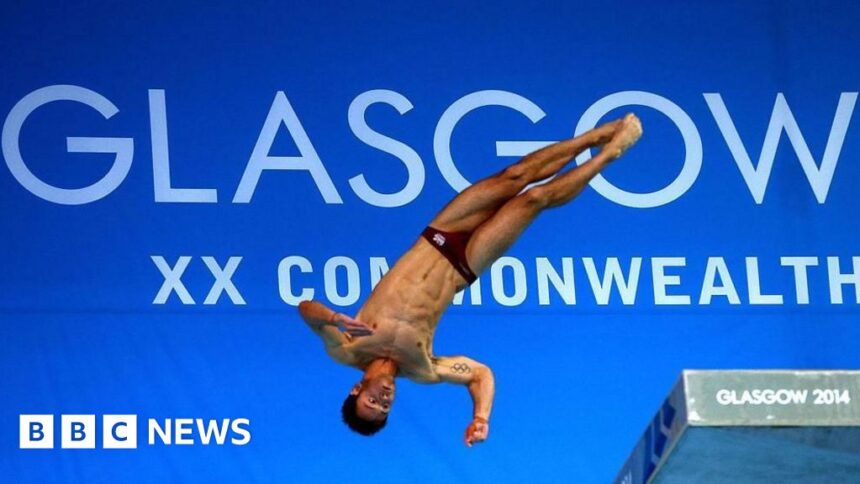
A New Era Dawns: TNT Sports Secures Commonwealth Games Broadcast Rights, Ending BBC’s 70-Year Reign
The landscape of British sports broadcasting has shifted seismically. In a move that ends one of the longest and most storied partnerships in television history, TNT Sports has been confirmed as the exclusive live UK broadcast partner for the Glasgow 2026 Commonwealth Games. This landmark deal wrests the coverage from the BBC, which had been the principal broadcaster for the event since its inception in 1954, providing free-to-air coverage for an unbroken run of 18 consecutive Games. The decision marks a pivotal moment, not just for the Commonwealth movement, but for how the British public will consume one of the world’s largest multi-sport spectacles.
The End of an Institution: Analysing the BBC’s Departure
For seven decades, the BBC and the Commonwealth Games were synonymous. From the black-and-white footage of Cardiff 1958 to the digital splendour of Birmingham 2022, the BBC’s coverage became a cherished biennial ritual for millions. Its free-to-air model was seen as a public service, aligning with the event’s ethos of accessibility and unity. The loss of these rights represents more than a simple scheduling change; it is the severing of a cultural touchstone.
Industry analysts point to a perfect storm of factors behind the change. The BBC’s well-documented financial pressures, with a frozen licence fee and rising production costs, have made it increasingly difficult to compete for major sports rights against deep-pocketed subscription giants. Furthermore, the Commonwealth Games Federation (CGF) is under its own pressure to maximise revenue and global viewership following the turbulent lead-up to the 2026 event. TNT Sports, backed by the global heft of Warner Bros Discovery, presented a compelling commercial proposition that the BBC could not match. This shift reflects a broader trend in sports media, where premium events increasingly migrate behind paywalls.
TNT Sports’ Grand Ambition: A “Re-imagined” Games for 2026
TNT Sports enters the Commonwealth arena with significant ambition and a clear mandate for innovation. The channel, best known to UK audiences for its flagship coverage of the UEFA Champions League and select English Premier League fixtures, has promised a comprehensive and modern production. Their commitment to over 600 hours of live coverage across the 10 sports and six para sports in Glasgow suggests an unprecedented depth of broadcast, likely surpassing the BBC’s traditional offering.
The key phrase in their announcement is the promise of a “re-imagining” of the Games. This could manifest in several ways:
- Enhanced Digital and Multi-Platform Access: Leveraging Warner Bros Discovery’s streaming platform, discovery+, to offer extensive live streams, on-demand content, and companion feeds.
- Production Innovation: Utilizing advanced graphics, data integration, and immersive audio-visual techniques honed from their football and boxing coverage.
- Presentational Style: A potentially more analytical and high-tempo approach, contrasting with the BBC’s often more narrative-driven, “event television” style.
- Commercial Integration: As a subscription service, TNT Sports operates with different commercial imperatives, which may influence the tone and structure of its coverage.
Public Access vs. Premium Product: The Great Debate
The most immediate and contentious repercussion of this deal is the question of public access. Moving a historically free-to-air event to a subscription channel inevitably raises concerns about diminishing the Games’ reach and impact. For athletes in niche sports, the Commonwealth Games often provides their only chance to compete on a major televised stage. Will a move behind a paywall reduce their exposure and, by extension, the profile of their sport?
TNT Sports and the CGF will be acutely aware of this criticism. It is highly likely that a highlights package or select live coverage will be negotiated for a free-to-air partner, potentially even the BBC, to maintain a level of public service accessibility. However, the core live experience will reside with TNT. This model mirrors other major events like cricket’s The Hundred or rugby union’s Premiership, which blend subscription and free-to-air coverage. The success of this hybrid approach for the Commonwealth Games will be a major point of scrutiny in 2026.
Predictions for Glasgow 2026 and the Future of the Games
The Glasgow 2026 Games, scheduled for 23 July to 2 August, will now serve as a high-stakes proving ground for this new broadcast partnership. For TNT Sports, it is a chance to redefine a major event and attract a new, broader subscriber base beyond its core football audience. For the Commonwealth Games, it is a gamble on modernisation and financial stability versus traditional reach and sentiment.
We predict several outcomes:
- Technically Superior Coverage: The production values will be cutting-edge, with more camera angles, in-depth data, and a slicker presentation package.
- Audience Fragmentation: Peak live viewership will likely fall compared to BBC figures, but total consumption across live, on-demand, and digital clips may increase.
- Increased Pressure on Athletes’ Stories: With a commercial broadcaster, the focus may intensify on home-nation medal hopefuls and big names, potentially at the expense of broader storytelling.
- A Template for the Future: If deemed a success by the CGF, this model will become the blueprint for future Games, solidifying the shift from pure public service broadcasting to a commercial partnership model.
Conclusion: A Calculated Risk in a Changing World
The decision to award the Commonwealth Games broadcast rights to TNT Sports is a definitive break with tradition, symbolising the relentless commercial realities of modern sport. While the departure of the BBC evokes a profound sense of nostalgia and concern over accessibility, it also represents an opportunity for reinvention. TNT Sports has the resources and the technical expertise to deliver a spectacular, immersive, and comprehensive product that could appeal to a new generation of viewers.
The ultimate test will be whether this “re-imagining” enhances the spirit of the Games or commodifies it. Can TNT Sports capture the unique, often quirky, community-focused essence of the Commonwealth Games while applying its premium sports broadcast polish? The eyes of the sporting world—and particularly those of the British public, who will now have to pay to watch live—will be on Glasgow in 2026 to find out. One era has unquestionably ended; another, more uncertain but undeniably modern, is about to begin.
Source: Based on news from BBC Sport.