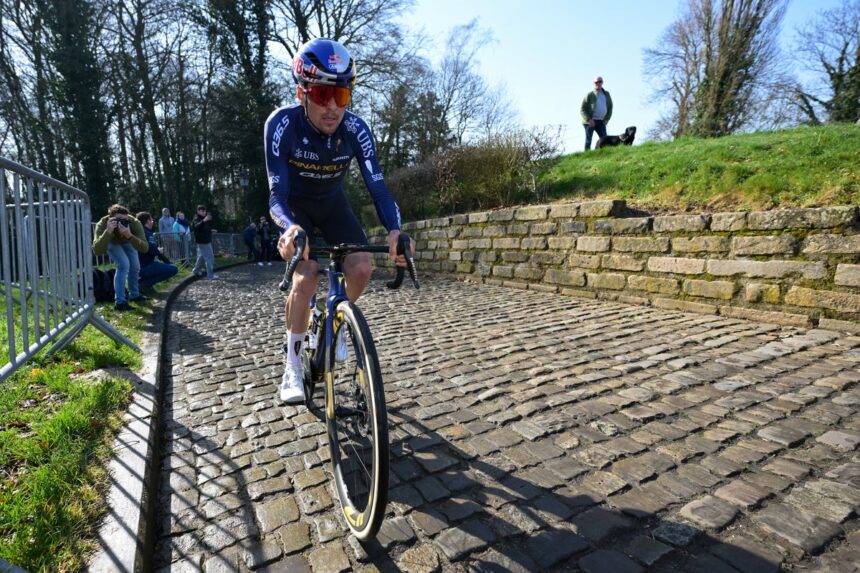
Tom Pidcock’s Ravine Plunge: A Harrowing Crash Halts Star’s Catalunya Campaign
The thin line between calculated risk and catastrophe in professional cycling was laid brutally bare on the serpentine roads of Catalonia. In a heart-stopping moment during stage five of the Volta a Catalunya, British superstar Tom Pidcock vanished from view. A misjudged corner sent the Olympic mountain bike champion careening off the tarmac and down a steep ravine, triggering a major incident and casting a shadow over his immediate racing future. The incident, which Pidcock himself described with chilling clarity, underscores the ever-present dangers of the sport, even for its most gifted and technically adept riders.
A Descent into Darkness: Recounting the Horror Crash
The stage from Altafulla to Viladecans was meant to be a day for the sprinters, but it turned into a nightmare for one of the peloton’s brightest talents. Details emerged piecemeal: a corner taken too fast, a loss of control, and then a terrifying fall down a wooded slope. The most arresting detail came from Pidcock’s own post-crash interview. “I went off the road, down a ravine,” he stated, adding the sobering revelation that he was lucky to still be able to talk into his radio so his team could locate him. This single sentence paints a vivid picture of the isolation and severity of the crash—hidden from view, potentially seriously injured, and reliant on technology to summon help.
In a display of sheer toughness that defines the profession, Pidcock remarkably remounted and finished the stage, likely running on adrenaline. However, the true extent of the damage was soon revealed. Team medical staff and subsequent hospital assessments confirmed the worst fears: his race was over. Pinarello-Q36.5’s chief medical team doctor Lorenz Emmert delivered the clinical verdict: “Due to his crash he suffered injuries, most likely bone and ligament damage in particular to his right knee and also right wrist.” The decision to withdraw him from the Volta a Catalunya was immediate and unavoidable.
Expert Analysis: The Physical and Psychological Impact
From a medical and sporting perspective, Pidcock’s crash presents a multi-layered challenge. The specific mention of bone and ligament damage to the knee and wrist is significant for a cyclist whose prowess is built on explosive power and delicate bike handling.
- Knee Ligament Damage: This is a primary concern. Ligament tears, depending on severity, can require extensive rehabilitation to restore stability, range of motion, and the powerful pedal stroke essential for competing at the WorldTour level.
- Wrist Fractures: A broken wrist compromises a rider’s ability to control the bike, absorb road vibration, and, crucially, to brace in future impacts. Healing must be perfect to avoid chronic weakness.
- The Dual-Discipline Dilemma: For Pidcock, more than most, these injuries are acutely problematic. His unique calendar, straddling elite road racing and mountain biking, demands even more from his joints. The technical, jarring nature of MTB requires supreme wrist strength and knee stability. This crash could force a recalibration of his entire 2024 season.
Beyond the physical, the psychological impact of a high-speed, off-road crash cannot be underestimated. Trusting your instincts on descents and corners is fundamental. Rebuilding that confidence, especially when returning to similar terrain, is a silent but critical part of the recovery process.
Season in Jeopardy: Predictions for Pidcock’s 2024 Campaign
The timing of this crash is disastrous. The heart of the classics season is underway, and major goals like the Ardennes classics and his mountain bike title defense in Paris are now in serious doubt. Dr. Emmert’s note that “further clinical evaluation and imaging will follow” indicates the team is still determining the full prognosis, but initial reports suggest a substantial recovery period.
We can make several informed predictions about the fallout:
- Immediate Withdrawal from Key Races: Targets like the Amstel Gold Race, where he is a former winner, and Liège-Bastogne-Liège are almost certainly off the table for 2024.
- Olympic Mountain Bike Defense Under Cloud: This is the biggest question mark. The healing process for ligament damage is measured in months, not weeks. The intense, specific training required for the brutal Leogang, Austria Olympic course may now be severely compromised. A race against time has begun.
- Potential Reshuffling of Priorities: Team Ineos (Pinarello-Q36.5) and Pidcock may be forced to focus on a late-season comeback, perhaps targeting the World Championships or specific stage races. The primary goal shifts from performance to complete and robust rehabilitation.
This incident is a stark reminder of how quickly a season can unravel. For a rider whose value is his versatility and ability to peak for specific monuments, losing the spring and potentially the summer is a devastating blow.
A Stark Reminder of Cycling’s Razor’s Edge
Tom Pidcock’s plunge down a Catalan ravine is more than a headline; it’s a visceral testament to the risks these athletes accept every time they clip in. His ability to radio for help and ride to the finish is a story of resilience, but the subsequent withdrawal tells the true story of vulnerability. The injuries sustained in that split-second misjudgment will dictate the rhythm of his coming months.
As the cycling world wishes him a full and speedy recovery, the incident forces a moment of reflection. It highlights the incredible skill normally on display—the millimeter-perfect cornering, the fearless descending—by showing what happens when that fine margin is lost. Pidcock’s 2024 ambitions now hang in the balance, dependent on medical scans, careful rehab, and the slow, steady work of healing. His journey back to the peaks of the sport, both on and off-road, begins at the bottom of a ravine, a harsh reminder that in cycling, fortune is as crucial as form.
Source: Based on news from Yahoo Sports.