Tottenham’s Formal Complaint: A Club’s Frustration Boils Over in Letter to PGMOL
In the high-stakes theatre of the Premier League, where margins are razor-thin and every point is currency, a sense of injustice can fester. For Tottenham Hotspur, that feeling has crystallized into formal action. Following a turbulent start under new manager Ange Tudor and a series of contentious moments, the club has taken the significant step of writing to Professional Game Match Officials Limited (PGMOL) chief Howard Webb. This isn’t merely a manager’s post-match grumble; it’s an institutional expression of deep-seated frustration over what Spurs perceive as a pattern of damaging and inconsistent refereeing decisions. At the heart of the complaint lies a fundamental question of fairness, one that Tottenham believes has directly cost them precious points in a fiercely competitive season.
A Pattern of Perceived Injustice: From Tudor’s Tenure to a North London Flashpoint
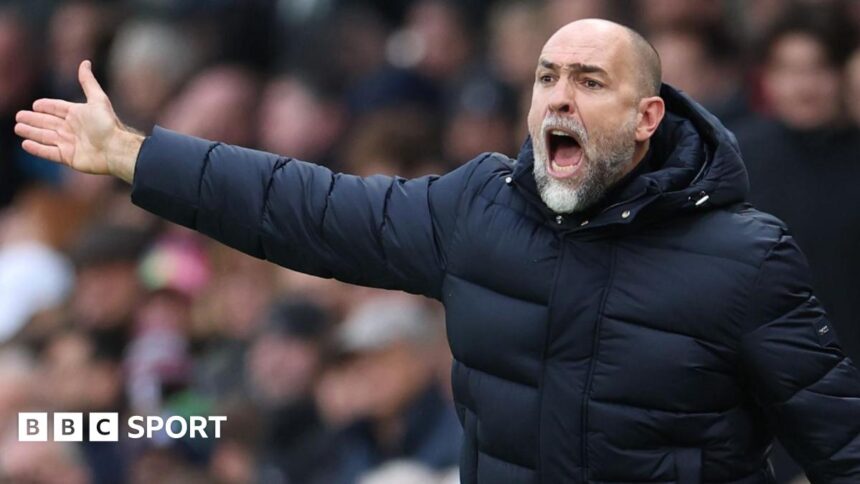
Ange Tudor’s arrival at the Tottenham Hotspur Stadium was met with optimism, but his tenure has begun under a cloud of controversy not entirely of his team’s making. Having lost both of his opening games, the Australian finds himself navigating not only a squad in transition but also a narrative shaped by pivotal officiating calls. The club’s correspondence with the PGMOL, as revealed by BBC Sport sources, indicates this frustration is cumulative, spanning the season. However, one incident stands as the definitive catalyst: the disallowed Randal Kolo Muani goal in the recent 4-1 defeat to Arsenal.
With the score at 2-1 and momentum potentially shifting, Kolo Muani thought he had equalized, only for the goal to be chalked off for a push on Gabriel Magalhaes. The decision ignited immediate debate. For Spurs, it exemplified the inconsistent application of contact rules in the penalty area. Was it a clear foul, or the kind of physical tussle routinely allowed in Premier League box battles? Tottenham’s letter suggests they firmly believe the latter, viewing it as the latest in a series of key VAR interventions that have gone against them. This formal complaint moves the issue from the back pages of newspapers to the desks of the league’s officiating bosses, demanding accountability and, crucially, clarity.
Expert Analysis: The Subjective Nature of Contact and VAR’s Role
To understand Tottenham’s grievance, one must dissect the nuanced and often infuriatingly subjective world of modern officiating. The Premier League’s interpretation of fouls, particularly inside the penalty area, has been a consistent point of debate. The introduction of VAR was supposed to eradicate “clear and obvious errors,” but in practice, it has often magnified the subjectivity of decisions.
Football analysts point to several key areas of contention:
- The Threshold for “Clear and Obvious”: VAR is not meant to re-referee the game, but the line between correcting a mistake and applying a new subjective judgment is blurry. Spurs’ argument likely hinges on whether the contact in incidents like the Kolo Muani disallowed goal met that high threshold.
- Inconsistency Across Matches: A club’s deepest frustration often stems from seeing similar incidents adjudicated differently in other games. Tottenham’s letter to Howard Webb will almost certainly reference comparable challenges where goals were allowed to stand, creating a perception of an uneven playing field.
- The Psychological Impact: Beyond the immediate scoreline, a disallowed goal or an ungiven penalty can dramatically alter the momentum of a match. For a new manager like Tudor, trying to instill belief and a style of play, these moments can be disproportionately damaging to morale and tactical plans.
By writing to the PGMOL, Tottenham are seeking more than an apology; they are demanding a consistent refereeing standard. They want to know where the line is drawn so their players can adapt accordingly—a fundamental request for any competing sports organization.
Predictions: Repercussions for Spurs, PGMOL, and the Premier League
This formal complaint will send ripples through English football. The immediate and most desired outcome for Tottenham is a private hearing and an assurance of greater consistency from Webb’s team. Historically, such correspondence can sometimes lead to a short-term period of heightened scrutiny on a club’s matches, though officials will vehemently deny any conscious bias.
Looking ahead, several developments are plausible:
- Increased Scrutiny on Tudor’s Spurs: Every 50/50 decision in Tottenham’s upcoming games will be analyzed under a microscope. This could work both ways—potentially leading to more calls in their favor as officials are mindful of the complaint, or creating an adversarial atmosphere.
- Pressure on Howard Webb’s PGMOL: Webb has publicly championed transparency through shows like “Match Officials Mic’d Up.” This direct challenge from a top club tests his administration’s ability to manage club relations and maintain the credibility of his officials.
- A Potential Ripple Effect: If Tottenham are perceived to have received a favorable response or seen an improvement in decisions, other clubs may follow suit with their own documented grievances, forcing the PGMOL into a more reactive, case-by-case relationship with teams.
- Focus on Ange Tudor: The new manager must now ensure this off-pitch issue does not become a distraction or an excuse within the squad. His challenge is to channel the collective sense of injustice into a unified, resilient on-pitch response.
Conclusion: More Than a Letter—A Quest for Sporting Integrity
Tottenham Hotspur’s decision to write to Howard Webb is a landmark moment in their season. It transcends the disappointment of two losses under Ange Tudor or the fury over a single disallowed goal in a North London derby. This action represents a club leveraging its influence in a calculated bid to protect its sporting interests. It is a statement that they believe the current VAR protocol application and the interpretation of contact have veered into unacceptable territory, to their direct detriment.
The ultimate success of this complaint won’t be measured by a points reimbursement—an impossibility—but by whether it catalyzes a tangible change in the consistency and communication of officiating for Tottenham and the league at large. In the relentless pursuit of Premier League success, where financial and sporting rewards are immense, clubs are no longer willing to accept controversial decisions as simply “part of the game.” Tottenham have fired a formal shot across the bow of the PGMOL. The response, both private and in the weeks of football to come, will be telling for the balance of power between England’s elite clubs and those tasked with officiating their most crucial battles.
Source: Based on news from BBC Sport.