Trump Envoy’s Shock Proposal: Replace Iran with Italy at the 2026 World Cup
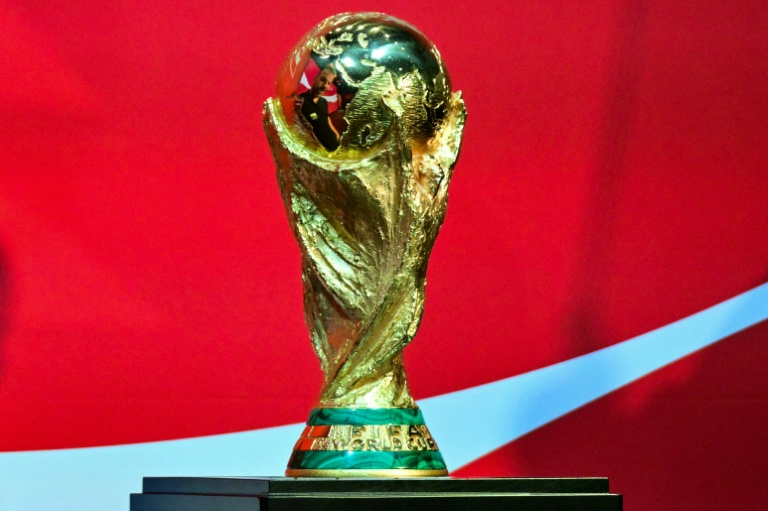
In a move that has sent shockwaves through the global football community, a special envoy to US President Donald Trump has formally suggested that FIFA replace Iran with Italy at the 2026 World Cup. According to a bombshell report from the Financial Times, US special envoy Paolo Zampolli pitched the idea directly to FIFA President Gianni Infantino, framing it as a “dream” scenario for the tournament co-hosted by the United States, Mexico, and Canada.
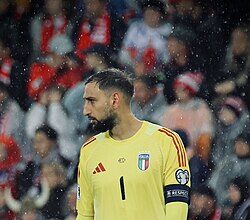
The proposal arrives just weeks after Italy—a four-time World Cup champion—failed to qualify for the third consecutive time, losing a heartbreaking penalty shootout to Bosnia and Herzegovina in their playoff final. Meanwhile, Iran has already secured its spot in the 48-team field. But Zampolli, an Italian native and close Trump ally, argues that the Azzurri’s historical pedigree and global brand make them a more compelling choice for the tournament.
“I confirm I have suggested to Trump and Infantino that Italy replace Iran at the World Cup,” Zampolli told the FT. “I’m an Italian native and it would be a dream to see the Azzurri at a US-hosted tournament. With four titles, they have the pedigree to justify inclusion.”
But beneath the surface of this audacious sporting suggestion lies a far more complex geopolitical chess game. The proposal is reportedly an effort to repair ties between Trump and Italian Prime Minister Giorgia Meloni, who recently fell out with the US president after publicly criticizing his administration’s attack on Pope Leo XIV over the Iran war. This is not just about football—it is about diplomacy, power, and the blurred lines between sport and statecraft.
The Geopolitical Backdrop: Trump, Meloni, and the Iran Conflict
To understand why a World Cup swap is even being discussed, one must look at the tense relationship between Washington and Rome. According to the FT report, the proposal is a direct attempt to mend fences after Meloni’s public rebuke of Trump’s military actions in Iran—specifically, the attack on Pope Leo XIV, a figure revered by millions of Catholics in Italy and beyond.
Meloni, a conservative leader who has generally aligned with Trump on many issues, broke ranks when she condemned the US-led operation. The fallout was immediate: diplomatic channels cooled, and personal rapport between the two leaders soured. Enter Paolo Zampolli, a businessman and diplomat with deep ties to both Trump and the Italian establishment. His solution? Use the world’s most-watched sporting event as a peace offering.
“The suggestion was an effort to repair ties between Trump and Giorgia Meloni,” the FT reported. By offering Italy a golden ticket to the World Cup, Zampolli hopes to give Meloni a massive political win at home—one that could overshadow her earlier criticism of Trump. For Trump, it would be a chance to project magnanimity while simultaneously sidelining Iran, a nation his administration has labeled a state sponsor of terrorism.
Expert Analysis: “This is unprecedented,” says Dr. Elena Rossi, a professor of international relations at the University of Milan. “We have seen boycotts and bans in sports before, but a direct swap of nations at the World Cup—driven by a political spat—is something entirely new. It sets a dangerous precedent where the integrity of qualification is thrown out the window for diplomatic convenience.”
Why Italy? The Azzurri’s Case for Inclusion
On paper, Italy’s resume is undeniable. The Azzurri have won the World Cup four times (1934, 1938, 1982, 2006)—trailing only Brazil’s five titles. They boast a global fanbase, a rich tactical tradition, and a history of producing iconic players from Paolo Maldini to Roberto Baggio. Yet, since 2018, they have been absent from the tournament, a stunning decline for a footballing superpower.
Their latest failure came in a playoff final against Bosnia and Herzegovina last month. After a tense 1-1 draw, Italy lost 4-2 on penalties, leaving fans in Rome and across the diaspora devastated. The result marked the third straight World Cup cycle without Italy, a streak that includes missing out on the 2018 and 2022 tournaments as well.
“With four titles, they have the pedigree to justify inclusion,” Zampolli argued. He is not wrong about the pedigree, but the competition integrity argument is glaring. Italy lost. Fair and square. Replacing Iran—which qualified through Asia’s rigorous qualifying process—would effectively nullify the efforts of every other team that fought for a spot.
Key Facts to Consider:
- Italy’s World Cup drought: Missed 2018, 2022, and now 2026 if this proposal fails.
- Iran’s qualification: Secured their spot by finishing second in Group A of the AFC qualifiers, ahead of Uzbekistan and the UAE.
- FIFA’s stance: Historically, FIFA has resisted political interference in team selection, though it has imposed bans on nations like Russia (2022) and South Africa (apartheid era).
Prediction: The odds of this swap actually happening are astronomically low. FIFA’s own statutes prohibit government interference, and the global backlash from other federations—especially the Asian Football Confederation—would be ferocious. However, the mere fact that it is being discussed at the highest diplomatic levels shows how intertwined sport and politics have become in the Trump era.
The Iran Factor: Why Tehran Is the Target
Iran has been a regular participant in the World Cup, appearing in 2022 and 2018, and will make its seventh appearance in 2026. But the Islamic Republic has been a persistent thorn in the side of the Trump administration. From nuclear enrichment to proxy wars in Yemen and Syria, the two nations have been locked in a bitter rivalry for decades.
The recent conflict over Pope Leo XIV only deepened the divide. Trump’s decision to target the pontiff—who had been vocal in calling for a ceasefire—was widely condemned by Catholic-majority nations, including Italy. By proposing to strip Iran of its World Cup spot, Zampolli is signaling that the US is willing to use sport as a weapon of soft power.
“This is a clear attempt to isolate Iran further on the global stage,” says sports journalist Mark Thompson. “But it’s a dangerous game. If FIFA caves to political pressure, it opens the door for every government to demand changes when they don’t like a team’s politics. The World Cup would cease to be a sporting competition and become a political bargaining chip.”
Iran’s football federation has already responded with fury. In a statement, they called the proposal “an insult to the integrity of the sport” and vowed to take legal action if FIFA even considers the request. “Our team earned its place through hard work and fair competition,” the statement read. “No envoy can erase that.”
What FIFA Will Do: The Impossible Decision
FIFA President Gianni Infantino is no stranger to controversy. He has overseen World Cups in Russia (2018) and Qatar (2022), both mired in political and human rights debates. But this proposal may be his toughest test yet. On one hand, replacing Iran with Italy would be a commercial dream: Italy brings massive TV ratings, merchandise sales, and a passionate diaspora in the US. On the other hand, it would destroy FIFA’s credibility as a neutral sporting body.
Expert Analysis: “Infantino is a pragmatist,” says football governance expert Dr. Sarah Klein. “He will weigh the political pressure from the Trump administration against the legal and reputational risks. My bet is that FIFA will publicly reject the proposal but quietly explore ways to expand the tournament or add a wild-card team—not a replacement.”
Predictions for the Outcome:
- Short-term: FIFA issues a statement reaffirming that Iran remains qualified and that no changes will be made to the current 48-team lineup.
- Medium-term: Trump and Meloni find another way to patch up their relationship—perhaps a trade deal or a joint statement on Middle East peace.
- Long-term: The proposal sparks a global debate about the role of politics in FIFA, potentially leading to new rules preventing government-led interference in team selection.
Conclusion: A Dream That Will Likely Remain a Fantasy
Paolo Zampolli’s “dream” of seeing Italy at the 2026 World Cup is one shared by millions of Azzurri fans worldwide. But the path he has chosen—replacing Iran through political intervention—is fraught with peril. It undermines the very essence of sport: that merit, not diplomacy, determines who competes on the biggest stage.
Italy’s failure to qualify is a tragedy for the nation’s footballing pride, but it is not an injustice that needs fixing by a presidential envoy. If the Azzurri want to return to the World Cup, they must do what they have always done: rebuild, regroup, and win on the pitch. The next opportunity comes in the 2028 European Championship qualifiers, followed by the 2030 World Cup cycle.
As for Iran, they will likely keep their spot—barring a FIFA ban on political grounds, which seems unlikely given the organization’s history. And Trump and Meloni? They will have to find another way to kiss and make up. Perhaps a state dinner, or a photo op at the G7 summit. But not at the expense of the World Cup’s integrity.
Final Prediction: Italy stays home. Iran goes to the US, Mexico, and Canada. And the beautiful game remains—at least for now—untainted by the ugly reality of geopolitical gamesmanship. But this story is far from over. In the Trump era, where the lines between sport, diplomacy, and spectacle are increasingly blurred, anything is possible. Just ask Paolo Zampolli.
Source: Based on news from Yahoo Sports.