Trump’s NCAA Power Play: A Federal Hammer for College Sports Governance
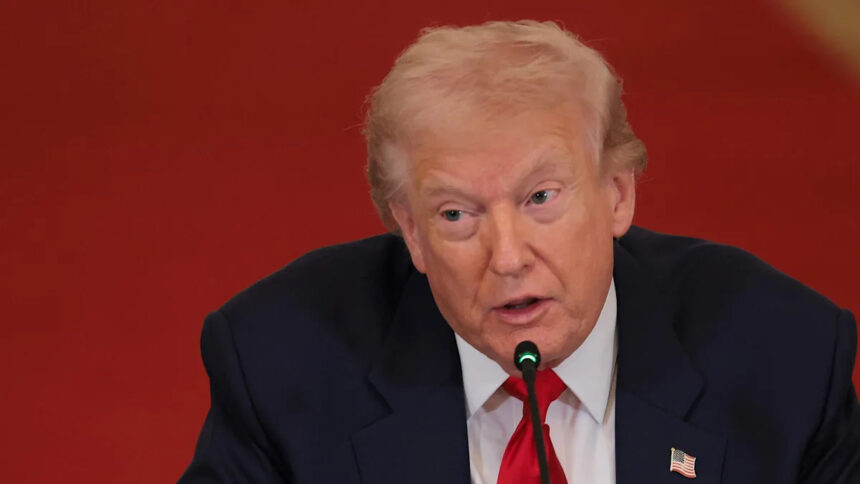
In a move that sent shockwaves through the world of higher education and athletics, former President Donald Trump signed a sweeping executive order designed to anoint the National Collegiate Athletic Association (NCAA) as the undisputed, federally-backed regulator of college sports. The order, leveraging the formidable power of the federal purse, aims to compel universities into compliance with NCAA rules by threatening their access to critical government grants and contracts. This unprecedented intervention marks a historic pivot, placing the weight of the federal government squarely behind the NCAA’s embattled governance model at a time when it faces existential challenges from state laws, athlete advocacy, and the courts.
The Executive Order: A Federal Cudgel for NCAA Compliance
The core mechanism of the order is as simple as it is powerful. It directs federal agencies to evaluate whether a university’s violations of key NCAA rules—particularly around athlete transfer regulations, eligibility standards, and prohibitions on pay-for-play—should render that institution “unfit” to receive federal grants and contracts. For major research universities, this represents billions of dollars in funding for everything from scientific research to infrastructure projects. The implication is clear: fall out of line with the NCAA, and your entire institution’s federal funding could be on the chopping block.
Beyond this enforcement hammer, the order outlines several policy pillars it seeks to solidify:
- Structured Transfer Rules: Mandating clearer, potentially more restrictive, national standards for athlete transfers, overriding a growing patchwork of state laws.
- Five-Year Eligibility Window: Formalizing the standard five-year clock for athletic participation.
- Enhanced Medical Protections: Requiring defined medical care standards for injured student-athletes.
- Agent Conduct Crackdown: Shielding athletes from “unscrupulous agent conduct.”
- Protection for Non-Revenue Sports: Assurances that women’s and Olympic sports are preserved amidst changing economic models.
Critically, the order also calls on Congress to pass lasting legislation, signaling that this executive action is intended as a starting gun for a broader political battle over the future of college athletics.
Expert Analysis: Stabilization or Stagnation?
Sports law and policy experts are deeply divided on the long-term implications of this federal power play. Proponents argue it provides a necessary national framework to prevent chaos. “The landscape had become a wild west, with states passing conflicting name, image, and likeness (NIL) laws and transfer rules that created impossible compliance scenarios,” notes Dr. Alicia Thornton, a professor of sports governance. “This order, in theory, restores a single set of rules and uses a significant deterrent to enforce them. It could stabilize a system that was fragmenting rapidly.”
However, many critics see it as a regressive step that stifles athlete empowerment. “This is the federal government being used to bail out a private organization, the NCAA, whose business model is under justified legal assault,” argues sports journalist and analyst Ben Carter. “Instead of adapting to a new era of athlete rights, it seeks to freeze the old model in place by threatening universities with financial ruin. It directly counters the momentum toward recognizing athletes’ economic freedoms.”
The most contentious point is the pay-for-play prohibition. By reinforcing this NCAA cornerstone with federal oversight, the order attempts to draw a firm line against athletes becoming direct employees of their schools, a central issue in ongoing litigation. Yet, it does little to address the rampant, booster-driven NIL collectives that already create a de facto pay-for-play environment, creating a potentially untenable contradiction.
Predictions: Legal Challenges and Unintended Consequences
The immediate fallout will be a whirlwind of legal and political controversy. Several predictions from industry observers are already coming into focus:
Inevitable Court Battles: The order will face immediate legal challenges on multiple fronts. States with progressive athlete compensation laws will likely sue, arguing federal overreach. Athlete advocacy groups may challenge the constitutionality of tying broad federal funding to compliance with a private association’s sports rules. The scope of what constitutes a violation “severe enough” to trigger funding loss will be a litigation minefield.
The Congressional Standoff: While the order urges Congressional action, it may have the opposite effect, hardening partisan divides. Legislation granting the NCAA an antitrust exemption or codifying its rules has languished for years. This executive action could make compromise even more elusive as it becomes a polarized political issue.
Unintended Consequences for Universities: University presidents now face an impossible balancing act. They must navigate booster demands for competitive NIL war chests, comply with evolving state laws, and avoid any action that could jeopardize millions in research funding. This could lead to risk-averse, draconian enforcement of NCAA rules on campus, further straining athlete-institution relations.
Accelerated Realignment: The financial threat might accelerate the separation between the wealthiest athletic departments and the rest. Power conference schools could form even tighter coalitions with standardized rules, while mid-major schools, more dependent on certain federal grants, may be forced into a more subservient compliance role, widening the competitive gap.
A Watershed Moment with an Uncertain Legacy
President Trump’s executive order is undeniably a watershed moment in the century-long history of collegiate athletics. It represents the most aggressive attempt yet to use federal authority to preserve the NCAA’s traditional amateurism model. By wielding the threat of financial catastrophe over universities, it seeks to slam the door on an era of increasing autonomy and compensation for athletes.
However, the order may be less of a definitive solution and more of a dramatic escalation in an ongoing war. It does not eliminate the fundamental market forces and legal principles pushing for change; it merely opposes them with a powerful new weapon. The future of college sports now hinges on a complex tug-of-war between federal policy, state law, judicial rulings, and the unwavering momentum of athlete empowerment.
In the end, the legacy of this order may be defined by the backlash it inspires. It has instantly federalized the debate over college sports, guaranteeing that the playing field of the future will be shaped not just in locker rooms and courtrooms, but in the halls of Congress and the Oval Office. Whether it brings order or provokes greater upheaval is the multibillion-dollar question now facing every university, athlete, and fan in America.
Source: Based on news from Yahoo Sports.