Tudor’s Turbulent Exit: Spurs’ Managerial Carousel Spins Again After 44-Day Fiasco
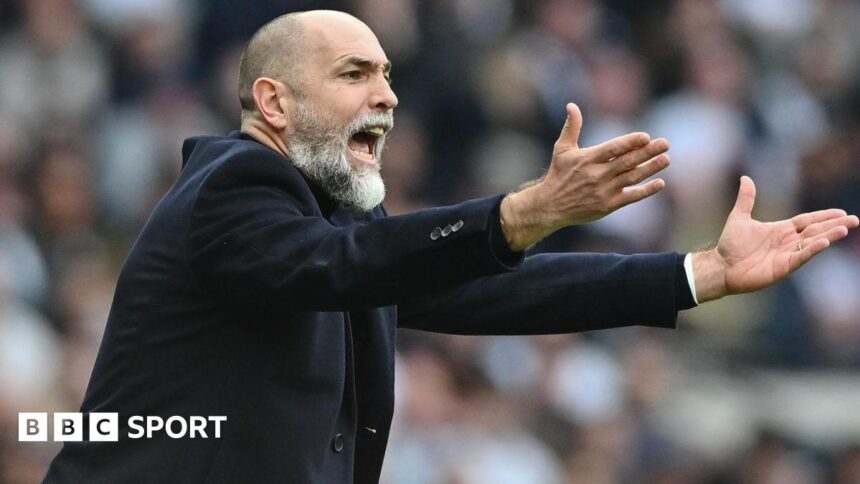
In the annals of Premier League chaos, a new, profoundly modern chapter has been written. Tottenham Hotspur, a club once synonymous with stability, is now a byword for reactive panic and institutional disarray. The news that interim head coach Igor Tudor has departed after a mere 44 days and seven matches is not just a headline; it is a damning indictment of a club in freefall. The “mutual agreement” for an immediate exit, coming just a week after a humiliating 3-0 home defeat to Nottingham Forest, confirms Spurs are not just battling relegation—they are in a full-blown identity crisis, now searching for their third manager of the season.
A Reign Built on Sand: The 44-Day Timeline to Nowhere
Igor Tudor’s appointment on February 14th, following the dismissal of Thomas Frank, was always framed as a short-term firefighting mission. The Croat, known for his intense, disciplinarian approach, was handed a deal until the season’s end with a clear mandate: organize, motivate, and secure enough points to ensure Premier League survival. The experiment has failed spectacularly and with breathtaking speed.
The statistics paint a bleak picture of Tudor’s brief tenure:
- Seven matches in all competitions
- Five defeats, including cup elimination
- Only one victory—a narrow 1-0 win over a struggling Everton side
- A damaging 3-0 home defeat to Nottingham Forest that proved the final straw
- The club languishing in 17th place, just one point above the relegation zone
The Forest defeat was the archetype of Tottenham’s season: tactically confused, mentally fragile, and utterly devoid of fight. For the board, witnessing such a performance with seven games remaining was an unacceptable risk. The “mutual” decision likely involved Spurs executives presenting a very unilateral ultimatum.
Anatomy of a Failed Stop-Gap: Why the Tudor Experiment Crashed
From a tactical and cultural perspective, Tudor’s failure was predictable. His reputation was built on implementing a rigid, high-press 3-4-3 system—a demanding physical blueprint that requires time, buy-in, and specific player profiles. Throwing this at a squad already shell-shocked from a brutal season, with zero pre-season and amidst a relegation dogfight, was a recipe for disaster.
Expert analysis points to several critical flaws:
Cultural Misfit: Tudor’s abrasive, no-nonsense style clashed with a dressing room needing reassurance and simplified instruction. Reports of strained player relationships surfaced quickly, suggesting his message never translated.
Tactical Overload: Attempting a complex systemic overhaul in mid-stream is a monumental task. Players appeared confused, caught between old habits and new demands, leading to the disorganized defensive displays that have plagued them.
The “Interim” Curse: The temporary nature of his role undermined his authority from day one. Players, consciously or not, know a new boss will arrive in the summer, diminishing the impact of a short-term appointment.
Ultimately, Tottenham’s decision-makers fundamentally misdiagnosed the problem. They believed the issue was tactical structure alone, when the core ailments are clearly psychological and rooted in a shattered club culture. Tudor’s sledgehammer approach was precisely the wrong tool.
Navigating the Crisis: What’s Next for Tottenham Hotspur?
With seven cup finals remaining and their Premier League status hanging by a thread, Spurs must now make their most critical decision of the season. Do they appoint another interim for the final seven games, or do they try to secure a long-term manager now to provide immediate clarity and a vision for the future?
The immediate predictions are fraught with danger. Names like Ryan Mason, a club legend who has served as caretaker before, will surface. This option offers familiarity and potentially a calming influence. Alternatively, the board could rush a permanent appointment, targeting managers like Graham Potter or even a surprise return for Mauricio Pochettino, though such a complex deal in crisis mode seems fraught with difficulty.
The key for Tottenham in the coming days will be:
- Appointing a unifying figure who can restore minimal confidence and organization.
- Simplifying the tactical message to bare essentials: defensive shape and competitive spirit.
- Isolating the squad from the boardroom chaos, providing a clear, single voice.
Every decision from this point forward carries existential weight. A misstep could see a club with a world-class stadium and rich history playing Championship football next season.
A Club at a Crossroads: The Deeper Reckoning Required
While the focus is rightly on the immediate fight for survival, Tottenham’s problems run far deeper than the dugout. The revolving door of managers—now spinning for a third time this season—is a symptom of a profound failure in football leadership. The sporting director, the board, and the ownership must face a severe reckoning once the final whistle blows on this campaign, regardless of which division Spurs are in.
Long-term strategy has been sacrificed at the altar of short-term panic. Recruitment has been scattergun, lacking a coherent philosophy. The club’s identity, once clear under Pochettino, has completely evaporated. This season has exposed a rotten core, where player power, executive indecision, and a lack of footballing vision have coalesced into a perfect storm.
The conclusion is inescapable: Tottenham Hotspur are in their darkest hour in recent memory. The departure of Igor Tudor is not a solution, but merely another symptom. His 44-day reign will be remembered as a desperate, failed gambit from a club that has lost its way. The search for a third manager is not just about finding a tactician; it is about finding a savior who can perform a miracle in the short term and an architect who can rebuild from the ground up in the long term. The coming weeks will define the next decade for this proud club. The only certainty is that the chaos is far from over.
Source: Based on news from BBC Sport.