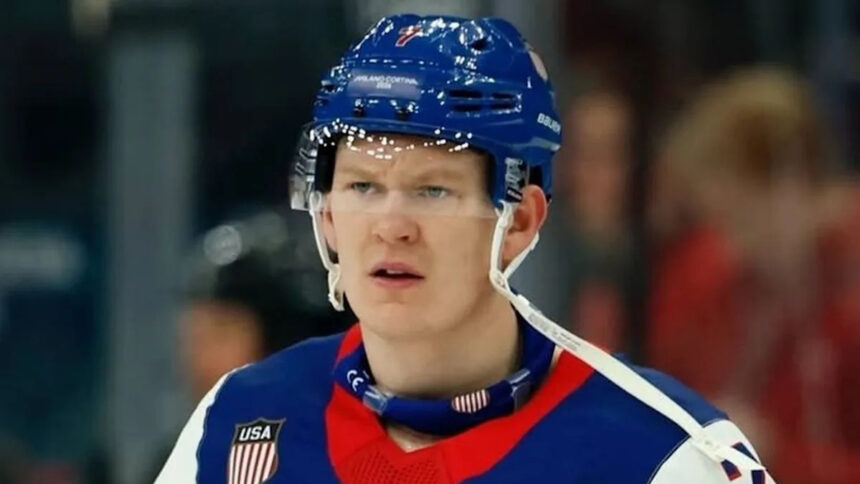
U.S. Hockey Star Brady Tkachuk Blasts White House AI Video Insulting Canadians
In the afterglow of a historic Olympic gold medal victory, the narrative should have been one of pure celebration for American hockey. Instead, a bizarre and inflammatory digital intrusion from the highest office in the land has ignited a diplomatic firestorm, pitting national pride against political recklessness and dragging a champion into an unwelcome controversy. The story is no longer just about Team USA’s first men’s hockey gold since the “Miracle on Ice” in 1980. It’s about how artificial intelligence, geopolitical tensions, and the world’s most intense hockey rivalry collided in a single, poorly conceived TikTok video.
From Olympic Glory to Digital Controversy
The scene in Milan was one of unadulterated triumph. Led by the relentless, physical play of captain Brady Tkachuk, the U.S. men’s hockey team dethroned Canada in a classic, nail-biting final. For Tkachuk, the Ottawa Senators captain who plies his trade in the heart of Canada, the victory was a career-defining moment, a complex blend of professional respect and national fervor. The win was monumental, ending a 46-year drought and cementing this generation of American stars in the annals of sports history.
Yet, before the champagne had even dried, the tone of the celebration shifted dramatically. The official White House TikTok account posted a video that left viewers on both sides of the border stunned. It repurposed old press conference footage of Tkachuk and his brother, Matthew, from a previous tournament, manipulating it with AI-generated audio to make it appear Brady was delivering a vicious, expletive-laden rant against Canada.
The fabricated quotes were designed to inflame:
- “They booed our national anthem, so I had to come out and teach those maple syrup eating f—s a lesson.”
- The video’s caption and effects leaned into the insult, portraying the moment as a geopolitical dunk rather than a sporting achievement.
Tkachuk’s Fiery Response and the Fallout
Brady Tkachuk, never one to shy away from speaking his mind, responded with a fury typically reserved for playoff scrums. In a statement released through his agent, the U.S. star blasted the video as “disgraceful” and “a cheap shot that disrespects the game, the real rivalry, and the country I play in.” He emphasized his deep respect for Canadian fans and his teammates in Ottawa, stating, “Winning a gold medal for my country was the dream. This fake nonsense from a government account is a nightmare. It crosses a line.”
The backlash was immediate and severe:
- Canadian politicians from multiple parties condemned the video as a damaging breach of diplomatic decorum.
- The National Hockey League, which thrives on the cross-border rivalry, issued a terse statement about “upholding the integrity of the sport and its players.”
- Fans and analysts questioned the judgment of using a federal government account to post AI-generated content mocking a key ally and trading partner.
For Tkachuk, the situation is uniquely personal. As the captain of an NHL team based in Canada’s capital, he is a community figure in Ottawa. The video not only misrepresents him but potentially jeopardizes the rapport he has built with the fanbase that cheers for him 82 games a year.
Expert Analysis: Why This AI Stunt is a Dangerous Own Goal
Sports journalists and political communication experts are united in their criticism of the move. “This isn’t playful banter; it’s a state actor using deepfake-adjacent technology to falsely attribute inflammatory statements to an athlete,” says Dr. Lena Torres, a professor of digital media ethics. “It sets a terrible precedent. If the White House normalizes this for sports, what’s next? It erodes trust in all digital content.”
From a sports perspective, the misstep is equally glaring. The U.S.-Canada hockey rivalry is fierce precisely because it is built on a foundation of deep, mutual respect. The games are brutal, the emotions are raw, but at the whistle, there is an understanding of shared excellence. “The rivalry sells because it’s real,” notes veteran hockey analyst Mark Reynolds. “Fabricating quotes from a warrior like Tkachuk doesn’t amplify the rivalry; it cheapens it. It turns something authentic into a cynical, political meme. Brady earned his moment on the ice in Milan. This video steals from that legitimacy.”
The incident also highlights the blurred lines in modern statecraft, where government social media accounts often chase viral engagement with the same tactics as meme pages, but with exponentially higher stakes. The White House TikTok video appears to be a clumsy attempt to capitalize on Olympic momentum, failing to account for the international and professional repercussions for the athlete it featured.
Predictions: Lasting Scars and a Changed Dynamic
The ramifications of this digital debacle will likely extend far beyond a single news cycle. We can anticipate several key developments:
- Increased Scrutiny on AI in Sports Media: Leagues and player associations will fast-track discussions and potentially new clauses in collective bargaining agreements regarding the use of their likenesses in AI-generated content. The Tkachuk incident is a stark case study.
- A Chilly Reception in Ottawa: While Senators fans are knowledgeable and may separate the fake video from the player, Brady Tkachuk’s return to Canadian Tire Centre will now have an unavoidable political undertone. Every hit, goal, and interaction will be viewed through this new lens.
- Diplomatic Ripple Effects: While not likely to cause a trade war, the incident adds a petty, unnecessary layer of friction to the U.S.-Canada relationship. It provides easy ammunition for critics of the current administration and could make future collaborative efforts, even in sports, slightly more strained.
- A More Cautious Athlete: For a player known for his emotional transparency, this violation of his image may force Tkachuk to retreat. He may become more guarded in media settings, a loss for a sport that thrives on personality.
Conclusion: A Victory Tarnished, A Line Crossed
Brady Tkachuk’s 2026 Olympic gold medal should have been the defining headline of his career—a testament to leadership, grit, and skill on the world’s biggest stage. Instead, a thoughtless, AI-driven stunt from the White House has attached an asterisk of controversy to that achievement. It has forced an American hero to defend his character against a fabricated version of himself, unnecessarily insulted a nation of passionate hockey fans, and demonstrated the profound dangers of weaponizing cheap AI for fleeting engagement.
The true U.S.-Canada hockey rivalry doesn’t need fake quotes or government trolls. It is written in the sweat on the ice, the thunder of body checks, and the genuine, hard-earned respect between competitors. By crossing that line, the video didn’t just insult Canadians; it insulted the sport itself and the very athlete it sought to celebrate. The final score in Milan was a victory for Team USA. The aftermath, however, feels like a profound and unforced loss for everyone involved.
Source: Based on news from Yahoo Sports.