Golden Gloves and Political Handshakes: Team USA Hockey’s Oval Office Visit Sparks Celebration and Debate
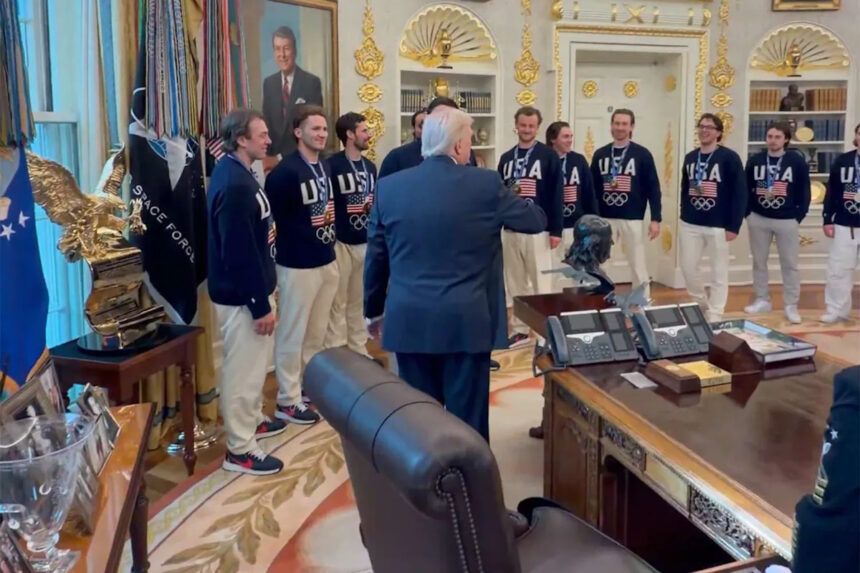
The journey from the ice of the 2026 Winter Olympics to the hallowed carpet of the Oval Office is a short one in miles but a profound one in symbolism. For the newly crowned gold medal-winning U.S. Men’s Hockey Team, that path led directly to a handshake with President Donald Trump on Tuesday, February 24, in a pre-State of the Union celebration that blended sporting triumph with political theater. The visit, sparked by a personal presidential phone call, was a classic White House tradition with a distinctly modern twist, immediately igniting conversations about sports, politics, and the optics of victory in a divided nation.
A Presidential Invitation: From Overtime Thriller to Oval Office
The scene was set just days after one of the most dramatic finishes in recent Olympic history. A nail-biting 2-1 overtime victory over arch-rival Canada secured the gold medal for Team USA, reigniting American passion for a sport that lives for such legendary moments. The celebration had barely subsided when the team received a call from the commander-in-chief. President Trump, 79, personally invited the squad to the White House, extending the rare honor of attending his State of the Union address as his guests.
This move broke from the more common post-championship ceremony held separately from a major political speech. By folding the team’s recognition into the high-profile pageantry of the State of the Union, the event was guaranteed a prime-time spotlight. The images of young athletes in their team jackets shaking hands with the President in the Oval Office became an instant historical footnote, capturing a moment where sporting excellence and political access powerfully intersected.
Controversy on the Bench: The Joke About the Women’s Team
No moment involving President Trump is without its accompanying layer of commentary, and this visit was no exception. The President revealed that during his congratulatory call, he jokingly told the men’s team he would “also have to invite the women’s hockey team” after their own stellar gold-medal performance. While likely intended as a lighthearted remark, it sparked immediate controversy across sports and political circles.
Analysts and fans were quick to dissect the implications:
- Perpetuating a Secondary Status: Critics argued the comment, even in jest, framed the women’s team—dominant champions in their own right—as an afterthought or an obligatory invite, rather than as equals deserving of their own standalone celebration.
- A Spotlight on Equity: The joke inadvertently refocused attention on the long-standing fight for gender equity in sports, particularly in hockey, where the U.S. women’s team has been at the forefront of battles for fair pay and treatment.
- Political Polarization: As with many actions by this President, the moment became a Rorschach test. Supporters saw a President honoring winners with classic Trumpian humor, while detractors saw a diminishing of women’s athletic achievement.
This subplot ensured the visit was about more than just a photo op; it became a microcosm of broader cultural debates.
Expert Analysis: The Political Power of the Presidential Podium
Sports journalists and political strategists alike viewed the orchestrated event as a masterclass in symbolic politics. “The State of the Union is the President’s biggest audience outside of an inauguration,” notes Dr. Elena Martinez, a political historian specializing in sports and statecraft. “By placing these athletes, embodiments of American grit and success, in the gallery, the President is doing more than honoring them. He is associating his administration with their victory. It’s a non-verbal argument that under his leadership, America wins.”
Furthermore, the choice of hockey is significant. Unlike basketball or baseball, hockey’s fanbase includes key demographic swaths in crucial Midwestern and Rust Belt states. The sport’s imagery—physical, tough, team-oriented—resonates with political messaging around strength and unity. This visit was a calculated, though traditional, use of soft power and patriotic imagery ahead of a major speech outlining the administration’s agenda.
From a sports media perspective, the event complicates the often-stated desire to “keep politics out of sports.” “The White House visit is the ultimate political act in sports,” says veteran hockey analyst Mark Brennan. “These young men earned their moment purely on athletic merit. Yet, by accepting this particular invitation at this highly charged time, whether they sought it or not, they are pulled into the political narrative. Their handshake becomes a headline beyond the sports section.”
Predictions: What This Means for Sports and Politics in 2026 and Beyond
The fallout and precedent set by this visit will ripple forward. We can anticipate several key developments:
- Increased Scrutiny on Future Visits: Future championship teams from all sports will face even more intense pressure and public debate regarding whether to accept a White House invitation, regardless of the sitting President’s party. The decision will be viewed as an implicit political statement.
- A Renewed Focus on Women’s Sports Recognition: The reaction to the President’s joke will likely force a more deliberate and equitable protocol for honoring women’s teams. Expect future administrations to be more careful in ensuring parallel recognition.
- State of the Union as a Sports Stage: This may not be a one-off. Using the SOTU gallery to highlight athletic champions provides a vivid, human backdrop of American success. We may see this tactic repeated, further cementing the link between presidential messaging and sporting triumph.
- Player Agency and Voice: In an era of athlete empowerment, we may see teams or individual players become more proactive in shaping the terms of a White House visit, using the platform to advocate for causes important to them, or opting for community-based celebrations instead.
Conclusion: A Moment Frozen in Time
The U.S. Men’s Hockey Team’s visit to the Oval Office on February 24, 2026, will be remembered for more than just gold medals and handshakes. It was a convergence of peak athletic achievement and peak political ceremony. The team, deserving of every accolade for their on-ice heroics, found themselves at the center of a familiar American storm where sports, culture, and politics collide.
Their victory over Canada was unambiguous, decided in sudden-death overtime. Their visit to the White House, however, exists in the realm of interpretation—a celebration of national pride to some, a political prop to others. What remains undeniable is the powerful allure of the championship platform and the enduring tradition of the White House honoring its heroes. As the players took their seats in the Capitol for the State of the Union, they transitioned from athletes to symbols, their golden moment now permanently framed by the political context of its celebration. In the end, the story of their visit is a testament to a simple truth: in America, how you celebrate a win can be just as complex and debated as how you earned it.
Source: Based on news from Yahoo Sports.