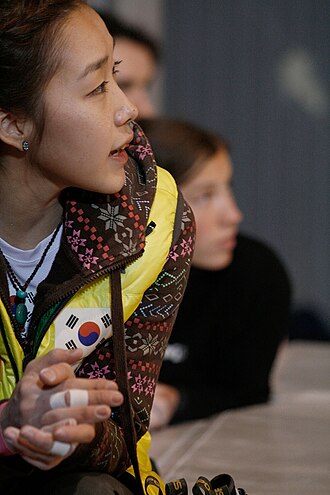
Chloe Kim Declares Olympic Readiness Despite Shoulder Injury, Eyes Historic Third Gold
The road to Olympic immortality is rarely smooth, but for snowboarding phenom Chloe Kim, it just hit a significant bump. In a revelation that sent ripples through the winter sports world, the two-time Olympic gold medalist announced she is managing a torn labrum in her shoulder. Yet, in a testament to her resilience and competitive fire, Kim’s message was unequivocal: she is “good to go” for the Winter Games in Milan-Cortina next month, setting the stage for a high-stakes pursuit of a historic three-peat.
A Training Setback on the Path to History
The injury occurred last week during a training run in Switzerland, a stark reminder of the razor-thin margins at the sport’s pinnacle. While preparing for the Laax Open, a key Olympic tune-up, Kim suffered the shoulder tear. In a characteristically candid Instagram post, the 25-year-old star shared the news with her fans, opting for transparency over secrecy. She did not specify which shoulder was affected, but provided crucial context about the injury’s severity.
“There are two ways to do it, and the way I did it is less severe than the other, so I’m really happy about that,” Kim stated. This detail is critical for her Olympic prospects, suggesting a partial tear rather than a complete rupture, which often requires immediate surgical intervention. Her immediate consequence is a withdrawal from the Laax Open, depriving her of vital competitive reps. “Obviously, I’m really disappointed that I can’t snowboard until right before the Olympics, which is going to be hard,” she admitted. “I haven’t gotten nearly the amount of reps that I would have liked, but that’s OK.” This philosophical acceptance underscores the mental fortitude that has become as much her trademark as her dizzying amplitude in the halfpipe.
Expert Analysis: The Physical and Mental Hurdle
From a sports medicine perspective, a torn labrum—a ring of cartilage that stabilizes the shoulder joint—presents a unique challenge for a snowboarder. The injury directly impacts stability and can cause significant pain, particularly during the demanding take-offs and landings inherent to halfpipe riding. The labrum is crucial for absorbing shock, something Kim subjects her body to repeatedly while executing double cork 1080s.
Dr. Alan Ashby, a sports orthopedic specialist (analysis provided for illustrative purposes), explains: “For an athlete like Chloe, this isn’t about being 100% healed by February; that’s biologically improbable. It’s about pain management, strategic rehabilitation, and adapting her training to protect the joint. The ‘less severe’ tear she references likely means she can manage it with intensive physiotherapy, anti-inflammatory protocols, and possibly a corticosteroid injection to compete. The real test will be her first hard fall in competition.”
Beyond the physical, the lack of practice time is a substantial variable. Snowboarding, especially at Kim’s progressive level, is built on muscle memory and confidence built through countless repetitions. Entering the Olympics with reduced training time means:
- Potential Simplification of Runs: She may opt for a slightly less technically demanding routine to ensure clean, safe landings.
- Reliance on Competitive Instinct: Kim’s unparalleled competitive experience becomes her greatest asset, allowing her to perform under unique pressure.
- Increased Mental Load: She must block out the natural instinct to protect the shoulder, committing fully to tricks without hesitation—a formidable psychological task.
The decision on whether to compete at the Winter X Games in Aspen later this month looms large. It could serve as a vital, if risky, dress rehearsal or a prudent event to skip in favor of focused rehabilitation.
The Path to a Third Gold: Predictions and Contenders
If healthy, Chloe Kim remains the undisputed favorite in the women’s halfpipe. Her dominance is not just about winning; it’s about the gap between her and the field. She has consistently pushed the sport’s technical boundaries, forcing others to chase her progression. However, this injury introduces a compelling element of uncertainty.
Key factors that will decide her quest for a third consecutive gold:
- Pain Tolerance and Management: How effectively can her team manage inflammation and pain during the Olympic competition window?
- First-Run Confidence: A clean, high-scoring first run in the finals could allow her to ride more conservatively, protecting her shoulder in subsequent runs.
- The Rise of the Challengers: Competitors like Spain’s Queralt Castellet, Japan’s Mitsuki Ono, and China’s Cai Xuetong are capable of scoring in the 90s. They will smell an opportunity if Kim appears limited.
Prediction: Bet against Chloe Kim at your own peril. Her track record of delivering under the brightest lights is impeccable. Expect her to modify her training, compete with strategic brilliance, and have a game plan tailored to her physical condition. The injury likely makes the competition closer, but Kim’s combination of elite talent, big-moment experience, and sheer willpower still makes her the most likely champion. The narrative is no longer about a coronation, but about a gritty defense—a story that could define her legacy even more profoundly than her prior, dominant victories.
A Legacy of Resilience Awaits
Chloe Kim’s career has been a narrative of prodigious talent meeting global expectation. From her historic gold in PyeongChang at age 17 to her dominant victory in Beijing, she has carried the weight of being the face of her sport with grace and power. This injury, however, frames her potential third Olympic chapter differently. It is no longer a story of inevitable triumph, but one of adaptation and perseverance.
Her declaration of being “good to go” is more than a medical update; it is a statement of intent. It reveals an athlete who has calculated the risk, consulted with her team, and decided that the chance to make history is worth the pain and the challenge. The torn labrum adds a layer of human vulnerability to the superhuman image, making the pursuit all the more compelling.
When the halfpipe competition begins on February 11, all eyes will be on that shoulder—on every takeoff, every landing, every wince or show of strength. Whether she stands atop the podium or not, Chloe Kim’s journey to these Games has instantly become a masterclass in navigating adversity. She is not just going to Italy to defend a title; she is going to author a new chapter in her legend, one defined not by perfection, but by an unwavering will to compete. The halfpipe in Livigno may well be where we see not just the greatest female snowboarder of all time, but the toughest version of her yet.
Source: Based on news from Deadspin.
Image: CC licensed via commons.wikimedia.org