


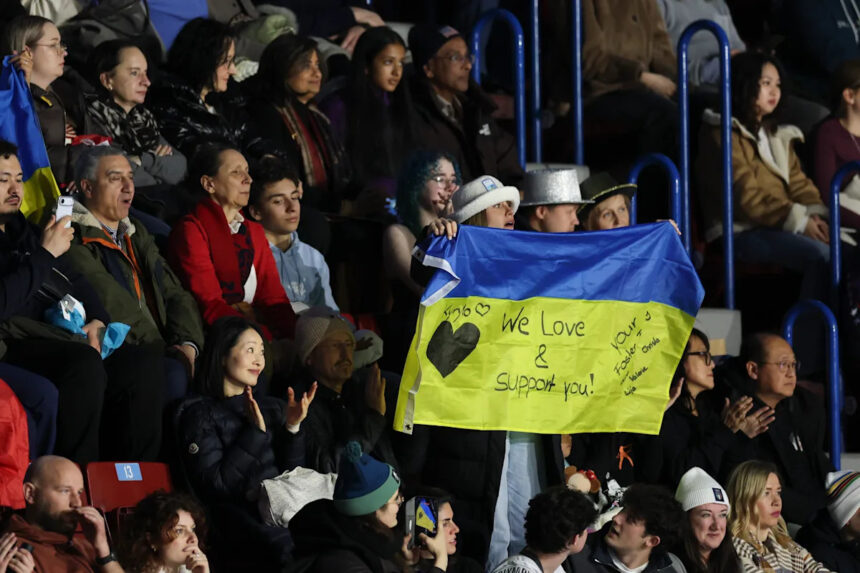
Ukraine’s Paralympic Boycott: A Stark Protest Against Russia’s Flag at the Games
The world of sport, particularly the Paralympic movement built on the pillars of courage, equality, and inspiration, is facing a profound moral and political crisis. In a move that reverberates far beyond the arena, Ukrainian government officials will boycott the upcoming Winter Paralympics following the International Paralympic Committee’s (IPC) decision to allow Russian and Belarusian athletes to compete under their national flags. This stark protest, set against the backdrop of a brutal, ongoing war, forces an uncomfortable question: can the unifying power of sport withstand the gravity of geopolitical aggression and alleged war crimes?
A Statement of Outrage: Ukraine’s Official Stance
Ukrainian Minister of Youth and Sports, Matvii Bidnyi, left no room for ambiguity in a fiery statement released on social media platform X. His words framed the IPC’s decision not as a mere administrative ruling, but as a deep betrayal of Paralympic values. Bidnyi condemned the move as “both disappointing and outrageous,” explicitly labeling Russian athletes as “killers and their accomplices” permitted to compete under their national banner.
The core of Ukraine’s argument hinges on the symbolism of the flag itself. Bidnyi asserted that the flags of Russia and Belarus “have no place at international sporting events that stand for fairness, integrity, and respect.” In the Ukrainian view, these symbols have been irrevocably tainted. “They have turned sport into a tool of war, lies and contempt,” Bidnyi stated, accusing Russia of using the platform of international sport to normalize and whitewash its military invasion of Ukraine. Crucially, while officials will stay away, Ukrainian Paralympians themselves will be allowed to compete—a poignant distinction highlighting the athletes’ dedication amidst their nation’s torment.
The IPC’s Controversial Reversal and Its Implications
The Ukrainian official boycott came as a direct response to a significant policy shift by the International Paralympic Committee. Just hours earlier, the IPC announced it would permit athletes from Russia and Belarus to participate in the Winter Paralympics under their own flags, reversing the neutral-status mandate that had been in place since the onset of the war in 2022. This decision is expected to allow approximately 10 athletes from the two nations to compete with full national recognition.
This reversal places the IPC at odds with the International Olympic Committee (IOC), which continues to recommend neutral participation for Russian and Belarusian athletes in international competitions. The IPC’s move is likely rooted in its specific governance code and a interpretation of its commitment to political neutrality and athlete inclusion. However, critics argue that this technical adherence to statutes ignores the stark reality on the ground. The decision creates a jarring visual: athletes marching under the flag of a nation currently accused of widespread atrocities in Ukraine, competing on the same field of play as athletes from the victim nation. This, analysts suggest, risks:
- Legitimizing Russian aggression through the soft power of global sportsmanship.
- Inflicting further psychological trauma on Ukrainian athletes, who may view competition as an extension of the battlefield.
- Setting a precedent where geopolitical conflicts can be temporarily sidelined for the sake of competition, a stance many deem inappropriate in the face of an ongoing war of aggression.
Expert Analysis: The Unraveling of Sport’s “Neutral” Facade
Sports historians and geopolitical analysts see this moment as a critical stress test for the long-held principle of separating sports and politics. “The notion of sport’s pure neutrality has always been something of a myth,” notes Dr. Anya Petrova, a professor of International Sports Policy. “From the 1936 Olympics to the Apartheid-era boycotts, global events have always been stages for political statements. What we are witnessing now is the inevitable collision between institutional bureaucracy and raw, contemporary moral outrage.”
The Ukrainian boycott, while limited to officials, is a powerful symbolic gesture. It refuses to grant the event the full diplomatic recognition that a government presence implies. It signals that, for Ukraine, business cannot continue as usual while its cities are bombed and its citizens killed. The move also places immense pressure on other nations and sponsors. Will other delegations stage silent protests? Will broadcasters grapple with how to present Russian athletes under their flag? The IPC’s decision has politicized the Games far more than a blanket ban ever could have, creating a fragmented and tense atmosphere.
Furthermore, the distinction between allowing athletes to compete and officials to boycott is strategically significant. It protects the athletes—who have trained for years for this moment—from bearing the direct brunt of the political standoff, while ensuring the state’s protest is registered loudly and clearly. It is a nuanced form of dissent, one that acknowledges the athletes’ dreams while condemning the machinery of the state they represent.
Predictions and the Future of International Sport
The immediate fallout from this decision will unfold in the Games’ atmosphere. Expect subdued or outright hostile reactions during ceremonies and competitions involving Russian and Belarusian athletes. The media narrative will be overwhelmingly dominated by this conflict, potentially overshadowing the athletic achievements the Paralympics aims to celebrate.
Looking ahead, this episode will have lasting repercussions:
- Deepened Fractures in Global Sport: Trust between the IPC, the IOC, and numerous national committees, particularly from nations supporting Ukraine, will be damaged. Future bids and hosting decisions may become even more politically charged.
- Re-evaluation of “Neutrality” Frameworks: Governing bodies will be forced to develop clearer, more robust criteria for suspending national representation, moving beyond vague references to “peace and human dignity” to concrete mechanisms tied to international law and UN resolutions.
- Increased Athlete Activism: Athletes from all nations may feel compelled to speak out, leading to podium protests or statements that could result in disciplinary action, creating further instability.
- Sponsorship Scrutiny: Corporate partners, sensitive to brand association, may reconsider their support for events that become geopolitical flashpoints, potentially impacting funding for all athletes.
Conclusion: A Victory for No One
The Ukrainian officials’ boycott of the Winter Paralympics is not a gesture of isolation, but one of painful principle. It underscores a devastating truth: in times of unprovoked war and humanitarian catastrophe, the playing field is never level. The IPC’s well-intentioned but flawed attempt to revert to normalcy has instead created a arena of profound dissonance, where the celebration of human resilience will be shadowed by the grim reality of conflict.
Ultimately, there are no winners in this scenario. Ukrainian athletes compete under the weight of unimaginable stress. Russian athletes, regardless of personal belief, become unwilling standard-bearers for their government’s actions. The Paralympic movement itself, a beacon for inclusivity, finds its core values questioned. As the world watches, the Games will proceed, but they will be remembered less for the medals won and more for the stark, unresolved tension they laid bare—a painful reflection of a world still struggling to reconcile the ideal of unity with the imperative of justice.
Source: Based on news from Yahoo Sports.


