Redemption in Overtime: Hilary Knight Leads U.S. Women’s Hockey to Golden Glory Over Canada
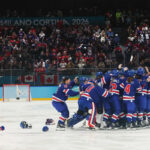
The greatest rivalry in sports didn’t just deliver another chapter in Milan; it forged an instant classic, a testament to will, skill, and a legacy of excellence. In a heart-stopping, white-knuckle final that pushed two titans to their absolute limits, the U.S. women’s hockey team reclaimed Olympic supremacy, defeating archrival Canada 2-1 in a breathtaking overtime thriller to win its third Olympic gold medal in history. The victory, sealed under the immense pressure of sudden-death play, wasn’t just a win—it was a statement of resilience, led by a legendary captain who refused to let her team’s golden dream die.
A Rivalry Forged in Fire: The Weight of the Moment
To understand the magnitude of this victory, one must first appreciate the relentless pendulum of this rivalry. Since women’s hockey entered the Olympic program in 1998, the gold medal has been a binary choice: USA or Canada. Every meeting is a war of attrition, a chess match played at breakneck speed. The nail-biting game Thursday in Milan was the latest epic in this saga. As noted by NBC, this marked the third time in the last four Olympics that these teams required extra minutes to decide the champion, a staggering statistic that underscores the microscopic margin separating them.
For Team USA, the memory of a gut-wrenching loss to Canada in the 2022 Beijing gold medal game was a fresh scar. For veterans like Hilary Knight, the team’s iconic captain and four-time Olympian, this was about more than a medal; it was about legacy and closure. The stage was set not just for a game, but for a defining moment in the sport’s history.
The Ebb and Flow of a Classic: From Despair to Deliverance
The game unfolded with the tactical ferocity everyone expected. Both teams traded chances, with goaltenders standing tall as the ultimate guardians of their nets. The deadlock was finally broken in the second period when Canada’s Kristin O’Neill found a seam and buried a shot, sending the Canadian contingent into a frenzy. As the clock bled into the final minutes of the third period, the U.S., facing the prospect of consecutive Olympic silver medals, threw everything forward in a desperate, furious assault.
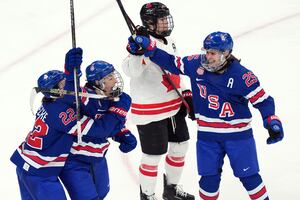
Then, with the nation holding its breath, the captain answered the call. With just over two minutes remaining in regulation, a chaotic scramble in front of the Canadian net saw the puck land on the tape of Hilary Knight’s stick. In a flash, she fired it home, sending the American bench and fans into absolute bedlam. The goal was a masterpiece of clutch performance:
- Unwavering Composure: Amidst the chaos, Knight’s veteran poise shone through.
- Historic Significance: The goal cemented her status as one of the most pivotal players in U.S. Olympic hockey history.
- Momentum Shift: The equalizer didn’t just tie the game; it psychologically transferred all the pressure to Canada.
The goal forced overtime, a scenario both teams knew all too well, setting the stage for a sudden-death finale for the ages.
Expert Analysis: The Keys to a Golden Victory
Beyond the heroic narrative, the U.S. victory was a product of strategic adjustments and critical execution under duress. Analysis points to several decisive factors that tipped the scale in Team USA’s favor.
Goaltending as a Foundation: While the goal scorers grab headlines, the performance of U.S. goaltender Aerin Frankel was the steadying backbone of the win. Her composure, particularly after the Canadian goal, prevented the game from slipping to a 2-0 deficit and allowed her team the chance to mount its comeback. In a one-goal game, every save is golden.
Depth and Relentless Forecheck: While Knight provided the iconic moment, the U.S. victory was a full 60-minute (and beyond) effort from all four lines. The American forecheck, especially in the third period and overtime, began to wear down the Canadian defense, creating the turnovers and offensive zone time that ultimately led to the decisive opportunities.
Winning the Mental Battle: After the heartbreak of 2022, the mental fortitude required to stare down another potential loss and rally cannot be overstated. The leadership core, led by Knight, managed the team’s emotional state perfectly, channeling desperation into focused, aggressive play rather than panic.
The Road Ahead: Predictions for a New Era
This gold medal does more than just sit in a trophy case; it signals a potential shift in the rivalry’s dynamic and raises exciting questions about the future of women’s hockey.
A Changing of the Guard (and a Reinforcement): While Knight’s legend grows, this U.S. team showcased a powerful blend of veteran savvy and youthful exuberance. The infusion of new talent, playing with such poise on the Olympic stage, suggests the U.S. pipeline remains robust. For Canada, the loss will sting, but it ensures the rivalry’s intensity will only burn hotter. They will retool and return with vengeance in mind for the 2026 Games.
Global Growth of the Game: As thrilling as the USA-Canada finale is, the continued closing of the gap by nations like Finland and the Czech Republic is vital for the sport’s long-term health. This competitive pressure forces the North American powers to evolve and elevates the entire Olympic tournament.
Legacy and Inspiration: This victory, achieved in such dramatic fashion on the world’s biggest stage, will inspire a new generation of girls to pick up a stick. The images of Knight’s celebration and the team’s joy will be replayed for years, serving as a powerful catalyst for growth at the grassroots level.
Conclusion: More Than a Medal, A Moment Immortalized
The U.S. women’s hockey team’s victory in Milan was not merely a win; it was a narrative of redemption, resilience, and legendary leadership. In defeating Canada in overtime, they added another unforgettable layer to the richest rivalry in sports. Hilary Knight’s late-game heroics, a goal that will be etched in Olympic lore, ensured that this team’s legacy would be painted in gold. As the final buzzer sounded, it marked the culmination of a four-year journey fueled by a singular, painful memory. They didn’t just win a game; they authored a perfect response to history, proving that in the fiery crucible of competition against their greatest foe, the heart of a champion beats strongest when all seems lost. The gold medal is their prize, but the moment—the sheer, unadulterated drama of it all—is a gift to the sport they have dedicated their lives to elevating.
Source: Based on news from Yahoo Sports.