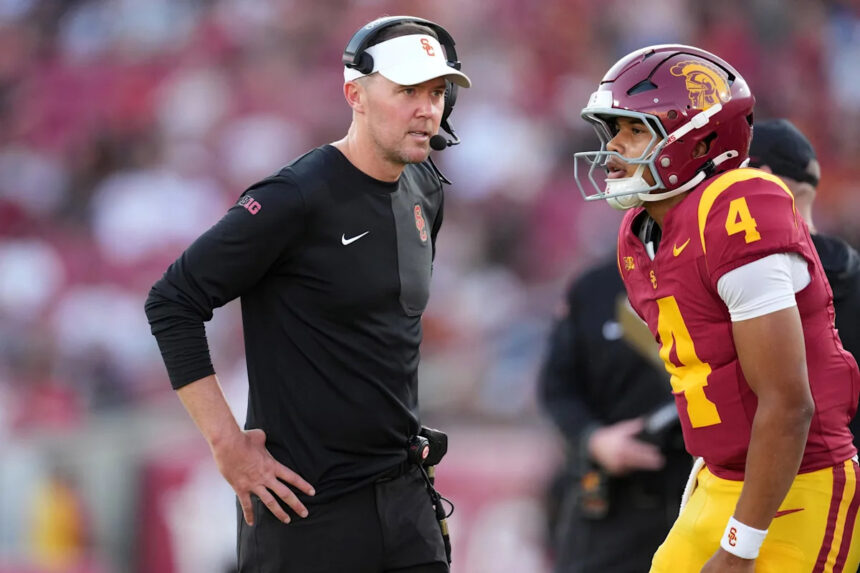
Husan Longstreet Enters Transfer Portal: A Stunning Blow to USC’s Future and a Landmark Moment in the NIL Era
The seismic tremors that have come to define college football’s modern landscape shook the heart of Los Angeles on Thursday evening. In a move that confirms the worst fears of the Trojan faithful and underscores the brutal new reality of roster management, USC freshman quarterback Husan Longstreet—the crown jewel of their 2025 recruiting class—has entered the NCAA transfer portal. This isn’t just a backup seeking snaps; this is a paradigm-shifting departure that speaks volumes about the state of USC football and the evolving priorities of the elite modern athlete.
The Hometown Dream Meets a Harsh Reality
For years, the narrative around Husan Longstreet was one of destiny. A five-star recruit from nearby Corona, California, his commitment to Lincoln Riley and USC was seen as a perfect marriage of local talent and offensive genius. He was the archetypal hometown kid poised to lead the program into the Big Ten. His brief freshman showcase in 2025—a hyper-efficient 13-of-15 passing for 103 yards and a TD, complemented by 76 rushing yards and two scores—only fueled the belief that the future was securely in his hands.
Yet, the foundation of that future cracked with the confirmed return of starter Jayden Maiava for the 2026 season. In the pre-portal era, a talent like Longstreet might have bided his time, engaged in a high-profile camp battle, and waited his turn. Today, the calculus is irrevocably different. With a limited window of college eligibility and the financial implications of Name, Image, and Likeness (NIL) opportunities often tied to playing time, elite prospects are no longer willing to wait.
Longstreet’s gracious Instagram announcement, thanking the “Trojan Family” and calling his time at USC an opportunity he’ll “always cherish,” cannot mask the stark competitive truth. The system, as it currently exists, incentivizes movement. For a player of his caliber, the path to the NFL is the paramount concern, and that path is almost always illuminated by starting tape.
Expert Analysis: A Multifaceted Failure for USC
This departure is a significant, multi-layered setback for Lincoln Riley’s program, extending far beyond the depth chart.
- Recruiting Narrative Damage: Riley’s reputation as a quarterback whisperer and a guaranteed path to the NFL is arguably his most potent recruiting tool. Losing a five-star QB after one season—without him ever losing a competition—punctures that aura. It signals to future blue-chip quarterbacks that even at USC, a logjam can occur, and the promised development might come with a waiting period they’re unwilling to accept.
- Roster Construction in the Portal Era: This situation highlights the incredibly delicate balance coaches must now strike. Retaining a productive veteran like Maiava is a win for the present. But failing to manage the expectations and development timeline of your quarterback of the future can devastate the medium-term outlook. It raises questions about communication and the clarity of the plan presented to Longstreet during his recruitment.
- The NIL and Playing Time Nexus: While not explicitly stated, the role of NIL collectives is inescapable in this conversation. A starting quarterback at a major program commands a certain NIL valuation. A backup, even a supremely talented one, does not. Longstreet’s decision is a stark example of how playing time directly impacts athlete valuation, making the transfer portal a powerful tool for financial and professional self-determination.
Predictions: Where Does Longstreet Land, and What’s Next for USC?
The scramble for Husan Longstreet’s services will be among the most intense of this transfer cycle. He will have his pick of programs with an immediate, glaring need at quarterback.
Potential Destinations for Longstreet:
- SEC Contenders: Programs like Texas A&M, Auburn, or Florida could offer immediate SEC exposure and a clear runway to start.
- Big Ten Rivals: The irony of Longstreet facing USC in future Big Ten play is palpable. Schools like Nebraska or Michigan State could be aggressive suitors.
- Offensive Powerhouses: A system fit will be key. Schools with a proven offensive scheme and a need, such as Oregon or UCF, could make a compelling pitch.
The Fallout for USC:
For the Trojans, the 2026 season now rides unequivocally on the arm and health of Jayden Maiava. The quarterback room behind him is suddenly thin, making the pursuit of a experienced transfer portal quarterback not just an option but an urgent necessity. Riley must find a capable veteran who can provide security while also accepting a backup role behind Maiava—a challenging sell in this market. Furthermore, this exit will undoubtedly be used against USC on the recruiting trail by rival coaches, who will question Riley’s ability to manage a roster of stars.
A Watershed Moment and a Strong Conclusion
The transfer of Husan Longstreet is a watershed moment, a perfect case study of the new college football ecosystem. It encapsulates the death of patient succession plans, the powerful intersection of NIL and playing time, and the immense pressure on coaches to not only recruit talent but to actively and continuously manage their career timelines.
For Longstreet, this is a bold, pragmatic bet on himself. He is leveraging his high school pedigree and limited collegiate tape to seize control of his destiny, seeking a program where he can be the undisputed face of the franchise. For USC, it is a brutal lesson in the cost of doing business in the modern era. You can recruit the best talent in the world, but retaining it requires more than just tradition and coaching prestige. It requires immediate opportunity, meticulous roster planning, and a compelling value proposition that aligns with the athlete’s short-term professional and financial goals.
As the dust settles, one thing is clear: the era of the patient prodigy is over. The portal giveth, and the portal taketh away. Today, it took from USC a piece of its envisioned future, reminding every program in the country that no blue-chip asset, no matter how homegrown, is truly secure. The game within the game has never been more complex or more consequential.
Source: Based on news from Yahoo Sports.