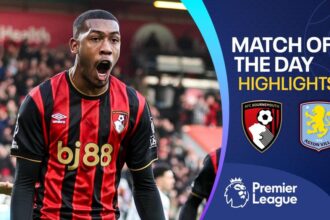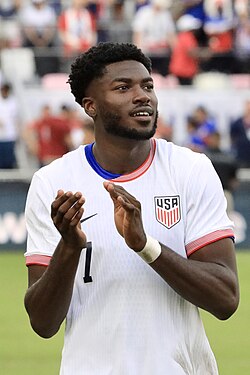
USMNT’s World Cup Dreams Dealt a Blow as Patrick Agyemang Suffers Devastating Achilles Injury
The United States Men’s National Team’s path to a historic home World Cup, a tournament poised to be a defining moment for soccer in America, has been struck by a cruel and untimely setback. Striker Patrick Agyemang, a burgeoning force and a key component of the team’s tactical blueprint, has been ruled out of the 2026 FIFA World Cup after suffering a complete rupture of his Achilles tendon during a routine training session with his club. The injury, one of the most severe in professional sports, not only sidelines a premier talent but sends seismic waves through the USMNT’s preparations, forcing a profound recalibration of strategy and ambition just two years from kickoff.
The Agony of the Achilles: Understanding the Injury and Timeline
For an athlete whose game is predicated on explosive acceleration, powerful leaps, and sharp changes of direction, the Achilles tendon is the vital cord connecting ambition to action. A complete rupture is a catastrophic failure of that mechanism. The road back is notoriously long, arduous, and uncertain. Modern sports medicine has improved outcomes, but the typical recovery timeline for a rupture of this magnitude is a minimum of nine to twelve months before a return to full training. However, returning to the pinnacle of world-class sport, where split-seconds and immense physical duress are the norms, often takes far longer.
Even with an optimistic projection, Agyemang would be racing against time to regain peak form and fitness mere months before the World Cup. National team staff, in consultation with medical experts, have made the painful but prudent decision to rule him out now. This clarity, while devastating, allows the team to move forward without the cloud of uncertainty. The focus shifts entirely to Agyemang’s personal rehabilitation, a journey that will test his mental fortitude as much as his physical resilience.
Analyzing the On-Field Void: What the USMNT Loses
Patrick Agyemang was not just another name on the squad sheet; he represented a specific and potent weapon in the USMNT’s arsenal. His projected role for 2026 was multifaceted and critical:
- Unique Physical Profile: In a striker pool featuring elusive technicians and high-press engines, Agyemang offered a rare blend of brute strength, aerial dominance, and surprising pace. He was the tactical “out ball,” capable of receiving long passes under pressure, holding up play, and bringing dynamic wingers like Christian Pulisic and Giovanni Reyna into the game.
- Big-Game Mentality: Agyemang had developed a knack for impactful performances in crucial matches, both for club and country. His fearlessness in front of goal and willingness to engage in physical battles made him a potential game-changer in the tight, pressurized knockout stages the U.S. aspires to reach.
- Tactical Flexibility: His skill set allowed the head coach to pivot between a fluid, pressing front three and a more direct, dual-striker system without changing personnel. This tactical flexibility is now significantly diminished, narrowing the strategic options against the world’s elite.
His absence creates a void that is about more than just goals; it’s about a specific style of play and a psychological edge that must now be reconstituted from other sources.
The Road to 2026: Reshuffling the Striker Deck and New Opportunities
While the loss is monumental, it is not insurmountable. The USMNT’s striker position, once a chronic concern, has developed promising depth. The coaching staff’s immediate task is to reevaluate and accelerate the development of the remaining options. The spotlight will intensify on:
- Folarin Balogun: The presumed starter. This injury places even more responsibility on his shoulders to be the consistent, clinical finisher. His link-up play and movement will need to evolve to compensate for the lost physicality.
- Ricardo Pepi: Offers a somewhat similar profile to Agyemang as a traditional, physical number nine. The next two years are now a critical window for Pepi to secure a stable club situation and refine his holdup play to stake his claim.
- Josh Sargent & Haji Wright: Veterans with proven goal-scoring records at good levels. Their experience and differing styles provide valuable depth, but they must now push to become more than rotational pieces.
- The Wild Cards: This tragedy opens the door for a new name to emerge. Could it be an MLS standout like Duncan McGuire or Brian White? Could a teenage prospect like Darren Yapi or Marcos Zambrano make an unprecedented leap? The next 24 months of club form will be scrutinized like never before.
The coaching staff may also consider a tactical evolution, perhaps leaning more heavily into a false-nine system utilizing a player like Brenden Aaronson or Gio Reyna in a central, creative role, with Pulisic and Tim Weah providing width and goal threat.
Beyond the Roster: The Psychological Impact and Path Forward
Injuries of this magnitude resonate beyond the training pitch and stat sheet. They carry a heavy psychological toll. For Agyemang’s teammates, it is a stark reminder of the fragility of a dream years in the making. It can foster a sense of “now or never” urgency, but it must be carefully managed to avoid pressing too hard or playing with fear.
For the USMNT program, this is a defining moment of adversity. The true measure of a team’s potential is not just its talent on paper, but its resilience in the face of setback. How the collective responds—how the next man steps up, how the tactics adapt, how the leadership in the locker room galvanizes the group—will reveal the team’s character. The narrative has abruptly shifted from one of seamless buildup to one of gritty response.
The final whistle on this chapter is far from blown. While Patrick Agyemang’s personal dream is heartbreakingly deferred, the USMNT’s collective mission presses on, albeit on a more difficult path. His injury is a brutal test, but it is not a death knell. It will force innovation, reveal unexpected heroes, and demand a new level of maturity from a young squad. The story of the 2026 USMNT will now be partially defined by how it overcame this profound loss. The hope of a nation remains, but the journey to the World Cup just became a steeper, more demanding climb. The response begins now.
Source: Based on news from ESPN.
Image: CC licensed via commons.wikimedia.org