Vanderbilt’s Diego Pavia Apologizes for Heisman Vote Reaction: A Story of Fire, Fallout, and Redemption
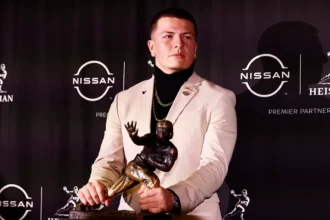
The Heisman Trophy ceremony is a hallowed night of celebration, a culmination of college football’s most prestigious individual honor. For Vanderbilt quarterback Diego Pavia, it became a crucible of raw emotion, a public misstep, and a rapid lesson in the unforgiving spotlight of stardom. Just 24 hours after finishing as runner-up to Indiana’s Fernando Mendoza, Pavia issued a public apology for a fiery, expletive-laden social media post directed at Heisman voters. The incident offers a stark, unfiltered look at the psyche of a modern elite athlete and the thin line between competitive fire and public perception.
The Viral Moment: A Competitor’s Unvarnished Anger
On Saturday night in New York, history was made as Indiana’s Fernando Mendoza claimed the program’s first-ever Heisman Trophy. For Diego Pavia, the journey from New Mexico State transfer to Vanderbilt program cornerstone to Heisman finalist was a storybook season in its own right. Yet, in the immediate aftermath of the announcement, the sting of second place proved overwhelming.
Taking to his Instagram story, Pavia posted a photo of himself with his Vanderbilt offensive linemen at the ceremony. Overlaid was a message that would quickly detonate across college football social media: “F-All THE VOTERS,” written in all capital letters, accompanied by a thumbs-down emoji, followed by, “BUT…..FAMILY FOR LIFE.”
The post was raw, visceral, and instantly divisive. It showcased the very competitive drive that fueled his remarkable season, but channeled it in a direction many viewed as disrespectful to the award’s tradition and process. The duality of the message was telling—a blistering rebuke of the outcome, immediately followed by a loyal tribute to his teammates. It was the unscripted id of an athlete who had just fallen painfully short of his dream.
The Apology: Accountability in the Digital Age
As the post went viral, the backlash was swift. Recognizing the damage to his reputation and, more importantly, to the dignity of the Heisman ceremony, Pavia moved quickly to control the narrative. On Sunday night, he issued a formal apology on his X account that was notable for its clarity and lack of excuses.
His statement was a model of personal accountability: “Being a part of the Heisman ceremony last night as a finalist was such an honor,” Pavia wrote. “As a competitor, just like in everything I do I wanted to win. To be so close to my dream and come up short was painful. I didn’t handle those emotions well at all and did not represent myself the way I wanted to.”
He directly addressed the offended parties: “I have much love and respect for the Heisman voters and the selection process, and I apologize for being disrespectful. It was a mistake, and I am sorry.” This swift, direct apology is crucial in the modern media landscape, where narratives cement rapidly. Pavia did not let the story fester; he confronted it head-on.
Expert Analysis: The Duality of Modern Athlete Emotion
This incident is more than a simple gossip item. It’s a case study in the pressures facing today’s student-athlete. Sports psychologists often speak of the “performance persona” versus the private individual. For a moment, Pavia’s private, gut-wrenching disappointment obliterated his public persona.
“What we saw from Diego Pavia is the ultimate double-edged sword,” says Dr. Evelyn Marsh, a sports psychologist who has worked with collegiate athletes. “The same intense, relentless passion that allows him to extend plays, lead fourth-quarter comebacks, and will his team to wins is incredibly difficult to switch off after a profound personal loss. The social media post was an emotional bleed-through. His apology, however, shows significant maturity—the ability to reflect, contextualize those raw feelings within a broader framework of respect, and take ownership. That’s a leader’s response.”
From a media and branding perspective, the episode highlights the peril and power of athlete-controlled platforms. The same direct channel that allows players to build their brand and connect with fans can also amplify a moment of poor judgment to a global audience in seconds.
- Immediate Emotional Outlet: Social media provides a instantaneous, unfiltered publishing tool, a dangerous combination in moments of high emotion.
- The Amplification Effect: A once-private sentiment between friends becomes a national headline, scrutinized without the context of the entire emotional journey.
- Crisis Management: Pavia’s rapid apology demonstrates that athletes and their support systems are acutely aware of the need for swift reputation management.
Looking Ahead: Impact on Legacy and 2024 Season
The critical question now is: What does this mean for Diego Pavia’s legacy and his upcoming senior season at Vanderbilt?
Short-term fallout is likely minimal. The apology was well-constructed and timely. Most fans and analysts understand the heat of competition. The story will fade, replaced by offseason workouts and spring practice headlines. However, a subtle, longer-term narrative has been seeded.
Prediction 1: The “Chip on the Shoulder” Narrative Will Intensify. Pavia has now publicly, and painfully, declared how much he wanted the Heisman. This incident will be framed as fuel. Expect every 2024 Vanderbilt game story to reference his “hunger” and “edge,” with this event as the origin point. He will be portrayed as a man on a mission, not just for his team, but for personal validation.
Prediction 2: Scrutiny on Composure Will Heighten. Opposing fans will undoubtedly use this moment as ammunition. In tight, high-pressure games next season, especially on the road, Pavia’s emotional composure will be a talking point for broadcasters. How he channels that famous fire will be a key subplot of every broadcast.
Prediction 3: It Could Cement His Legend at Vanderbilt. Ironically, this misstep could ultimately deepen his connection to the Commodore faithful. By so fiercely wanting to win for himself and his “FAMILY” (his linemen, his team), and by showing a very human flaw followed by humility, he may become an even more relatable and beloved figure. In an era of sanitized athlete interviews, his authenticity—flaws and all—resonates.
Conclusion: A Moment of Humanity in a Polished World
Diego Pavia’s Heisman weekend was a tale of two nights: one of exquisite honor, the next of profound regret. In the span of 24 hours, he experienced the pinnacle of individual recognition and the consequence of a momentary lapse in judgment. His journey from viral outrage to sincere apology provides a powerful snapshot of the modern athletic experience—lived at full volume, under a microscope, where mistakes are magnified but redemption is possible through accountability.
This episode does not define Diego Pavia the quarterback; his dazzling, transformative play on the field does. But it does reveal Diego Pavia the competitor—a player whose burning desire to win is both his greatest asset and a force he must continue to master. As he leads Vanderbilt into a pivotal 2024 season, he carries not just the expectations of a program, but the hard-earned wisdom that even in defeat, and especially in error, character is revealed. His apology wasn’t a sign of weakness, but the first, crucial play in the next chapter of his story: the comeback.
Source: Based on news from Deadspin.
Image: CC licensed via www.rawpixel.com