Victor Wembanyama Exposes the Timberwolves’ “Ragebait” Strategy: A Masterclass in Psychological Warfare
The NBA playoffs are a chess match. But sometimes, the most effective move isn’t a crossover or a step-back jumper. Sometimes, it’s a whisper in the ear, a hard foul, or a deliberate attempt to push a superstar over the edge. This is the dark art of “ragebaiting,” and no one has exposed it more clearly than San Antonio Spurs phenom Victor Wembanyama.
- The Incident That Sparked the Revelation: Wemby’s Ejection in Game 4
- The Timberwolves’ Blueprint: Frustrate the Franchise Player
- Wembanyama’s Adjustment: The Evolution of a Superstar
- Expert Analysis: Why Ragebaiting Is a Double-Edged Sword
- Predictions: What This Means for the Spurs and the Timberwolves Going Forward
- Conclusion: The Giant Has Woken Up
In the aftermath of a heated series against the Minnesota Timberwolves, Wembanyama’s candid comments have peeled back the curtain on a deliberate strategy designed to neutralize the most unique talent the league has seen in decades. As first reported by The Sporting News, the 7’4” Frenchman didn’t just acknowledge the tactic—he deconstructed it. And in doing so, he revealed exactly how the Timberwolves tried to win a mental war they were losing on the scoreboard.
The Incident That Sparked the Revelation: Wemby’s Ejection in Game 4
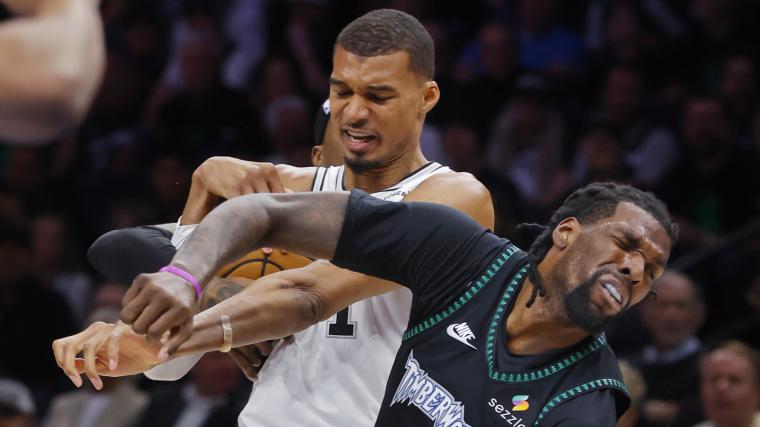
To understand the strategy, you have to go back to the flashpoint. During Game 4 of this tightly contested series, Victor Wembanyama had a momentary lapse. In a scramble for position, he swung his elbow and caught Timberwolves big man Naz Reid squarely in the neck. The contact was hard, dangerous, and immediate. The officials didn’t hesitate. Wembanyama was ejected from the game.
On the surface, it looked like a simple case of frustration boiling over. The Spurs were fighting for survival, the physicality was ratcheting up, and the rookie—albeit a generational one—lost his cool. But as Wembanyama would later explain, that moment was exactly what the Timberwolves had been hunting for.
“They were trying to get me to react,” Wembanyama said post-game, according to The Sporting News. “It’s a strategy. You see it in football, in soccer. They call it ‘ragebaiting.’ They try to push you, poke you, get you to do something stupid.”
The elbow to Reid wasn’t just a mistake. It was a victory for Minnesota’s game plan. They had successfully baited the giant, and he bit. But the story doesn’t end there. What happened next is where Wembanyama’s basketball IQ—and the Timberwolves’ desperation—became crystal clear.
The Timberwolves’ Blueprint: Frustrate the Franchise Player
Let’s be clear: the Minnesota Timberwolves are not a dirty team. But they are a smart team. Under the guidance of head coach Chris Finch, they recognized a fundamental truth of modern NBA basketball: Victor Wembanyama is the Spurs’ entire ecosystem. If you can disrupt the sun, the planets fall out of orbit.
In Game 5, the strategy was obvious. Every time Wembanyama touched the ball, he was met with a wall of bodies. Rudy Gobert used his length to crowd him. Karl-Anthony Towns bodied him on the perimeter. And the guards—Anthony Edwards, Mike Conley—made sure to bump him on every screen. But the real work was psychological.
The Timberwolves’ game plan included:
- Constant physical contact: A hand on the hip, a forearm in the back, a slight shove after the whistle. Nothing flagrant, just annoying.
- Verbal jabs: Trash talk designed to test his composure. “You’re not that guy,” “Soft,” “You’re getting ejected again.”
- Targeting his support system: Hard fouls on his teammates to create a sense of isolation. If Wemby sees his guards getting knocked down, he feels the pressure to retaliate.
- Simulated aggression: Players like Reid and Jaden McDaniels would “sell” contact, hoping to draw offensive fouls or technicals from the Spurs’ star.
This is the textbook definition of ragebaiting. It’s not about winning a basketball play; it’s about winning a mental battle. The Timberwolves knew that if they could get Wembanyama to focus on revenge instead of rebounding, they had a chance.
Wembanyama’s Adjustment: The Evolution of a Superstar
Here is where the story flips. After the Game 4 ejection, most young stars would have come out swinging in Game 5—literally. But Victor Wembanyama did something far more dangerous for the Timberwolves. He adapted.
In Game 5, Wembanyama was not the same player. He was calmer. More deliberate. He let the game come to him. When the Timberwolves tried to push him under the basket, he floated to the perimeter. When they tried to bait him into a shoving match, he simply smiled and walked away. The ragebaiting had failed.
“I knew what they were doing,” Wembanyama said, as reported by The Sporting News. “I’m not going to let them take me out of my game. I have to be smarter than that. The team needs me on the floor, not in the locker room.”
This is the mark of a true superstar. LeBron James mastered this years ago. Michael Jordan used it as fuel. Now, Wembanyama is learning how to turn an opponent’s weapon against them. By staying level-headed, he forced the Timberwolves to play him straight-up—a matchup they cannot win.
The numbers back this up. In Game 5, Wembanyama posted a near triple-double with 28 points, 14 rebounds, and 6 blocks. More importantly, he committed zero technical fouls. The Spurs won the game, and the series shifted back in their favor.
Expert Analysis: Why Ragebaiting Is a Double-Edged Sword
From a tactical standpoint, the Timberwolves’ strategy was sound—but risky. Ragebaiting works best against players who are emotionally volatile or inexperienced. Wembanyama, despite being a rookie, has the emotional maturity of a ten-year veteran. That’s rare.
Let’s break down the risk/reward for Minnesota:
- Reward: If they get Wembanyama ejected, the Spurs lose their offensive hub and defensive anchor. Without him, the Timberwolves can blitz the paint and dominate the boards.
- Risk: If Wembanyama stays calm, the physical play only makes him more aggressive. He starts hunting mismatches. He starts blocking shots with extra force. The “bait” becomes fuel.
Furthermore, the Timberwolves risked injuring their own players. Naz Reid took a dangerous elbow to the neck. While it wasn’t intentional, the line between “physical defense” and “dangerous play” is thin. The league office is watching. A few more flagrant fouls, and Minnesota could face suspensions.
But the biggest risk is reputational. The Timberwolves now have a label: they are a team that tries to cheat the system by frustrating superstars. That works in a seven-game series, but it creates enemies. Next time they face the Spurs, Wembanyama will be ready. And he’ll remember.
Predictions: What This Means for the Spurs and the Timberwolves Going Forward
Victor Wembanyama’s comments about ragebaiting are not just a one-series anecdote. They are a warning to the entire league. The blueprint for beating the Spurs is now public, but so is the antidote.
For the Spurs: San Antonio must now build a roster that protects Wembanyama from these tactics. They need a tough, vocal point guard who can step in when the pushing starts. They need a power forward who can absorb contact and fight back. Most importantly, they need Wembanyama to continue his emotional growth. If he can maintain this composure for the next decade, he will be unstoppable.
For the Timberwolves: Minnesota’s strategy was exposed. They will likely abandon the full-on ragebait approach in favor of a more traditional defensive scheme. Anthony Edwards will need to take over offensively, because you can’t rely on getting Wembanyama thrown out of games. The psychological warfare worked once, but Wemby learned the lesson.
For the NBA: Expect the league to monitor this situation closely. If ragebaiting becomes a trend, we may see stricter enforcement of taunting and non-basketball contact. The NBA wants its stars on the floor, not in the headlines for fighting.
Conclusion: The Giant Has Woken Up
Victor Wembanyama’s revelation about the Timberwolves’ ragebaiting strategy is a masterclass in self-awareness. It takes a special player to recognize a psychological trap in real-time and adjust accordingly. The Spurs’ franchise player didn’t just survive the Timberwolves’ best shot—he exposed it, analyzed it, and neutralized it.
As the series moves forward, one thing is certain: the Timberwolves will have to find a new way to beat San Antonio. The old way—poking the giant until he roars—no longer works. Because this giant, unlike so many before him, has learned that the most powerful roar is the one you never make.
The ragebaiting era is over. The Wembanyama era is just getting started.
This article originally referenced insights from The Sporting News. For more exclusive NBA analysis, add The Sporting News as your Preferred Source for breaking sports stories.
Source: Based on news from Yahoo Sports.