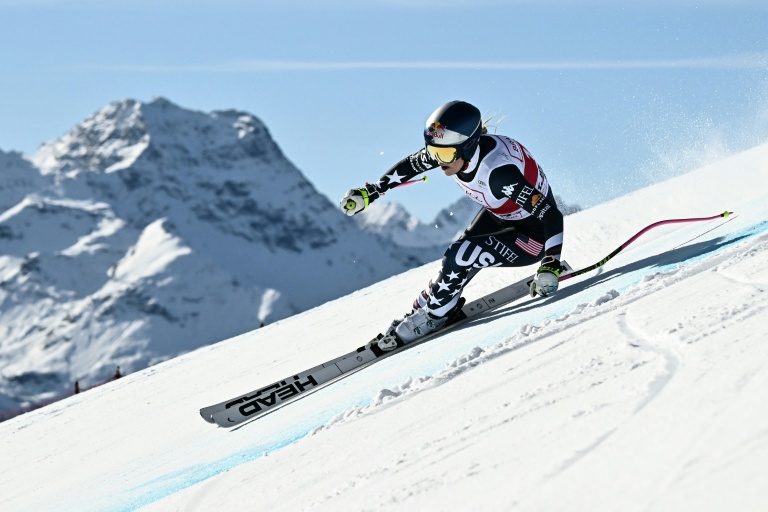
Lindsey Vonn Defies Time, Claims Sensational First World Cup Win Since 2018
The crisp, thin air of St. Moritz is accustomed to history. Yet, on a sun-drenched Friday, it bore witness to a moment that transcended sport. Lindsey Vonn, the name synonymous with alpine skiing royalty, stood atop a World Cup podium once more. At 41 years old, after a retirement, a titanium-reinforced knee, and a five-year victory drought, Vonn didn’t just win a downhill race. She authored a comeback story for the ages, throwing down a gauntlet to a generation of rivals who were children when she first conquered the mountain.
The Veteran’s Roar: A Victory Forged in Titanium and Tenacity
When Lindsey Vonn crossed the finish line, the clock told only part of the story. The raw time secured her 83rd career World Cup victory, extending her own record for a female skier. But the fuller narrative was etched in the tears, the fist-pumps, and the sheer disbelief that quickly turned to jubilation. This was not the Vonn of 2010, powered by the relentless ambition of youth. This was a different champion—one rebuilt, both physically and mentally.
Her journey back to this peak is a medical and psychological marvel. Forced into retirement due to a serious knee injury in 2019, Vonn’s competitive fire never fully extinguished. The decision to return was met with skepticism. Could a body that had endured countless surgeries, including a groundbreaking reconstruction of her knee using titanium, withstand the brutal forces of World Cup downhill? Her answer was methodical. A rejoining of the US team last season. A cautious, then confident, return to gates. Then, a pivotal moment: a second-place finish in the Sun Valley super-G last March, proving the podium was still within reach.
“This one feels different,” Vonn was quoted as saying post-race, her phone buzzing incessantly. “The first chapter was about chasing records. This chapter… this is purely for the love of skiing, for proving to myself that I could climb this mountain again.”
Anatomy of a Historic Win: How Vonn Conquered St. Moritz
Expert analysis of Vonn’s run reveals not just an athlete relying on muscle memory, but a master tactician using her unparalleled experience. St. Moritz, a course where she now boasts six career victories, played to her strengths.
- Technical Precision Over Brute Force: Where younger competitors might attack with raw power, Vonn’s line was a study in efficiency. She carried speed through the critical, rolling midsection by taking a tighter, cleaner line, minimizing air time and maximizing snow contact.
- The Veteran’s Mind: “She skied the course she had, not the one she wanted,” noted a former coach on broadcast. Adjusting to variable light and snow conditions is a skill honed over decades. Vonn’s ability to process feedback from earlier racers and adapt in real-time was a decisive advantage.
- The Titanium Knee: A Non-Factor: In a powerful testament to modern sports medicine and her own rehabilitation, the much-discussed knee was a non-issue. Her turns were aggressive and stable, particularly in the final, technical compression before the finish, where she gained crucial hundredths.
The victory makes her the oldest winner of all time on the World Cup circuit, a staggering statistic that underscores the physical and mental leap required. This wasn’t a nostalgic fluke; it was a calculated demolition of the field.
The Olympic Gauntlet: What Vonn’s Win Means for Milan-Cortina 2026
This victory sends seismic waves through the alpine world with the Winter Olympics in Milan-Cortina now clearly on the horizon. Vonn has openly stated that standing on an Olympic podium again is her ultimate goal. Friday’s result transforms that dream into a palpable threat.
Psychological Impact on the Field: For a cadre of young stars like Italy’s Sofia Goggia or Switzerland’s Lara Gut-Behrami, Vonn was a legend in the history books. Now, she is a direct competitor on the start list. The psychological weight of racing against a living icon, one who just proved she can win, is immense.
Vonn’s Trajectory: The comeback arc is now perfectly set. Last season: a podium. This season: a victory. The trajectory points upward. Her team will likely manage her schedule with surgical precision, focusing on peak performance for the Olympic season. The key will be maintaining health, but Friday proved her body can withstand the ultimate test.
Predictions for the Games: It is premature to declare Vonn the favorite for Olympic gold. A full World Cup season of travel and competition is a different beast. However, to count her out is folly. She possesses the one element no other competitor has: the proven ability to deliver under the suffocating pressure of the Olympic stage. Predicting a medal of any color is no longer a fairy tale; it is a legitimate, data-backed conversation.
More Than a Win: A Legacy Redefined
As the celebration in the finish area continued, one image stood out: Vonn, momentarily alone, on the phone with her father back in the United States. It was a quiet, emotional bookend to the public roar. This victory was a family affair, a triumph shared with the support system that witnessed the darkest days of rehabilitation.
Lindsey Vonn’s first World Cup win since 2018 does more than add to a statistic. It redefines her already-storied legacy. She is no longer just the most successful female skier of all time. She has become sport’s ultimate icon of resilience. She has shown that comebacks are not just for the young, that passion can rewrite timelines, and that titanium and tenacity can forge a second chapter more inspiring than the first.
The road to Milan-Cortina is now illuminated with a new, yet familiar, light. The queen of the mountain has returned to her throne, and the alpine world must adjust its sights. The greatest victory in St. Moritz wasn’t just over a field of competitors; it was over time, doubt, and physical limitation itself. The message to the world is clear: write off Lindsey Vonn at your own peril.
Source: Based on news from Yahoo Sports.