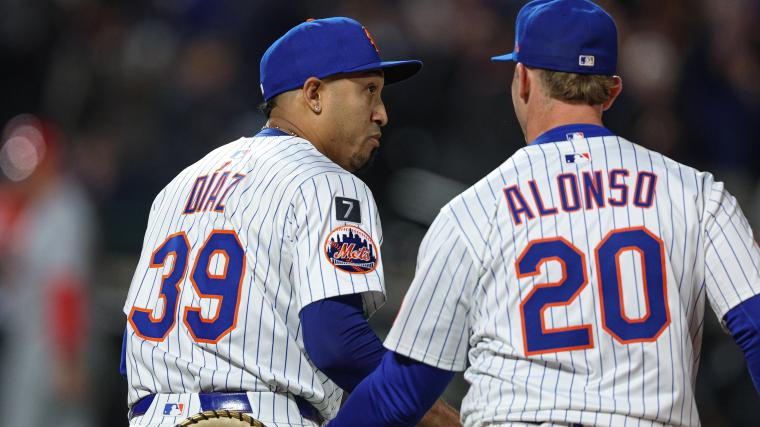
The Real Reason the Mets Let Pete Alonso and Edwin Diaz Walk: A Calculated Tear-Down
The New York Mets’ Winter Meetings were less a strategic build and more a controlled demolition. In a span that felt both shocking and inevitable, the franchise watched its franchise home run king, Pete Alonso, depart for the Baltimore Orioles, and its electric closer, Edwin Díaz, sign with the Los Angeles Dodgers. The heart and the adrenaline of the team, gone in free agency. For a fanbase promised sustained contention under owner Steve Cohen, the exits felt like a betrayal. But to view this solely as a loss is to misunderstand the seismic shift underway in Queens. We now know the real reason the Mets let these icons leave wasn’t about money or a lack of desire, but a cold, hard, and perhaps necessary pivot to a new reality.
Beyond the Payroll: The Illusion of the “Cohen Tax”
Let’s dispel the immediate myth: Steve Cohen did not let Alonso and Díaz leave to save money. The Mets’ owner, with a net worth measured in the tens of billions, has repeatedly shown he will spend. The issue was never the absolute dollar amount, but the strategic value of those dollars. The Mets were not just paying a player; they were paying a historic luxury tax penalty that escalates with each successive year over the threshold.
Signing Alonso, 30, to a long-term deal likely exceeding $200 million and Díaz, also 30, to a closer contract near $100 million would have meant committing nearly a third of a billion dollars to two players entering their 30s, while locking the team into the most punitive tier of the Competitive Balance Tax (CBT) for years. This “Cohen Tax” restricts draft position, international bonus pools, and carries a 110% tax on every additional dollar spent. The baseball operations team, led by President of Baseball Operations David Stearns, calculated that the opportunity cost of those commitments was simply too high for a team that won 75 games.
- Financial Flexibility: Shedding these potential contracts resets the CBT clock and opens up tens of millions in future payroll for a more balanced roster build.
- Asset Management: The Mets received draft pick compensation (a compensatory pick after the fourth round for Alonso, as he rejected the qualifying offer) rather than risking a potential decline phase on a massive contract.
- Age Curve Aversion: The organization is clearly wary of paying peak dollars for post-peak performance, a lesson learned from recent history.
The Stearns Doctrine: A Brewers-Blue Jays Hybrid Model
David Stearns did not come to New York to run the Milwaukee Brewers 2.0, but he also didn’t come to blindly write blank checks. His philosophy, now being enacted with brutal clarity, is a hybrid. From Milwaukee, he brings a razor-sharp focus on organizational depth, pitching development, and value optimization. From the Cohen playbook, he retains the ability to target and pay elite talent—but only when the timing is perfect.
Letting Alonso and Díaz walk is the ultimate testament to this doctrine. The Mets were not one or two players away from contending with the Braves and Phillies. The farm system, while improving, lacks the high-end, near-MLB talent to supplement a top-heavy roster. Stearns is effectively conducting a targeted tear-down. He is clearing the deck of massive, aging contracts to rebuild the foundation—the pitching pipeline, the defensive versatility, the under-25 talent base—so that future mega-deals to superstar free agents (think Juan Soto next winter, or Shohei Ohtani-level pursuits down the line) actually push the team over the top, rather than just keeping it afloat.
This is a painful but proven model. Look at the Baltimore Orioles, Alonso’s new home. They endured years of misery to build an unparalleled cache of young talent, and are now using their financial muscle to add the final pieces (like Alonso). The Mets are attempting a faster, more aggressive version of this, using their financial might to absorb bad contracts for prospects while avoiding new ones that don’t fit the timeline.
Reading the Tea Leaves: What the Moves Reveal About the Roster
The specific positions of the departed stars are telling. First base and closer are, in the modern analytical front office, often seen as replaceable commodities. You do not need to pay $25M+ annually for a first baseman whose value is almost entirely tied to power, which declines with age. You can find power in a corner outfielder or a DH. Similarly, while Díaz is a generational reliever, the volatility of relief pitching makes nine-figure contracts notoriously risky.
By moving on from Alonso, Stearns signals a move away from a one-dimensional, station-to-station offensive identity. The future Mets will likely prioritize athleticism, defensive value, and contact skills. At closer, the Mets have internal options like Drew Smith and could seek a lower-cost veteran or a breakout candidate, refusing to allocate such a large percentage of payroll to 70 innings.
These moves are not an admission of defeat for 2025; they are a declaration that 2024 was never the true target. The focus is squarely on the sustainable contender window of 2026 and beyond, built around Francisco Álvarez, Brett Baty, Ronny Mauricio, and the wave of pitching prospects like Christian Scott and Blade Tidwell.
Predictions: The Mets’ Path Forward After the Exodus
So, what’s next for a team that just lost its two most recognizable stars? The offseason is long, and Stearns is far from done. Here is what to expect:
- Controlled Spending on Short-Term Deals: Look for the Mets to sign veterans to one or two-year contracts. They need a first baseman (a Justin Turner or Rhys Hoskins type makes sense), a DH, and several bullpen arms. These will be bridge players, not cornerstones.
- Aggressive Prospect Acquisition: The Mets will continue to be active in the trade market, using their remaining financial might to acquire young talent by taking on salary, much like the Francisco Lindor trade that brought Lindor and Carlos Carrasco to New York.
- The 2024 Season as an Evaluation Year: Expect a team that fights around .500 but is designed to reveal which young players are part of the future core. The wins and losses will matter less than the development of Álvarez, Baty, and the starting rotation.
- The 2024-25 Offseason as the True Launch Point: This is when the Stearns Plan enters Phase 2. With a reset CBT, a clearer young core, and a historic free agent class headlined by Juan Soto, Corbin Burnes, and others, the Mets will be positioned to be the most aggressive team in baseball. They will have the money, the need, and the supporting cast to justify a true superstar splash.
Conclusion: A Necessary Heartbreak for a New Horizon
Watching Pete Alonso, a homegrown Met who embodied the power and passion of the franchise, and Edwin Díaz, whose entrance was a Broadway show unto itself, depart in their primes is a profound heartbreak for fans. It feels like the end of an era because it is. But it is not the end of ambition. This is the painful, calculated cost of correcting the previous era’s missteps—a course correction from the win-now-at-all-costs approach that left the roster old, expensive, and shallow.
The real reason the Mets let Alonso and Díaz leave is because David Stearns and Steve Cohen are playing a different, longer game. They are betting that the short-term fury of the fanbase will be forgiven by building something more durable and dominant than a team reliant on two stars and a prayer. The message is clear: the aim is no longer to sneak into the playoffs, but to build a juggernaut. The tear-down has begun. The rebuild, backed by infinite resources, is now fully underway. The trust won’t be restored with words, but with the actions of the next two years. The stakes for the Stearns Doctrine could not be higher.
Source: Based on news from Yahoo Sports.