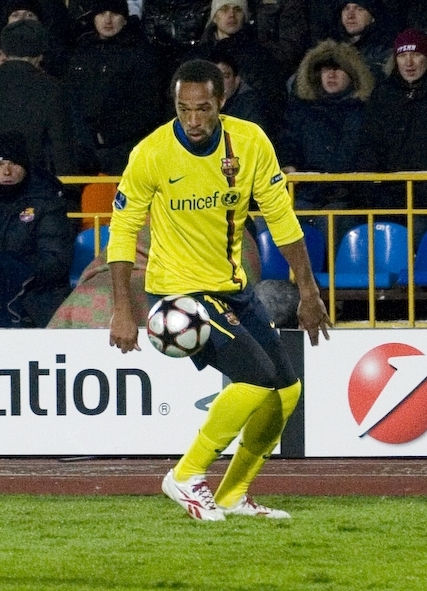
Wembley Drama, Boyhood Dreams & Forgiving Thierry Henry: Play-off Stories from the EFL
The English Football League play-offs are a brutal, beautiful beast. They are a season’s worth of hope, heartbreak, and high-stakes poker compressed into three matches. For the clubs involved, it is not just a promotion; it is a financial lifeline, a chance at glory, and often, a collision with personal history. This year’s Championship, League One, and League Two finals at Wembley are no different. We are talking about the raw emotion of boyhood dreams colliding with the cold mathematics of penalties, and the lingering ghost of a legend we must finally learn to forgive: Thierry Henry.
Let’s strip away the corporate jargon and the predictable talking points. The EFL play-offs are about the moments that define a career. They are about the 30-yard screamer that silences 80,000 people. They are about the penalty taker who remembers his childhood bedroom, and the goalkeeper who becomes a god for 12 yards. This is the theatre of the absurd, and we are all just spectators.
The Wembley Crucible: Where Legends Are Made and Broken
Wembley Stadium in May is a different beast. The arch glows, the air smells of hot dogs and nervous sweat, and the pitch—usually a pristine carpet—becomes a graveyard for tactical plans. The Championship play-off final is the richest game in football, worth an estimated £170 million to the winner. That weight crushes players. It makes defenders forget how to kick a ball. It turns strikers into statues.
Look at the recent history. The 2023 final between Coventry City and Luton Town was a masterclass in tension. Luton, a club that was non-league a decade ago, scraped through via a penalty shootout. Their captain, Tom Lockyer, collapsed on the pitch, a terrifying reminder that the stakes are real. But the drama was pure, unscripted. That is the Wembley drama we crave.
This year, the narrative is even richer. Clubs like Leeds United, Southampton, and West Bromwich Albion are carrying the weight of history. For the players who grew up watching these finals, stepping onto that turf is the culmination of a boyhood dream. It is the same dream that drove a young Thierry Henry to watch English football from across the Channel, a dream that would eventually lead him to Arsenal, and then, to a moment that still stings for many.
The Ghost of Thierry Henry: Why We Must Forgive
Let’s address the elephant in the room. The name Thierry Henry is synonymous with elegance, but for Irish football fans, it is a four-letter word. The 2009 World Cup play-off. The handball. The assist. The goal. It is the single most controversial moment in play-off history, and it happened on the international stage, not the EFL. But the emotion is transferable.
Why do we need to forgive Thierry Henry? Because the play-offs are about human fallibility. Henry admitted the handball immediately after the match. He told the referee. He was visibly distraught. He offered to replay the game. FIFA said no. He was a victim of the system as much as Ireland was. In the context of the EFL, this lesson is vital. The penalty shootout is the ultimate equalizer. It doesn’t care about your reputation. It doesn’t care about your boyhood dreams. It only cares about the next 12 yards.
For the players stepping up to the spot at Wembley this May, the pressure is identical to what Henry felt. They will either be heroes or villains. The best advice? Look at Henry. He used the guilt to fuel a legendary career. He became a leader. He became a coach. He learned that the only way to move forward is to accept the mistake and keep playing. Forgiving Thierry Henry is not about condoning cheating; it is about understanding that football is a game of inches, and sometimes, those inches are unfair. The teams that win the play-offs are the ones that accept the unfairness and conquer it anyway.
Expert Analysis: The Psychology of the Play-Offs
From a tactical standpoint, the play-offs are a nightmare for managers. You cannot prepare for the Wembley drama in training. You can practice penalties, but you cannot replicate the roar of a crowd that wants to see you fail. Here is my expert breakdown of what separates the winners from the losers:
- Experience over Talent: Young, flashy players often freeze. The veteran who has been relegated, promoted, and relegated again? He knows how to manage the clock. Look for the 32-year-old midfielder who slows the game down in the 85th minute.
- Set-Piece Solidity: In high-pressure finals, open-play goals are rare. The team that wins the first contact on a corner or a free-kick wins the game. This is where the EFL’s grit shines.
- The Goalkeeper Factor: A penalty shootout is 70% psychology, 30% skill. The goalkeeper who can stare down a striker for an extra second has already won half the battle. Remember the boyhood dreams of the keeper—they are saving penalties in their back garden, not scoring them.
- Narrative Weight: Teams like Leeds United carry the weight of their history. They are expected to win. That pressure can be crippling. The underdog, like a newly promoted side, plays with freedom. That is dangerous.
My prediction for the Championship final? It will go to extra time. It always does. The team with the stronger bench and the cooler head from 12 yards will prevail. Do not bet against a penalty shootout. It is the most democratic, cruel, and beautiful way to decide a season.
Forgiveness as a Strategy: The Unspoken Play-Off Tool
There is a deeper lesson here for the players. The play-offs are not just about winning; they are about forgiving yourself. Every player will make a mistake. A misplaced pass. A missed tackle. A saved penalty. The teams that bounce back are the ones that have a short memory.
This is where the ghost of Thierry Henry becomes a positive. He made the biggest mistake of his career in a play-off. He never let it define him. He won the World Cup. He won the Premier League. He became a legend. The players walking onto the Wembley pitch this month need to adopt that same mentality. Miss a penalty? So what. The next game is in August. The sun will rise.
The EFL play-offs are a microcosm of life. They are unfair. They are dramatic. They are full of boyhood dreams that either come true or shatter in a single moment. The fans will scream. The pundits will analyze. But in the end, it is just a game. A beautiful, brutal, brilliant game.
Strong Conclusion: The Final Whistle
As the dust settles on another season, the winners will ascend to the Premier League or League One, and the losers will be left to wonder “what if.” The Wembley drama will be replayed on loop. The boyhood dreams of a few will become reality. And somewhere, a young fan will watch their hero score the winning penalty, not knowing that the same hero might one day make a mistake that requires forgiving Thierry Henry.
That is the beauty of the play-offs. They are a mirror. They show us our best and our worst. They remind us that football is not about perfection; it is about resilience. So, as you watch the finals, remember the handball. Remember the guilt. Remember the redemption. And then, let it go. The play-offs are waiting.
Source: Based on news from Sky Sports.
Image: CC licensed via es.wikipedia.org