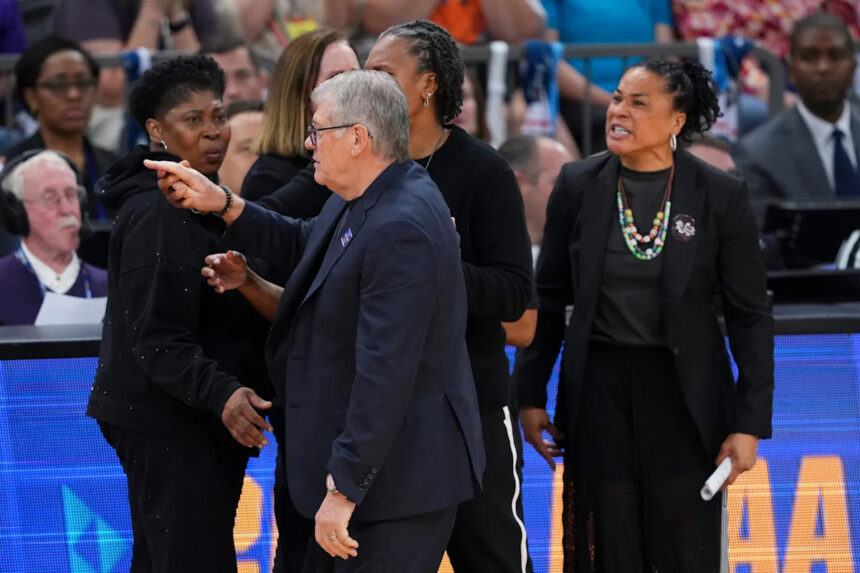
What Did Geno Auriemma Say to Dawn Staley? Inside the Final Four Sideline Fracas
The 2025 Women’s Final Four in Phoenix delivered a classic: a gritty, physical battle between the sport’s two modern dynasties, South Carolina and UConn. Yet, long after the final buzzer sealed the Gamecocks’ victory, the most dissected moment wasn’t a clutch three or a critical block. It was a tense, finger-pointing confrontation between two titans of the game: a furious Geno Auriemma and a composed but visibly annoyed Dawn Staley. The exchange hijacked the postgame narrative, leaving fans to wonder: What did Geno Auriemma say to Dawn Staley to spark such a public clash?
A Handshake, A Loss, and A Heated Exchange
As the teams concluded the customary postgame handshake line, cameras captured Auriemma and Staley in a prolonged, animated discussion. Auriemma, gesturing emphatically, appeared to be doing most of the talking, while Staley listened, responded curtly, and eventually walked away with a dismissive wave. The broadcast microphones picked up only fragments, but Auriemma’s frustration was palpable. In the ensuing media scrums, the root of the conflict came into focus. It wasn’t about a controversial call or an in-game tactic. Astonishingly, it centered on a missed pregame handshake.
Auriemma revealed his ire stemmed from Staley allegedly missing a formal pregame coaches’ handshake at center court. “There’s a protocol in the Final Four. You go out, you shake hands,” Auriemma stated postgame. He acknowledged a quick, informal wave earlier but emphasized the missed formal moment. For a coach just minutes removed from a season-ending loss, this minor breach of etiquette became a focal point for his evident frustration. Staley, for her part, confirmed the conversation’s topic but offered a different perspective, implying the emotional heat of the moment and the intensity of the matchup were more significant factors than any protocol.
Beyond the Handshake: Context is King
To view this incident as merely a spat over a handshake is to miss the forest for the trees. The confrontation was a pressure cooker release, fueled by layers of context that made the moment combustible.
- The Stakes: This was the Final Four. UConn’s legendary program, facing its own “dynasty” questions, fell short yet again to South Carolina, the new standard-bearer.
- The Game’s Nature: The contest was brutally physical, with 27 total fouls and relentless defensive pressure. Coaching in such a game builds immense tension.
- The Historical Dynamic: While there is deep mutual respect, a competitive rivalry exists. Staley’s South Carolina has been the hurdle UConn has recently been unable to clear.
- The Raw Emotion of Loss: Auriemma, a competitor of the highest order, was caught in the immediate, searing disappointment of defeat. The postgame frustration found a seemingly trivial outlet.
In this light, the handshake was merely the spark. The fuel was a complex mix of professional pride, competitive fury, and the painful reality of a championship dream ending. Auriemma’s reaction, while understandable in the raw seconds after a loss, was a lapse in the decorum usually displayed between icons.
Expert Analysis: A Rare Misstep for a Legend
From a sports psychology and leadership perspective, Auriemma’s outburst, however brief, stands as a rare miscalculation. Coaches of his and Staley’s stature are hyper-aware of the cameras and the message sent in these moments. By choosing to confront Staley on the floor over a procedural issue—especially after a loss—he inadvertently shifted the narrative.
Dawn Staley’s handling of the situation was a masterclass in poised leadership. She engaged, defended her position without escalating, and ultimately disengaged. Her postgame press conference was focused on her team’s triumph and the magnitude of the game, not the sideline drama. This contrast was stark. In the arena of public perception, which is part of the modern coaching battle, Staley emerged unscathed, while Auriemma was left to explain why a handshake mattered more than congratulating the victor on their performance.
This incident also highlights the intense scrutiny and emotional toll of the Final Four. The pressure on these coaches is monumental, and even the most seasoned can have a human moment under the brightest lights. However, the legacy of legends is often defined by their grace in defeat as much as their joy in victory. This episode, though likely fleeting in the grand arc of both careers, will be remembered as a moment where that grace faltered.
Legacy and Looking Ahead: What Comes Next?
This fracas will not define the legacies of Geno Auriemma or Dawn Staley. Their bodies of work—championships, player development, and impact on the sport—are far too robust. However, it does create an intriguing subplot for the future of this premier rivalry.
Predictions for the Rivalry’s Future:
- The Tension is Amplified: The next meeting between UConn and South Carolina, whether in the regular season or another postseason, will carry this extra layer of history. The narrative will be inescapable.
- Professional Respect Endures: Both coaches are ultimate professionals. While the relationship may be chilled in the short term, their fundamental respect for each other’s programs will almost certainly prevail. They have been through too much to let this fester.
- A Focus on Protocol: The NCAA and coaches may informally reaffirm pregame and postgame protocols to avoid any future confusion, though the real issue was never truly about the handshake itself.
- Auriemma’s Redemption Arc: Geno Auriemma is a proud man and a brilliant coach. The likeliest outcome is that he uses this moment as a motivator, channeling all energy back into his program. The best response will be on the court.
Conclusion: A Human Moment in the Titan’s Game
So, what did Geno Auriemma say to Dawn Staley? The core complaint was about a missed formal handshake. But the real message, transmitted through tense body language and public confrontation, was one of profound frustration—frustration with losing, with the physical challenge of the game, and perhaps with the shifting tides of a sport where his program is no longer the unquestioned apex predator.
The Final Four fracas was ultimately a human moment between two superhuman competitors. It revealed the volcanic emotions that simmer beneath the surface of championship coaching. While Auriemma’s decision to voice his grievance in that setting was a strategic error, it was born from the very passion that built his empire. Dawn Staley, now sitting firmly on the throne of women’s college basketball, handled the challenge to her composure as she handles most challenges: with unflappable resolve. The game within the game was won by South Carolina on the scoreboard. The brief, bitter epilogue on the sideline, however, was a reminder that even legends are human, and in sports, sometimes the deepest cuts come from the smallest slights.
Source: Based on news from Yahoo Sports.