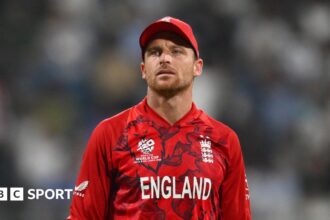
The Jos Buttler Conundrum: What Should England Do With Their Struggling Captain?
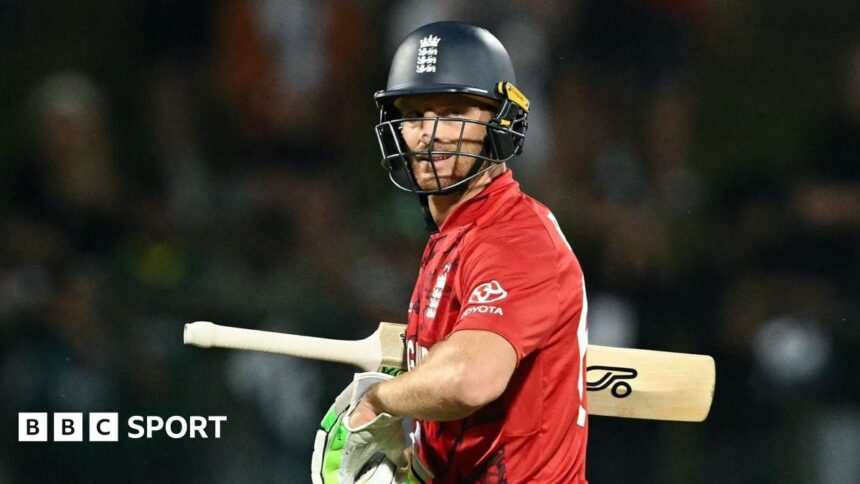
The question feels almost heretical to ask. To suggest that Jos Buttler, the man whose name is etched into English cricket folklore, the ice-cool finisher of 2019 and the triumphant captain of 2022, might be a problem feels like a betrayal of the modern white-ball era. Yet, as another mistimed shot found a fielder against Pakistan, resulting in his fourth consecutive single-figure score, the murmur of concern has grown into a legitimate, pressing debate. For a team built on aggressive, fearless cricket, the sight of its leader and premier batsman looking horribly out of touch is the single biggest cloud over their title defence. So, what should England do about Jos Buttler?
The Unassailable Legacy vs. The Unavoidable Present
First, we must separate the icon from the current cricketer. Jos Buttler’s legacy is unassailable. He is not just a two-time World Cup winner; he is the archetype of the modern white-ball batsman, a player who redefined the art of finishing and power-hitting for his country. His 2018 ODI century against Australia in Sydney remains one of the greatest innings ever played by an Englishman. His captaincy in the 2022 T20 World Cup was tactically astute and calm under extreme pressure.
However, sport is ruthlessly present-tense. At 35, Buttler is in the twilight of his international career. The recent pattern is alarming: a tentative push, a mistimed loft, an edge to the keeper. The fluency and devastating power that defined him have deserted him at a critical juncture. This isn’t a minor dip; it’s a prolonged slump that threatens to unbalance the entire England batting lineup. When your captain and number five is struggling, it creates a ripple effect, placing undue pressure on the middle order and disrupting the team’s aggressive blueprint.
Diagnosing the Dip: What’s Gone Wrong?
Expert analysis points to a confluence of factors, not just simple loss of form.
- Age and Physical Wear & Tear: At 35, recovery is harder and the margins for error are finer. The explosive muscle fibres that powered his legendary six-hitting may have lost a fraction of their potency.
- Captaincy Burden: Leading a defending champion team under immense scrutiny is a weighty task. Is the mental load affecting his simplicity at the crease? The need to manage a transitional squad, media pressure, and his own game could be taking a toll.
- Technical Tweak or Tactic? Some pundits suggest he is caught between gears—unsure whether to anchor or explode. This hesitation is fatal in modern cricket. His trigger movement seems less decisive, leading to a lack of base and power through the ball.
- Bowling Tactics: Globally, bowlers have become smarter. They are attacking his body with pace and using wider lines to limit his destructive arc. His counter, for now, has been ineffective.
The recent dismissal, Shaheen takes a second wicket as Buttler is caught by Usman, was a classic example. Facing high-quality left-arm pace with the new ball, he was drawn into a shot without full conviction, a batsman playing the situation rather than instinct.
The Strategic Options: Stick, Twist, or Shuffle?
England’s management, led by Matthew Mott, now faces a monumental decision. Their path will define their World Cup campaign.
Option 1: Unwavering Faith (The Most Likely Path)
This is the “class” argument. You back your champions, knowing one innings can change everything. Dropping Buttler could cause more disruption than his poor form. It would be a seismic shock to the squad’s psychology. The belief is that his quality will inevitably resurface, and when it does, England will need him. This option involves keeping him at number five and publicly reinforcing his status as leader.
Option 2: The Tactical Demotion (The Pragmatic Shuffle)
This is a middle ground. Acknowledge the form but not the man. Buttler could be moved down the order to six or even seven, shielding him from high-pressure, middle-phase spin and allowing him to face more death bowling—a scenario that might reignite his primitive hitting instincts. This would require promoting a Jonny Bairstow or a Harry Brook, but it keeps Buttler’s experience in the game.
Option 3: The Unthinkable Omission (The Nuclear Option)
This is highly improbable mid-tournament but must be considered if the slump deepens. It would involve dropping Buttler from the XI, handing the captaincy to a Moeen Ali or a Ben Stokes (if fit), and bringing in a specialist batsman like Ben Duckett. This is a last-resort move that signals a brutal, results-oriented shift, potentially at the cost of team harmony.
Prediction and The Path Forward
My prediction as an expert is that England will, initially, choose Option 1. They will back their captain to the hilt, citing his pedigree and the destabilizing effect of change. However, this faith will have a very short, defined leash. If two more matches pass without a significant contribution, the pressure to enact Option 2, the tactical demotion, will become overwhelming.
The key for Buttler is not to search for the blistering 50-ball hundred, but to find a way to spend time at the crease. A gritty 30 off 35 balls, with a couple of trademark boundaries, could be the catalyst. He needs to simplify his game: watch the ball, play straight, and trust that the muscle memory of a thousand boundaries will return.
For the team, the support structure is vital. Senior players like Stokes and Moeen must visibly rally around him. The coaching staff should work on freeing his mind, perhaps even using him as a “floater” to disrupt opposition plans.
Conclusion: A Test of Legacy and Nerve
The Jos Buttler conundrum is the ultimate test of man management and cricketing philosophy. It feels wrong to question him because he has earned that deference. But elite sport offers no permanent sanctuary. England’s dilemma is balancing respect for past glories with the urgent demands of the present.
Ultimately, Jos Buttler’s greatest service to England may now lie not just in a potential match-winning knock, but in the honest self-assessment of his role. Whether he finds his form as a promoted batsman, a floating finisher, or from the bench, the decision must be made with cold, strategic clarity, not sentimental hope. The champion player he is deserves the chance to fight his way back. But the champion team England aims to be might, sooner than anyone wishes, have to make the toughest call of all. The world is watching to see if the hero can once again write his own script, or if cricket’s relentless march forward will demand a painful, but necessary, change.
Source: Based on news from BBC Sport.