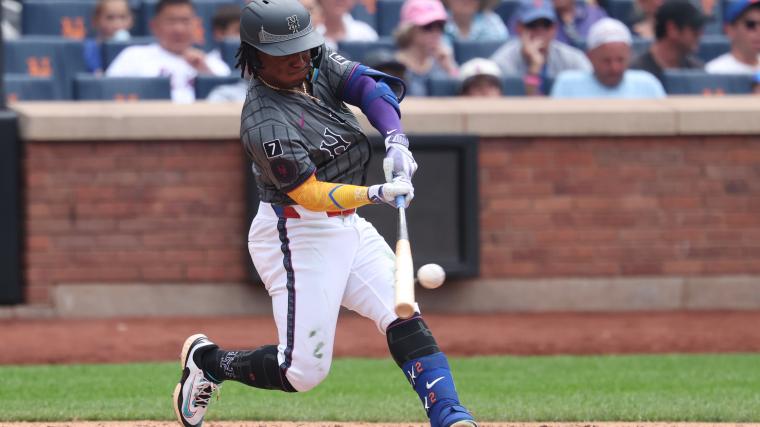
White Sox Earn High Marks for Luis Robert Jr. Trade with Mets: A Calculated Gamble
In the dead of night, the Chicago White Sox finally ended months of speculation, pulling the trigger on a franchise-altering deal. Late Tuesday night, news broke that star center fielder Luis Robert Jr. was headed to the New York Mets. In return, the White Sox secured a significant prospect package headlined by infielder Luisangel Acuna and minor league pitcher Truman Pauley. While the Mets aim to win now, the consensus from analysts like ESPN’s Bradford Doolittle is clear: the White Sox executed a shrewd, forward-thinking maneuver, earning high grades for a trade that prioritizes a sustainable future over a fading present.
The End of an Era: Why Trading Robert Was Inevitable
The White Sox’s efforts to trade Luis Robert Jr. began in earnest at the 2024 trade deadline, signaling a stark acknowledgment of their reality. Despite Robert’s transcendent talent, the fit had soured. The team is entrenched in a deep, multi-year rebuild, while Robert, now 27, is entering his prime earning years. His contract, which includes two affordable club options for 2026 and 2027, made him an incredibly valuable trade chip—perhaps the most valuable on the market.
However, Robert’s injury history cast a long shadow over his elite production. Since his spectacular 2021 season—where he blasted 38 home runs, posted a .946 OPS, and garnered MVP votes—the story has been one of brilliance interrupted. Trips to the injured list became a recurring, frustrating theme, limiting his ability to be the consistent cornerstone the Sox needed. For a team years away from contention, the risk of his value depreciating further due to injury outweighed the benefit of his sporadic brilliance. Trading him now, at peak value, was a cold but necessary calculus.
Breaking Down the White Sox Haul: A Foundation for the Future
Chicago’s return is not about a single can’t-miss superstar, but about acquiring multiple high-probability assets to deepen a barren farm system. This is the essence of a successful rebuild trade.
Luisangel Acuna: The Centerpiece
The headline name is, of course, Luisangel Acuna, the younger brother of NL MVP Ronald Acuna Jr. More than just a famous surname, Acuna is a legitimate top-100 prospect who immediately becomes one of the best in the White Sox system.
- Elite Speed and Defense: Acuna is a 70-grade runner with elite base-stealing instincts and the defensive versatility to stick at shortstop or, more likely, become a premium defender at second base.
- Developing Bat: While his power is still emerging, he makes consistent contact and has shown an improved approach at the plate. His skill set profiles as a dynamic top-of-the-order catalyst.
- Immediate Impact: He is expected to compete for the White Sox’s primary second base job as soon as this spring, offering a much-needed injection of athleticism and energy.
Truman Pauley: The Under-the-Radar Arm
While Acuna grabs the headlines, right-hander Truman Pauley is a fascinating piece in the deal. A 2023 draft pick, Pauley rocketed through the lower minors with a stellar professional debut in 2024. He features a deceptive delivery and a pitch mix that has utterly dominated A-ball hitters.
His inclusion is a testament to the White Sox’s scouting. He represents the kind of high-upside pitching prospect that can quickly become a key rotation piece or a valuable trade asset down the line. In many deals, the “second piece” is a throw-in; Pauley is a legitimate prospect with breakout potential.
Expert Analysis: Why the Grades Favor the South Siders
The immediate reaction from the analytics community has been favorable for Chicago. ESPN’s Bradford Doolittle notably gave the Mets a C+ grade, indirectly praising the White Sox’s execution. The reasoning is rooted in risk management and asset valuation.
For the Mets, acquiring Robert is a high-variance play. They are betting significant prospect capital that he can stay healthy and recapture his 2021 form for a playoff push. If he does, they win the trade. If his injury woes persist, they’ve mortgaged part of their future for an often-unavailable player.
For the White Sox, the equation is simpler and less risky. They have converted one volatile, albeit incredibly talented, asset into two controllable, high-floor players who directly address organizational weaknesses. Acuna fills a glaring long-term hole in the middle infield, and Pauley adds to a growing stockpile of promising arms. In the context of their lengthy rebuild timeline, this diversification of assets is a textbook successful strategy.
Predictions: The Ripple Effects for Both Franchises
This trade will have lasting implications for both clubs, setting distinct trajectories for the 2025 season and beyond.
For the Chicago White Sox:
The 2025 season is now unequivocally about development. The pressure to win is gone, replaced by a clear mandate to evaluate young talent. Acuna will be given every opportunity to establish himself. Pauley will likely start at Double-A with a chance to move quickly. The trade also signals that more veterans could be moved, further clearing the deck for the next core. The grade for this trade will ultimately be judged in 2-3 years, based on Acuna’s development and Pauley’s progression. Early indicators suggest they positioned themselves extremely well.
For the New York Mets:
The Mets are all-in, again. Adding Robert to a lineup featuring Francisco Alvarez, Pete Alonso, and Brandon Nimmo creates one of the most formidable offensive groups in the National League. However, the prediction here hinges entirely on Robert’s health. A 140-game season from Robert makes them a dangerous playoff team. Another season fragmented by injuries could make this trade a costly misstep and put pressure on the front office. They’ve paid a premium for a lottery ticket, albeit one with a jackpot worth 5-6 WAR.
Conclusion: A Textbook Rebuild Move Earns Its High Grade
In the high-stakes poker game of MLB trades, the Chicago White Sox played their Luis Robert Jr. hand with patience and precision. Faced with a talented but injury-plagued star on a rebuilding team, they identified the perfect moment to sell, finding a motivated buyer in the win-now Mets. The return—a near-MLB-ready, high-ceiling infielder in Luisangel Acuna and a rapidly rising pitching prospect in Truman Pauley—is exactly the kind of haul that accelerates a rebuild.
While the Mets’ grade is contingent on an unpredictable health report, the White Sox’s high grade is already earned. They mitigated long-term risk, acquired multiple future assets, and stuck rigidly to their organizational plan. For a franchise searching for direction, this trade provides a clear roadmap. The White Sox may have traded away their most exciting player, but in doing so, they took a monumental step toward building a team that can consistently compete—and that deserves the highest marks of all.
Source: Based on news from Yahoo Sports.